Omar Abdullah: Kashmir Wounds Still Unhealed
Omar Abdullah speaks on Article 370 abrogation, Kashmir's healing process
'%3E%3Crect%20width%3D'96'%20height%3D'96'%20fill%3D'%231A5276'%2F%3E%3Ccircle%20cx%3D'30'%20cy%3D'24'%20r%3D'44'%20fill%3D'%23fff'%20opacity%3D'.12'%2F%3E%3Ccircle%20cx%3D'60'%20cy%3D'74'%20r%3D'40'%20fill%3D'%23000'%20opacity%3D'.10'%2F%3E%3C%2Fg%3E%3Cg%20fill%3D'%23fff'%3E%3Cpath%20d%3D'M31%2041%20L48%2031%20L65%2041%20Z'%2F%3E%3Crect%20x%3D'33'%20y%3D'43'%20width%3D'4'%20height%3D'17'%2F%3E%3Crect%20x%3D'41'%20y%3D'43'%20width%3D'4'%20height%3D'17'%2F%3E%3Crect%20x%3D'51'%20y%3D'43'%20width%3D'4'%20height%3D'17'%2F%3E%3Crect%20x%3D'59'%20y%3D'43'%20width%3D'4'%20height%3D'17'%2F%3E%3Crect%20x%3D'30'%20y%3D'62'%20width%3D'36'%20height%3D'4'%20rx%3D'1'%2F%3E%3C%2Fg%3E%3C%2Fsvg%3E)
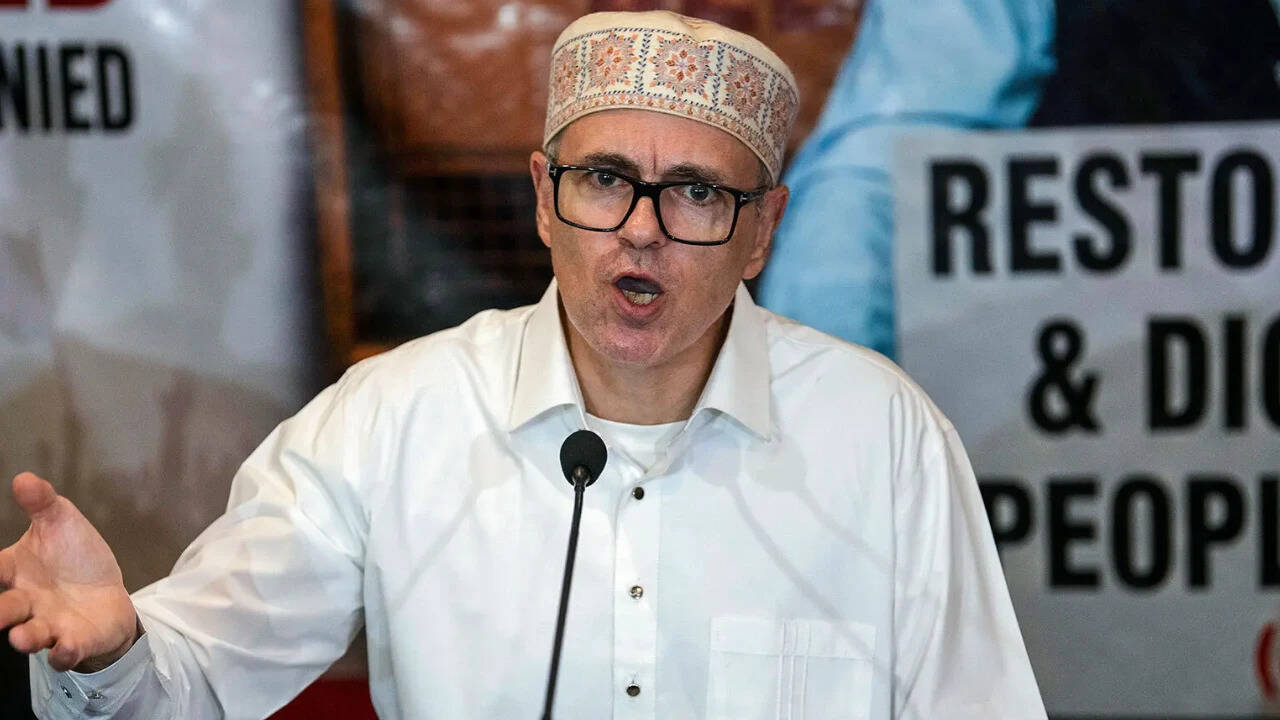
Omar Abdullah, the former Chief Minister of Jammu and Kashmir, has stated that the wounds of the abrogation of Article 370 are yet to heal. He expressed his sentiments through a poetic reference, saying 'miles to go before I sleep', indicating a long and arduous journey ahead for the region.
The abrogation of Article 370, which granted special status to Jammu and Kashmir, was a highly controversial move made by the Indian government in 2019. The decision was met with widespread protests and criticism from various quarters, including political leaders and human rights organizations.
Omar Abdullah, who has been a vocal critic of the abrogation, emphasized that the region is still grappling with the aftermath of the decision. He highlighted the need for a peaceful and inclusive approach to address the concerns and aspirations of the people of Jammu and Kashmir.
The former Chief Minister's comments come at a time when the region is witnessing a surge in political activity, with various parties and organizations seeking to revive the democratic process. However, the path ahead is fraught with challenges, and it remains to be seen how the situation will unfold in the coming days and weeks.
The abrogation of Article 370 has had far-reaching consequences for Jammu and Kashmir, including a significant impact on the region's economy, politics, and social fabric. The decision has also led to a deterioration in relations between India and Pakistan, with both countries exchanging heated rhetoric and diplomatic barbs.
As the situation in Jammu and Kashmir continues to evolve, it is clear that the road to healing and reconciliation will be long and difficult. Omar Abdullah's comments serve as a reminder that the wounds of the past are still raw and that a sustained effort is needed to address the concerns and aspirations of the people of the region.
In the context of Indian politics, the abrogation of Article 370 has been a highly polarizing issue, with different parties and organizations holding varying views on the matter. While some have supported the decision, others have criticized it as an attack on the region's autonomy and identity.
Ultimately, the future of Jammu and Kashmir will depend on the ability of the Indian government and the people of the region to work together towards a peaceful and inclusive solution. It is a complex and challenging task, but one that is essential for the region's stability and prosperity.
The situation in Jammu and Kashmir serves as a reminder of the complexities and challenges of Indian politics, where different regions and communities have unique concerns and aspirations. As the country continues to evolve and grow, it is essential to address these concerns and work towards a more inclusive and peaceful future for all.
In conclusion, Omar Abdullah's comments highlight the need for a sustained effort to address the concerns and aspirations of the people of Jammu and Kashmir. The road to healing and reconciliation will be long and difficult, but it is essential for the region's stability and prosperity.
Frequently asked questions
What is Article 370?
Article 370 was a constitutional provision that granted special status to Jammu and Kashmir.
Why was Article 370 abrogated?
The Indian government abrogated Article 370 in 2019, citing the need to integrate Jammu and Kashmir with the rest of the country.