Elephant Confronts JCB in Assam Forest
A viral video shows an elephant standing up to a JCB machine in Assam, sparking outrage and calls for forest protection. The footage highlights the growing pressure on wildlife habitats.
'%3E%3Crect%20width%3D'96'%20height%3D'96'%20fill%3D'%23B3261E'%2F%3E%3Ccircle%20cx%3D'30'%20cy%3D'24'%20r%3D'44'%20fill%3D'%23fff'%20opacity%3D'.12'%2F%3E%3Ccircle%20cx%3D'60'%20cy%3D'74'%20r%3D'40'%20fill%3D'%23000'%20opacity%3D'.10'%2F%3E%3C%2Fg%3E%3Cg%20fill%3D'%23fff'%3E%3Crect%20x%3D'29'%20y%3D'49'%20width%3D'8'%20height%3D'19'%20rx%3D'1'%2F%3E%3Crect%20x%3D'39'%20y%3D'40'%20width%3D'9'%20height%3D'28'%20rx%3D'1'%2F%3E%3Crect%20x%3D'50'%20y%3D'45'%20width%3D'8'%20height%3D'23'%20rx%3D'1'%2F%3E%3Crect%20x%3D'60'%20y%3D'53'%20width%3D'7'%20height%3D'15'%20rx%3D'1'%2F%3E%3Crect%20x%3D'41'%20y%3D'34'%20width%3D'5'%20height%3D'6'%2F%3E%3C%2Fg%3E%3C%2Fsvg%3E)
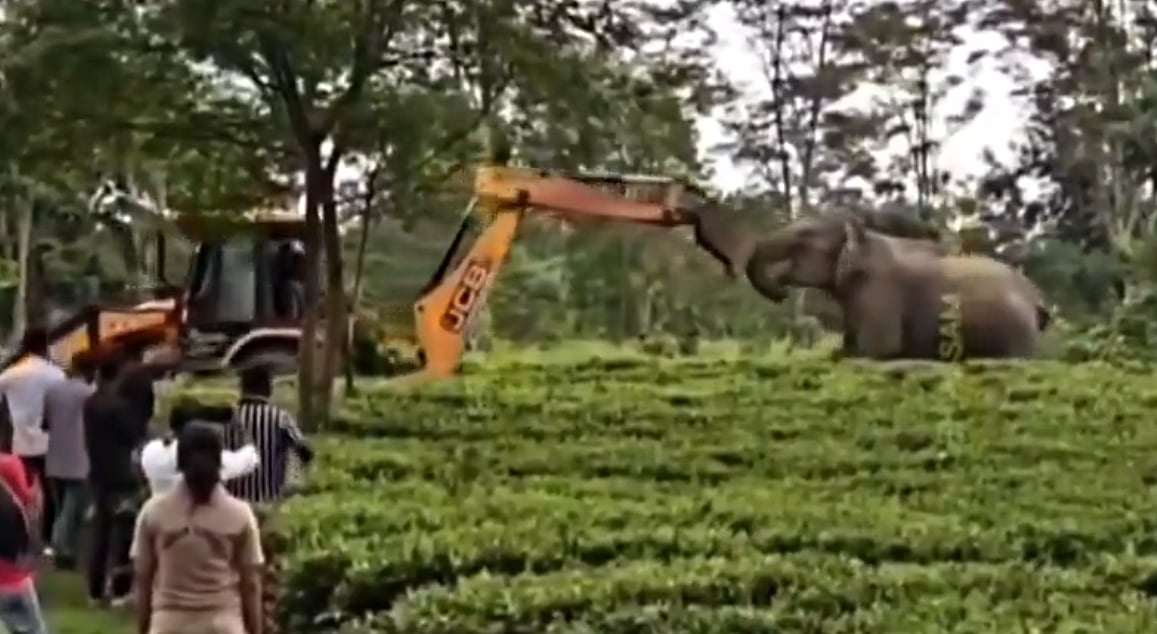
A powerful video from Assam has captured the attention of millions after showing a wild elephant confronting a JCB machine in a forested area. The elephant is seen standing directly in front of the machine, refusing to back down. Although the exact circumstances surrounding the incident are still unclear, the footage has become a symbol of the challenges faced by elephants as forests continue to shrink across India.
The video quickly spread across social media platforms, attracting millions of views and thousands of comments. Viewers praised the elephant's calm yet determined stance, calling it one of the most emotional wildlife moments captured this year. Many users described the animal as defending the only home it has ever known, while others said the clip highlights the increasing conflict between development projects and the natural environment.
Assam is home to one of India's largest populations of Asian elephants, and its forests serve as vital wildlife corridors connecting protected landscapes. However, habitat fragmentation caused by expanding roads, settlements, mining, agriculture, and other development activities has reduced the space available for elephants to move safely. When traditional migration routes are disrupted, elephants often enter villages and farmland in search of food or passage, increasing the risk of human-elephant conflict.
Such encounters can result in injuries and fatalities for both people and animals. The viral footage has reignited conversations about the urgent need to conserve forests and protect wildlife corridors before they disappear. Environmental advocates argue that careful planning, sustainable development, and stronger habitat protection measures are essential to reducing conflict between humans and wildlife.
The video has sparked outrage and calls for action, with many users expressing their concern for the welfare of the elephant and the future of India's forests. One user commented, 'At least animals have more common sense for nature conservation and deforestation…Humanity and humankind in the lowest level at this point.' Another said, 'This is RIDICULOUS! Whatever the reason, the guy needs to be arrested ! You cannot harm an animal this way! Heartbreaking!'
The incident has highlighted the need for stronger forest protection and conservation efforts in India. The country is home to a diverse range of wildlife, including elephants, tigers, and leopards, and it is essential that we take steps to protect their habitats and prevent human-wildlife conflict.
The viral footage has also sparked a wider conversation about the impact of human activity on the environment. As India continues to develop and grow, it is essential that we prioritize sustainability and conservation, and take steps to reduce our impact on the natural world.
In conclusion, the video of the elephant confronting the JCB machine in Assam is a powerful reminder of the challenges faced by wildlife in India. It highlights the need for stronger forest protection and conservation efforts, and the importance of prioritizing sustainability and conservation as we continue to develop and grow.
The incident has significant implications for India's wildlife and the environment, and it is essential that we take action to address the issue of habitat fragmentation and human-wildlife conflict. By working together, we can help to protect India's forests and wildlife, and ensure a sustainable future for generations to come.
The video has sparked a national conversation about the importance of conservation and sustainability, and it is essential that we continue to prioritize these issues in the years to come. By doing so, we can help to protect India's natural heritage and ensure a bright future for the country's wildlife.
In the end, the video of the elephant confronting the JCB machine is a call to action, a reminder of the need for urgent action to protect India's forests and wildlife. It is essential that we take this call to action seriously, and work together to address the challenges faced by wildlife in India.
As the conversation around the video continues to grow, it is essential that we prioritize the welfare of the elephant and the future of India's forests. We must take action to protect the natural world, and ensure a sustainable future for generations to come.
The video has highlighted the need for a comprehensive approach to conservation and sustainability, one that takes into account the complex relationships between humans and wildlife. By working together, we can help to protect India's forests and wildlife, and ensure a bright future for the country.
In the years to come, it will be essential to prioritize conservation and sustainability, and to take action to address the challenges faced by wildlife in India. The video of the elephant confronting the JCB machine is a powerful reminder of the need for urgent action, and it is essential that we take this call to action seriously.
The incident has significant implications for India's wildlife and the environment, and it is essential that we take action to address the issue of habitat fragmentation and human-wildlife conflict. By working together, we can help to protect India's forests and wildlife, and ensure a sustainable future for generations to come.
The video has sparked a national conversation about the importance of conservation and sustainability, and it is essential that we continue to prioritize these issues in the years to come. By doing so, we can help to protect India's natural heritage and ensure a bright future for the country's wildlife.
In conclusion, the video of the elephant confronting the JCB machine in Assam is a powerful reminder of the challenges faced by wildlife in India. It highlights the need for stronger forest protection and conservation efforts, and the importance of prioritizing sustainability and conservation as we continue to develop and grow.
What it means for India is that the country needs to take a closer look at its conservation efforts and prioritize the protection of its wildlife and natural habitats. The incident is a wake-up call for the nation to take action and ensure that the country's natural heritage is preserved for future generations.