India Develops Own Missile Shield, Redefining S-500 Need
India's missile defence trials show progress, questioning S-500 necessity
'%3E%3Crect%20width%3D'96'%20height%3D'96'%20fill%3D'%234A235A'%2F%3E%3Ccircle%20cx%3D'30'%20cy%3D'24'%20r%3D'44'%20fill%3D'%23fff'%20opacity%3D'.12'%2F%3E%3Ccircle%20cx%3D'60'%20cy%3D'74'%20r%3D'40'%20fill%3D'%23000'%20opacity%3D'.10'%2F%3E%3C%2Fg%3E%3Cg%20fill%3D'none'%20stroke%3D'%23fff'%20stroke-width%3D'3'%3E%3Ccircle%20cx%3D'48'%20cy%3D'48'%20r%3D'16'%2F%3E%3Cellipse%20cx%3D'48'%20cy%3D'48'%20rx%3D'6.5'%20ry%3D'16'%2F%3E%3Cline%20x1%3D'32'%20y1%3D'42'%20x2%3D'64'%20y2%3D'42'%2F%3E%3Cline%20x1%3D'32'%20y1%3D'54'%20x2%3D'64'%20y2%3D'54'%2F%3E%3C%2Fg%3E%3C%2Fsvg%3E)
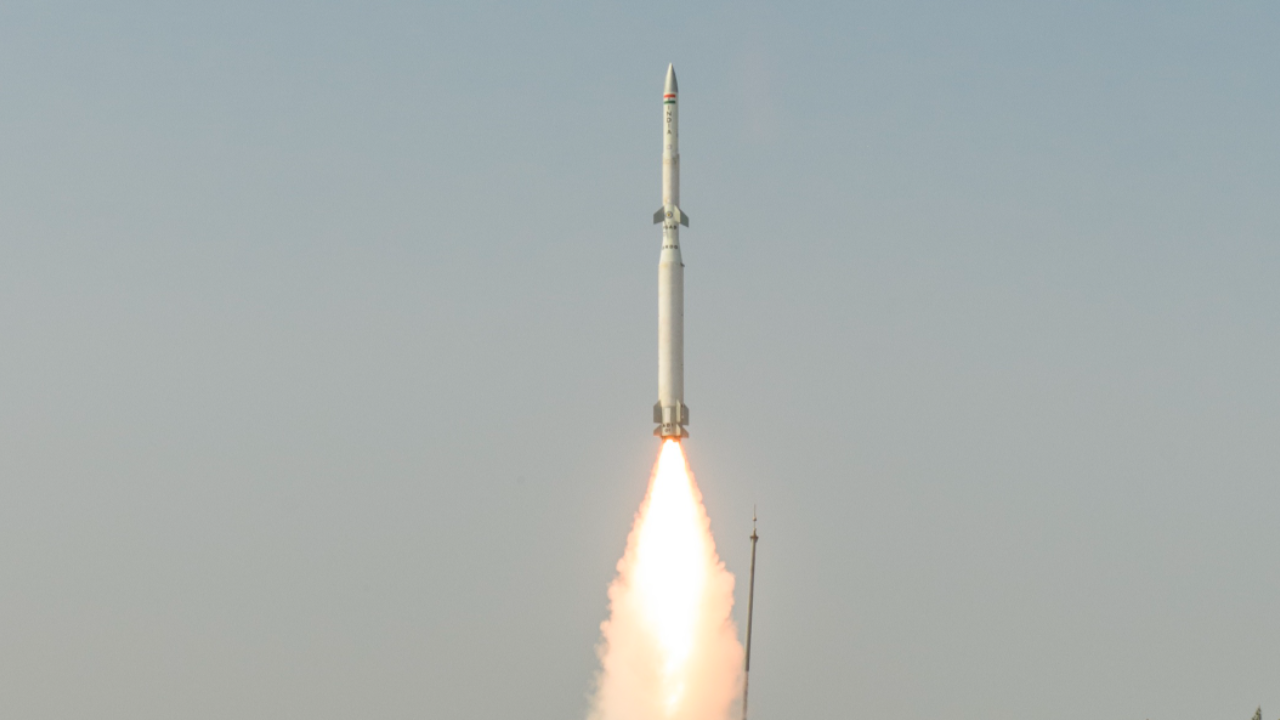
India has successfully conducted a series of missile defence trials, showcasing significant improvements in its capabilities to intercept aerial threats. These tests have validated the country's ability to effectively counter various types of ballistic missiles.
The development of India's own Ballistic Missile Defence (BMD) system is a crucial step towards enhancing its defence capabilities. This indigenous system is designed to counter modern threats, placing India among the nations with advanced missile defence systems.
Russia's S-500 Prometheus system is known for its advanced capabilities against ballistic missiles. However, with India's progress in developing its own BMD system, the need for the S-500 is being reevaluated. The S-500 offers cutting-edge technology, but India's indigenous system is rapidly advancing, changing the equation.
India's BMD system consists of multiple layers, including the Prithvi Defence Vehicle (PDV) and the Advanced Area Defence (AAD) system. These systems are designed to intercept ballistic missiles at different ranges and altitudes, providing a comprehensive defence shield.
The development of India's own missile defence system is a strategic move, aimed at reducing dependence on foreign technology. This approach will enable India to have greater control over its defence capabilities, allowing for more flexibility and autonomy in its defence strategy.
The progress made by India in its missile defence trials is a significant achievement, demonstrating the country's growing capabilities in this field. As India continues to develop its indigenous BMD system, it is likely to have a major impact on the country's defence strategy and its relationships with other nations.
The implications of India's advancing missile defence capabilities are far-reaching. With its own BMD system, India will be better equipped to counter modern threats, enhancing its national security. This development will also have significant implications for the region, as India's growing defence capabilities will likely influence the balance of power in South Asia.
In conclusion, India's recent missile defence trials have demonstrated significant advancements in its capabilities, changing the equation for the need of Russia's S-500 system. As India continues to develop its indigenous BMD system, it is likely to have a major impact on the country's defence strategy and its relationships with other nations.
Frequently asked questions
What is India's Ballistic Missile Defence system?
India's Ballistic Missile Defence system is an indigenous system designed to counter modern threats, consisting of multiple layers including the Prithvi Defence Vehicle and the Advanced Area Defence system.
How does India's BMD system impact its defence strategy?
India's BMD system will enable the country to have greater control over its defence capabilities, allowing for more flexibility and autonomy in its defence strategy, and enhancing its national security.