SC: BCI Can't Discipline Law Students Before Enrolment
SC rules BCI has no power, NALSAR law university case heard
'%3E%3Crect%20width%3D'96'%20height%3D'96'%20fill%3D'%231A5276'%2F%3E%3Ccircle%20cx%3D'30'%20cy%3D'24'%20r%3D'44'%20fill%3D'%23fff'%20opacity%3D'.12'%2F%3E%3Ccircle%20cx%3D'60'%20cy%3D'74'%20r%3D'40'%20fill%3D'%23000'%20opacity%3D'.10'%2F%3E%3C%2Fg%3E%3Cg%20fill%3D'%23fff'%3E%3Cpath%20d%3D'M31%2041%20L48%2031%20L65%2041%20Z'%2F%3E%3Crect%20x%3D'33'%20y%3D'43'%20width%3D'4'%20height%3D'17'%2F%3E%3Crect%20x%3D'41'%20y%3D'43'%20width%3D'4'%20height%3D'17'%2F%3E%3Crect%20x%3D'51'%20y%3D'43'%20width%3D'4'%20height%3D'17'%2F%3E%3Crect%20x%3D'59'%20y%3D'43'%20width%3D'4'%20height%3D'17'%2F%3E%3Crect%20x%3D'30'%20y%3D'62'%20width%3D'36'%20height%3D'4'%20rx%3D'1'%2F%3E%3C%2Fg%3E%3C%2Fsvg%3E)
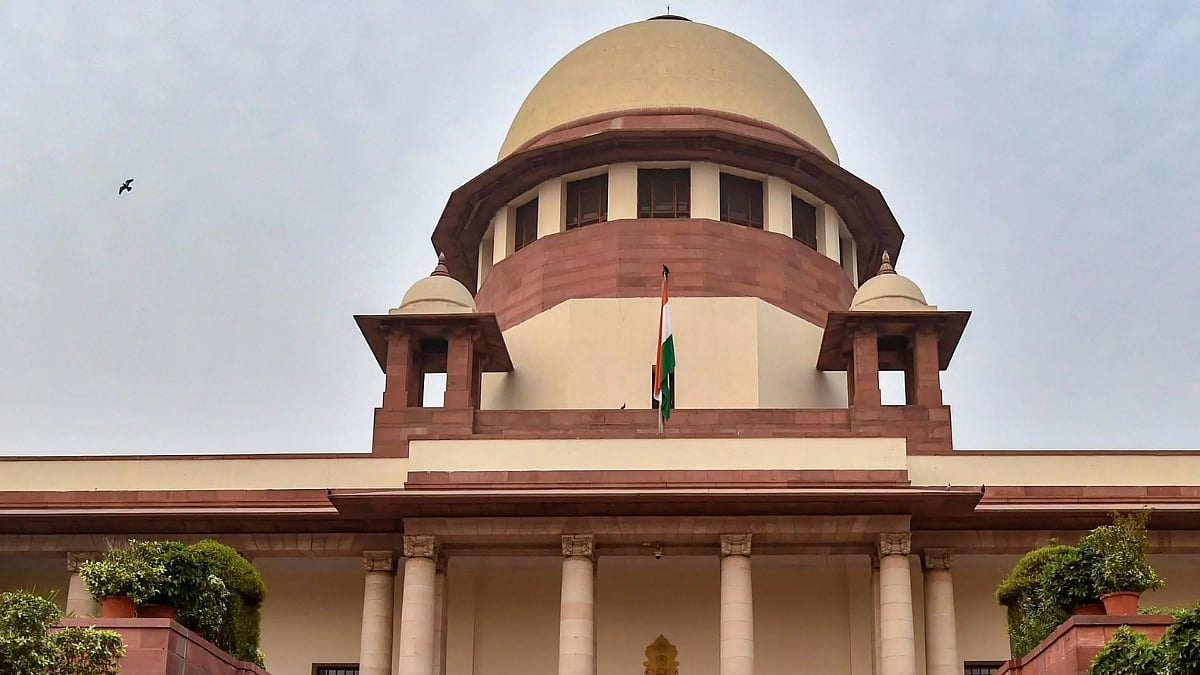
The Supreme Court has ruled that the Bar Council of India (BCI) has no authority to take disciplinary action against law students before they are enrolled as advocates.
The ruling came during the hearing of the NALSAR law university case, where the BCI had issued an order against the students and later withdrew it. A bench headed by Chief Justice of India Surya Kant made it clear that the BCI and State Bar Councils do not possess the statutory authority to initiate disciplinary action against law students.
The court stated that a Bar Council gets disciplinary jurisdiction over a law graduate only after they are enrolled as an advocate. The bench added that the BCI has neither jurisdiction nor statutory competence to deal with the conduct of law students, which falls exclusively within the domain of the educational institution or university.
The directives issued by BCI Chairman Manan Kumar Mishra on August 13 were declared to be without any legal authority. The BCI Chairman had directed that graduates of the university not be enrolled after students objected to Chief Justice of India Surya Kant being invited as a guest at the convocation.
However, after facing massive backlash, the BCI retracted its earlier decision and clarified that all 2026 NALSAR graduates could enrol as advocates. Mishra also apologised to law students, saying he sincerely regretted and apologised if any of his words or letters connected with the controversy had hurt their feelings.
The Supreme Court's ruling has significant implications for the regulation of law students in India. It establishes that the BCI's role is limited to regulating the conduct of enrolled advocates, and that educational institutions have the primary responsibility for disciplining their students.
The NALSAR law university case had sparked a controversy over the role of the BCI in regulating law students. The case had highlighted the need for clarity on the jurisdiction of the BCI and the limits of its authority.
The Supreme Court's ruling provides much-needed clarity on this issue, and establishes that the BCI's authority is limited to enrolled advocates. This ruling is expected to have a significant impact on the regulation of law students in India, and will likely be welcomed by educational institutions and law students alike.
In conclusion, the Supreme Court's ruling is a significant development in the regulation of law students in India. It establishes the limits of the BCI's authority and provides clarity on the jurisdiction of the BCI and educational institutions. This ruling is expected to have a positive impact on the regulation of law students in India, and will likely be seen as a victory for educational institutions and law students.
The ruling also highlights the importance of respecting the autonomy of educational institutions and the need for clarity on the jurisdiction of regulatory bodies. It is a significant step forward in the development of a clear and consistent regulatory framework for law students in India.
Overall, the Supreme Court's ruling is a welcome development that provides much-needed clarity on the regulation of law students in India. It is expected to have a positive impact on the regulation of law students and will likely be seen as a significant step forward in the development of a clear and consistent regulatory framework for law students in India.
Frequently asked questions
Can the BCI discipline law students before enrolment?
No, the Supreme Court has ruled that the BCI has no authority to take disciplinary action against law students before they are enrolled as advocates.
What is the BCI's role in regulating law students?
The BCI's role is limited to regulating the conduct of enrolled advocates, and educational institutions have the primary responsibility for disciplining their students.