India Plans Ethanol ATMs For Cooking Fuel
India to sell ethanol through vending machines, reducing LPG dependence.
'%3E%3Crect%20width%3D'96'%20height%3D'96'%20fill%3D'%23B3261E'%2F%3E%3Ccircle%20cx%3D'30'%20cy%3D'24'%20r%3D'44'%20fill%3D'%23fff'%20opacity%3D'.12'%2F%3E%3Ccircle%20cx%3D'60'%20cy%3D'74'%20r%3D'40'%20fill%3D'%23000'%20opacity%3D'.10'%2F%3E%3C%2Fg%3E%3Cg%20fill%3D'%23fff'%3E%3Crect%20x%3D'29'%20y%3D'49'%20width%3D'8'%20height%3D'19'%20rx%3D'1'%2F%3E%3Crect%20x%3D'39'%20y%3D'40'%20width%3D'9'%20height%3D'28'%20rx%3D'1'%2F%3E%3Crect%20x%3D'50'%20y%3D'45'%20width%3D'8'%20height%3D'23'%20rx%3D'1'%2F%3E%3Crect%20x%3D'60'%20y%3D'53'%20width%3D'7'%20height%3D'15'%20rx%3D'1'%2F%3E%3Crect%20x%3D'41'%20y%3D'34'%20width%3D'5'%20height%3D'6'%2F%3E%3C%2Fg%3E%3C%2Fsvg%3E)
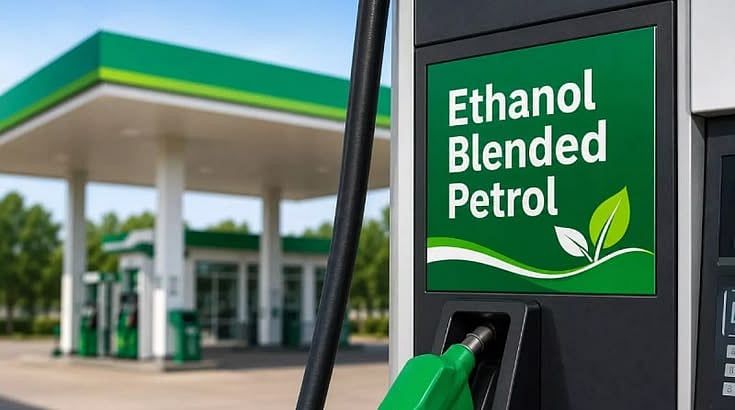
The Indian government has met its 20 percent ethanol blending target in petrol and is now exploring new ways to utilize its surplus ethanol production. One such idea is the introduction of ethanol ATMs, which would allow households to buy ethanol for cooking directly from fuel retail outlets.
An ethanol ATM refers to a dispensing kiosk or automated machine that oil marketing companies may set up at existing fuel retail outlets. This machine would dispense ethanol in canisters for household use, similar to how petrol or diesel is currently dispensed at fuel stations.
The government plans to begin with a pilot phase, installing initial canister dispensing kiosks at select outlets to test consumer response before any wider deployment. The push for ethanol as cooking fuel comes as India's annual ethanol production capacity has crossed 20 billion litres, with another 4 billion litres expected to be added during the current financial year.
Of the total production capacity, only around 11 billion litres are consumed annually under the E20 petrol blending programme, while the liquor, pharmaceutical, and chemical industries use another 3 to 3.5 billion litres. This leaves an estimated 7 billion litres of production capacity sitting unused, prompting the government to look at fresh avenues of demand.
The proposal is also driven by concerns around India's dependence on imported LPG, much of which is sourced from Gulf countries and shipped through the Strait of Hormuz. The disruption in global energy markets during the recent conflict in West Asia exposed the vulnerability of this supply chain.
To make the shift viable for households, the government is reportedly considering a subsidy mechanism to support ethanol-based cooking. This could take the form of either a one-time capital subsidy for ethanol stoves or an ongoing fiscal incentive to encourage adoption.
The introduction of ethanol ATMs is part of a broader plan to expand ethanol's role beyond automotive fuel. The government and state-run oil marketing companies are discussing ways to utilize surplus ethanol production, including cooking fuel, sustainable aviation fuel, flex fuel vehicles, and exports to neighboring countries.
The energy security angle is a significant factor in the government's decision to promote ethanol as cooking fuel. By reducing dependence on imported LPG, India can mitigate the risks associated with global energy market disruptions.
In conclusion, the introduction of ethanol ATMs in India is a significant development that could reduce the country's dependence on imported LPG and promote energy security. With the government's support and industry involvement, ethanol-based cooking could become a viable alternative for households in the near future.
The success of this initiative will depend on various factors, including consumer adoption, subsidy mechanisms, and the availability of ethanol stoves. However, with India's surplus ethanol production and the government's commitment to promoting energy security, the prospects for ethanol ATMs look promising.
As the country moves forward with this initiative, it will be essential to monitor the progress and address any challenges that arise. The introduction of ethanol ATMs is a step in the right direction, and it could have a significant impact on India's energy landscape in the years to come.
The government's plan to promote ethanol as cooking fuel is a testament to its commitment to reducing dependence on imported fuels and promoting energy security. With the right support and infrastructure, ethanol ATMs could become a common sight in India, providing households with a convenient and sustainable alternative to traditional cooking fuels.
In the long run, the introduction of ethanol ATMs could have a significant impact on India's energy sector, reducing the country's dependence on imported fuels and promoting energy security. As the country continues to explore new ways to utilize its surplus ethanol production, the prospects for a more sustainable energy future look promising.
The Indian government's initiative to introduce ethanol ATMs is a significant step towards promoting energy security and reducing dependence on imported fuels. With the right support and infrastructure, this initiative could have a lasting impact on the country's energy landscape.
The introduction of ethanol ATMs is a significant development that could reduce India's dependence on imported LPG and promote energy security. As the country moves forward with this initiative, it will be essential to monitor the progress and address any challenges that arise.
In conclusion, the introduction of ethanol ATMs in India is a significant development that could promote energy security and reduce dependence on imported fuels. With the government's support and industry involvement, ethanol-based cooking could become a viable alternative for households in the near future.
Frequently asked questions
What is an ethanol ATM?
An ethanol ATM is a dispensing kiosk or automated machine that dispenses ethanol in canisters for household use.
Why is the government promoting ethanol as cooking fuel?
The government is promoting ethanol as cooking fuel to reduce dependence on imported LPG and promote energy security.