India Expands Airborne Surveillance Fleet
India triples airborne surveillance fleet, boosts air defence by 2028.
'%3E%3Crect%20width%3D'96'%20height%3D'96'%20fill%3D'%234A235A'%2F%3E%3Ccircle%20cx%3D'30'%20cy%3D'24'%20r%3D'44'%20fill%3D'%23fff'%20opacity%3D'.12'%2F%3E%3Ccircle%20cx%3D'60'%20cy%3D'74'%20r%3D'40'%20fill%3D'%23000'%20opacity%3D'.10'%2F%3E%3C%2Fg%3E%3Cg%20fill%3D'none'%20stroke%3D'%23fff'%20stroke-width%3D'3'%3E%3Ccircle%20cx%3D'48'%20cy%3D'48'%20r%3D'16'%2F%3E%3Cellipse%20cx%3D'48'%20cy%3D'48'%20rx%3D'6.5'%20ry%3D'16'%2F%3E%3Cline%20x1%3D'32'%20y1%3D'42'%20x2%3D'64'%20y2%3D'42'%2F%3E%3Cline%20x1%3D'32'%20y1%3D'54'%20x2%3D'64'%20y2%3D'54'%2F%3E%3C%2Fg%3E%3C%2Fsvg%3E)
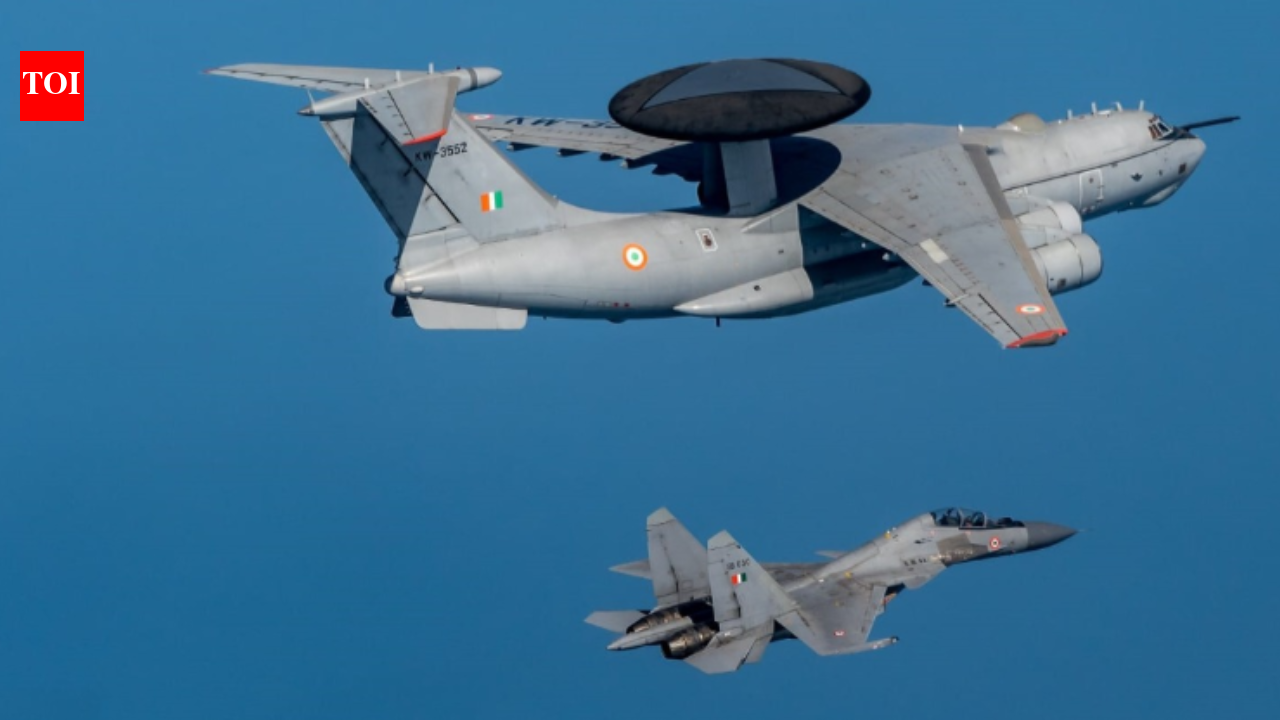
India is undertaking a significant expansion of its airborne surveillance fleet to enhance its air defence capabilities.
The expansion plan includes the introduction of new Netra Mk-1A aircraft, which will triple the size of the indigenous fleet by 2028. This move is expected to substantially improve the country's ability to detect and respond to airborne threats.
The Netra Mk-1A aircraft are part of a broader effort to upgrade India's airborne surveillance capabilities. The Netra Mk-2 program, which is currently underway, aims to develop advanced indigenous Airborne Warning and Control System (AWACS) platforms by 2032.
As a result of this expansion, the fleet size is expected to increase from six to eighteen aircraft. This significant increase in capacity will provide the Indian military with comprehensive battlespace awareness and networked force capabilities, enabling it to better detect and respond to airborne threats.
The expansion of the airborne surveillance fleet is a critical component of India's overall strategy to enhance its air defence capabilities. By leveraging advanced technologies and indigenous development, India aims to create a robust and effective air defence system that can detect and destroy airborne threats before they strike.
The introduction of new aircraft and systems will also enable the Indian military to improve its situational awareness and decision-making capabilities. With a larger and more advanced fleet, India will be better equipped to respond to a wide range of airborne threats, from enemy aircraft to missiles and drones.
The development of advanced indigenous AWACS platforms is a key aspect of India's defence modernization strategy. By investing in indigenous development, India aims to reduce its dependence on foreign technologies and create a self-sufficient defence industry.
Overall, the expansion of India's airborne surveillance fleet is a significant step towards enhancing the country's air defence capabilities. With a larger and more advanced fleet, India will be better equipped to detect and respond to airborne threats, and to protect its airspace from potential attacks.
The significance of this expansion cannot be overstated, as it will have a major impact on India's national security. With a robust and effective air defence system, India will be able to safeguard its airspace and protect its citizens from potential threats.
Frequently asked questions
What is the purpose of India's airborne surveillance fleet expansion?
The expansion aims to enhance India's air defence capabilities and provide comprehensive battlespace awareness.
How many aircraft will India have in its airborne surveillance fleet by 2028?
The fleet size is expected to increase from six to eighteen aircraft.