Supreme Court Denies Bail To Undertrial After 8 Years
Undertrial spends 8 years in jail, Supreme Court denies bail. Trial to be completed in 6 months.
'%3E%3Crect%20width%3D'96'%20height%3D'96'%20fill%3D'%23B3261E'%2F%3E%3Ccircle%20cx%3D'30'%20cy%3D'24'%20r%3D'44'%20fill%3D'%23fff'%20opacity%3D'.12'%2F%3E%3Ccircle%20cx%3D'60'%20cy%3D'74'%20r%3D'40'%20fill%3D'%23000'%20opacity%3D'.10'%2F%3E%3C%2Fg%3E%3Cg%20fill%3D'%23fff'%3E%3Crect%20x%3D'29'%20y%3D'49'%20width%3D'8'%20height%3D'19'%20rx%3D'1'%2F%3E%3Crect%20x%3D'39'%20y%3D'40'%20width%3D'9'%20height%3D'28'%20rx%3D'1'%2F%3E%3Crect%20x%3D'50'%20y%3D'45'%20width%3D'8'%20height%3D'23'%20rx%3D'1'%2F%3E%3Crect%20x%3D'60'%20y%3D'53'%20width%3D'7'%20height%3D'15'%20rx%3D'1'%2F%3E%3Crect%20x%3D'41'%20y%3D'34'%20width%3D'5'%20height%3D'6'%2F%3E%3C%2Fg%3E%3C%2Fsvg%3E)
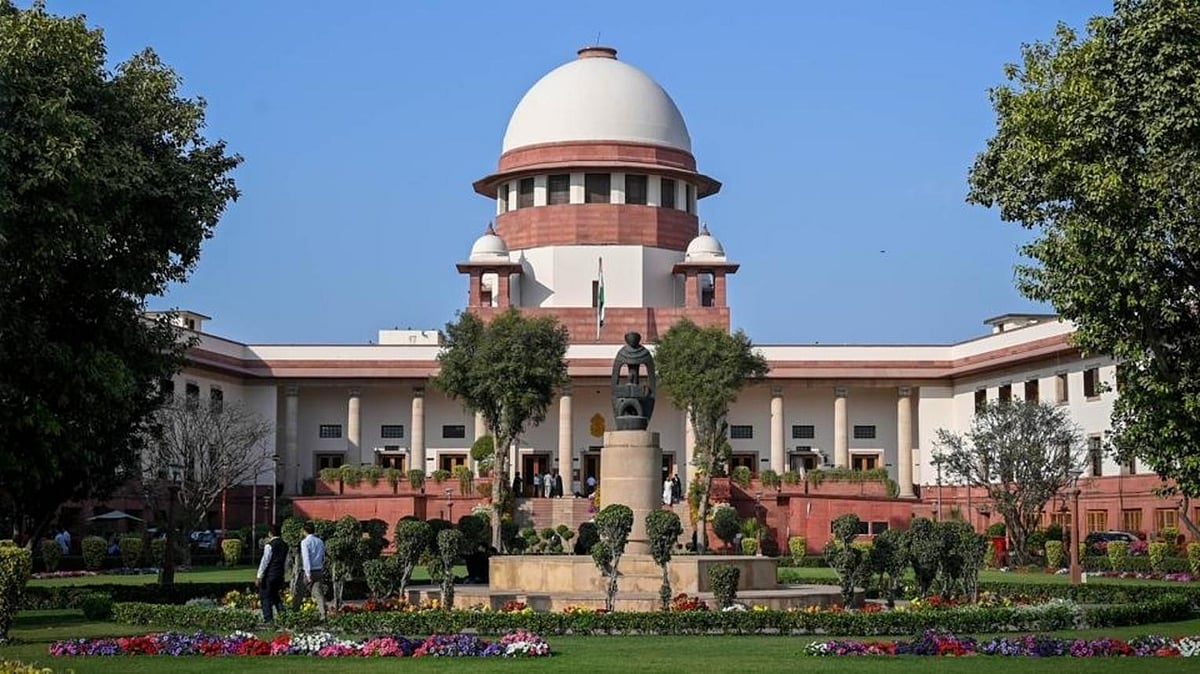
The Supreme Court has denied bail to an undertrial who has been in judicial custody for over eight years in a burglary case. The court cited the undertrial's alleged involvement in similar offences in the past as the reason for denying bail.
The case relates to a burglary at a jewellery shop in Kolkata, where the petitioner and others allegedly assaulted the shop owner and his employees before taking jewellery worth ₹21,66,048.
The Supreme Court expressed concern over the slow pace of the trial, noting that only six witnesses had been examined so far despite the petitioner spending eight years and six months in custody.
The court described the situation as 'shocking' and ordered that the trial be completed within six months.
The petitioner's bail plea was rejected by the Calcutta High Court, following which he approached the Supreme Court.
The Supreme Court made it clear that the unusually long period of incarceration was a serious concern, but declined to exercise its discretion in favour of the petitioner due to his antecedents.
The bench noted that the petitioner had previously been involved in offences of the same nature as the one in which he is facing trial.
The case highlights the tension in the criminal justice system, where a suspect's antecedents can weigh against bail, but spending more than eight years in custody raises serious questions about the pace of justice.
The Supreme Court directed the trial court to proceed expeditiously and complete the entire trial within six months from the date of its order, without fail.
The court also directed that the disposal of the trial be reported back to it.
The direction puts the responsibility squarely on the trial court to bring the case to a conclusion within a fixed timeframe.
The Supreme Court disposed of the petition with these directions.
The case has sparked concerns about the slow pace of trials in India and the impact it has on undertrials.
The Supreme Court's order is seen as a step towards ensuring that trials are completed in a timely manner and that undertrials do not spend years in custody without a verdict.
The case is a reminder of the need for a more efficient and effective criminal justice system in India.
Frequently asked questions
How long has the undertrial been in jail?
The undertrial has been in jail for over 8 years.
Why did the Supreme Court deny bail?
The Supreme Court denied bail due to the undertrial's alleged involvement in similar offences in the past.