Student Protests Erupt in Ranchi and Delhi
Students protest in Ranchi and Delhi, demanding fair exams and jobs.
'%3E%3Crect%20width%3D'96'%20height%3D'96'%20fill%3D'%231A5276'%2F%3E%3Ccircle%20cx%3D'30'%20cy%3D'24'%20r%3D'44'%20fill%3D'%23fff'%20opacity%3D'.12'%2F%3E%3Ccircle%20cx%3D'60'%20cy%3D'74'%20r%3D'40'%20fill%3D'%23000'%20opacity%3D'.10'%2F%3E%3C%2Fg%3E%3Cg%20fill%3D'%23fff'%3E%3Cpath%20d%3D'M31%2041%20L48%2031%20L65%2041%20Z'%2F%3E%3Crect%20x%3D'33'%20y%3D'43'%20width%3D'4'%20height%3D'17'%2F%3E%3Crect%20x%3D'41'%20y%3D'43'%20width%3D'4'%20height%3D'17'%2F%3E%3Crect%20x%3D'51'%20y%3D'43'%20width%3D'4'%20height%3D'17'%2F%3E%3Crect%20x%3D'59'%20y%3D'43'%20width%3D'4'%20height%3D'17'%2F%3E%3Crect%20x%3D'30'%20y%3D'62'%20width%3D'36'%20height%3D'4'%20rx%3D'1'%2F%3E%3C%2Fg%3E%3C%2Fsvg%3E)
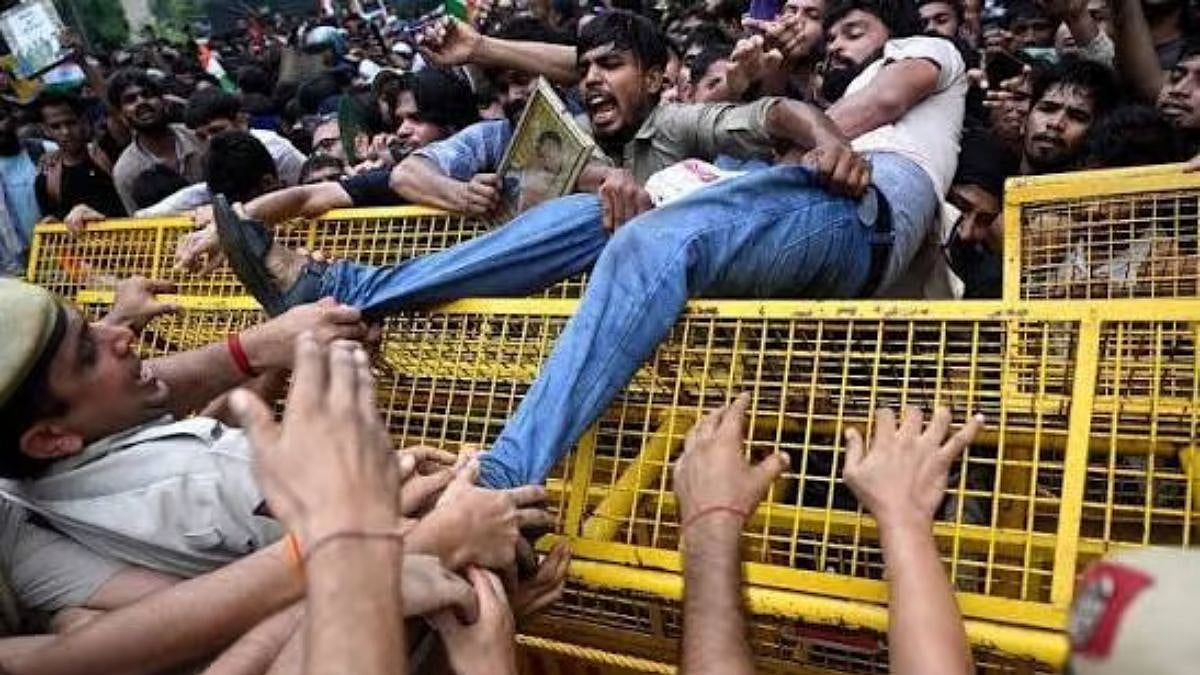
A young man in Ranchi lies on a stretcher, weakened by nine days of hunger strike, after clearing prelims multiple times but never seeing a final appointment list. Around him, women wipe away tear gas, clutching faded admit cards that represent years of unpaid labor and family sacrifices.
In Delhi, teenagers in cockroach masks had earlier protested at Jantar Mantar, demanding action against a union minister. Despite the different locations and governments, the demand is the same: stop treating their futures as disposable.
The protests in Ranchi and Delhi are not about party politics, but about the broken promises of the system. The students are demanding accountability for the anomalies in the exam results, including alleged seat sales and manipulated answer sheets.
The faces in Ranchi are not just of Gen Z, but also of men and women in their late twenties and thirties who have spent years preparing for exams that keep springing leaks. They have sold ancestral land, delayed starting families, and accumulated a decade of quiet humiliation.
The same personal fury had filled Jantar Mantar after the NEET paper leak. Different exams, different ages, same wound: the growing certainty that the system treats sincerity as foolishness and patience as weakness.
Every serious protest is political because it confronts power. The Jantar Mantar agitation was political, forcing a union minister's resignation. The Ranchi agitation is political, producing CID arrests and government offers to cancel certain examinations.
Parties have offered solidarity and support to the protesters, recognizing the electoral value of youth anger. However, this does not define or own the anger itself. The protests are a demand for accountability and fairness, not a tool for party politics.
The system needs to answer for its broken promises, and the students will not back down. The protests in Ranchi and Delhi are a testament to the power of youth anger and the demand for a fair and just system.
The government needs to take concrete steps to address the anomalies in the exam results and ensure that the system is fair and transparent. The students have made it clear that they will not be silenced, and their demand for accountability will not be ignored.
In conclusion, the student protests in Ranchi and Delhi are a wake-up call for the system to take responsibility for its actions. The demand for fairness and accountability is not a partisan issue, but a fundamental right of the students. The government needs to listen to their demands and take concrete steps to address the issues, rather than trying to politicize the protests.
The protests have already produced results, with the government offering to cancel certain examinations and the CID arresting individuals involved in the anomalies. However, this is just the beginning, and the students will continue to demand justice and fairness until their demands are met.
The student protests in Ranchi and Delhi are a reminder that the power of youth anger and demand for accountability can bring about change. The system needs to take notice and take concrete steps to address the issues, rather than trying to silence the protesters.
In the end, the student protests in Ranchi and Delhi are not just about the exams or the jobs, but about the fundamental right to a fair and just system. The students have made it clear that they will not be ignored, and their demand for accountability will not be silenced.
Frequently asked questions
What are the students protesting in Ranchi and Delhi?
The students are protesting against the anomalies in the exam results, including alleged seat sales and manipulated answer sheets.
What do the students want from the government?
The students want the government to take concrete steps to address the anomalies and ensure that the system is fair and transparent.