Powai Residents Protest Unplanned Commercial Growth
500 residents protest, demand infrastructure before new projects. Protest against haphazard development, enviornment damage and congestion.
'%3E%3Crect%20width%3D'96'%20height%3D'96'%20fill%3D'%23B3261E'%2F%3E%3Ccircle%20cx%3D'30'%20cy%3D'24'%20r%3D'44'%20fill%3D'%23fff'%20opacity%3D'.12'%2F%3E%3Ccircle%20cx%3D'60'%20cy%3D'74'%20r%3D'40'%20fill%3D'%23000'%20opacity%3D'.10'%2F%3E%3C%2Fg%3E%3Cg%20fill%3D'%23fff'%3E%3Crect%20x%3D'29'%20y%3D'49'%20width%3D'8'%20height%3D'19'%20rx%3D'1'%2F%3E%3Crect%20x%3D'39'%20y%3D'40'%20width%3D'9'%20height%3D'28'%20rx%3D'1'%2F%3E%3Crect%20x%3D'50'%20y%3D'45'%20width%3D'8'%20height%3D'23'%20rx%3D'1'%2F%3E%3Crect%20x%3D'60'%20y%3D'53'%20width%3D'7'%20height%3D'15'%20rx%3D'1'%2F%3E%3Crect%20x%3D'41'%20y%3D'34'%20width%3D'5'%20height%3D'6'%2F%3E%3C%2Fg%3E%3C%2Fsvg%3E)
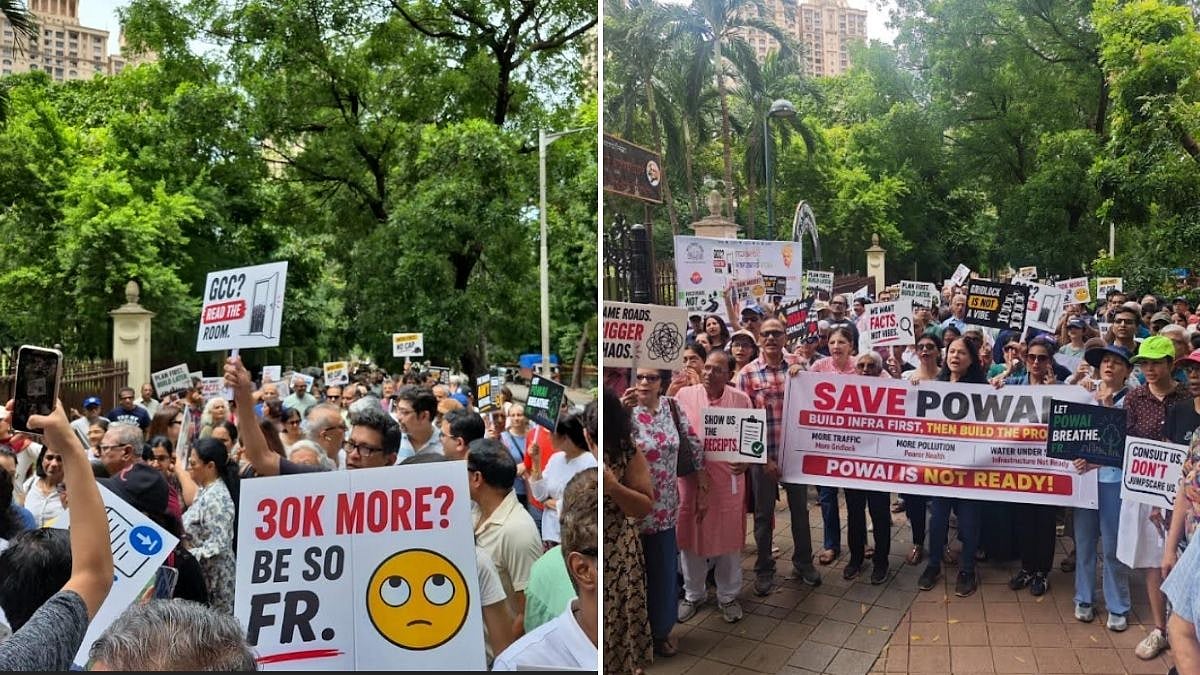
Around 500 residents of Powai took to the streets on Sunday to protest against the extensive and unplanned commercial development in the area. The protest, titled 'SAVE POWAI - Build Infra First, Then Build The Project', was organised by the Powai Action Forum and saw residents marching from Haiko to Atal Park, carrying placards.
The residents are not against development, but are demanding responsible and evidence-based urban planning. They estimate that new commercial projects will add over 20,000 vehicle trips every day, potentially causing a gridlock in the Powai-Chandivali corridor. The residents are demanding that the government assess all existing, approved, and proposed developments together and conduct a cumulative impact assessment covering traffic, water, sewage, drainage, emergency access, and the environment.
According to Milan Bhatt, a resident of Powai and ALM secretary, the government needs to look at the cumulative impact of all the projects together, rather than individually. 'We already have a 30,000-seat Global Capacity Centre coming up, and existing commercial and residential developments are being redeveloped or expanded,' he said.
Pamela Cheema, Chairperson of the Powai ALM, pointed out that the Powai Chandivali corridor is already saturated with development and cannot sustain any further expansion. 'The present infrastructure is completely over-stressed and cannot cope with any more so-called development,' she said.
Meanwhile, BGRE, the company developing the Global Capacity Centre, said that they believe commercial growth must align with sustainable urban development. 'We respect the concerns raised by residents and will continue to work with the community and all stakeholders to address them constructively,' a company spokesperson said.
The protest highlights the need for responsible and sustainable urban planning in Mumbai. The city's infrastructure is already under strain, and unplanned development can have severe consequences for the environment and residents. The government needs to take a holistic approach to development, considering the cumulative impact of all projects on the city's infrastructure and environment.
The residents of Powai are demanding that the government prioritize infrastructure development before approving new projects. This includes upgrading the city's roads, public transport, and utilities to accommodate the growing population and commercial activity. The government needs to strike a balance between economic growth and sustainable development, ensuring that the city's infrastructure can support the needs of its residents and businesses.
In conclusion, the protest by Powai residents highlights the need for responsible and sustainable urban planning in Mumbai. The government needs to take a holistic approach to development, considering the cumulative impact of all projects on the city's infrastructure and environment. By prioritizing infrastructure development and sustainable urban planning, the government can ensure that Mumbai's growth is balanced and sustainable.
The issue of unplanned development is not unique to Powai, and it is a challenge that many areas in Mumbai face. The city's rapid growth and urbanization have put a strain on its infrastructure, and it is essential that the government takes a proactive approach to address these issues. By engaging with residents and stakeholders, the government can develop solutions that balance economic growth with sustainable development and ensure that Mumbai remains a livable and sustainable city.
As the city continues to grow and develop, it is essential that the government prioritizes the needs of its residents and businesses. This includes investing in infrastructure development, upgrading public transport, and promoting sustainable urban planning. By doing so, the government can ensure that Mumbai's growth is balanced and sustainable, and that the city remains a great place to live and work.
In the context of Mumbai's development, the protest by Powai residents is a significant event. It highlights the need for responsible and sustainable urban planning and the importance of prioritizing infrastructure development. The government needs to take a holistic approach to development, considering the cumulative impact of all projects on the city's infrastructure and environment. By doing so, the government can ensure that Mumbai's growth is balanced and sustainable, and that the city remains a livable and sustainable city.
The protest also underscores the importance of community engagement and participation in the development process. The residents of Powai are not just demanding that the government prioritize infrastructure development, but they are also seeking to be involved in the decision-making process. This is essential for ensuring that the city's development is inclusive and sustainable, and that the needs of all stakeholders are taken into account.
In conclusion, the protest by Powai residents is a significant event that highlights the need for responsible and sustainable urban planning in Mumbai. The government needs to prioritize infrastructure development, engage with residents and stakeholders, and promote sustainable urban planning. By doing so, the government can ensure that Mumbai's growth is balanced and sustainable, and that the city remains a livable and sustainable city.
The significance of the protest lies in its ability to bring attention to the issues of unplanned development and the need for sustainable urban planning. The protest demonstrates that residents are willing to take a stand and demand that the government prioritizes their needs and the needs of the city. It also highlights the importance of community engagement and participation in the development process, and the need for the government to take a holistic approach to development.
As the city moves forward, it is essential that the government takes the concerns of the residents of Powai into account. The government needs to prioritize infrastructure development, promote sustainable urban planning, and engage with residents and stakeholders. By doing so, the government can ensure that Mumbai's growth is balanced and sustainable, and that the city remains a livable and sustainable city.
In the end, the protest by Powai residents is a call to action for the government to prioritize sustainable urban planning and infrastructure development. The government needs to take a proactive approach to address the issues of unplanned development and ensure that the city's growth is balanced and sustainable. By doing so, the government can ensure that Mumbai remains a great place to live and work, and that the city's development is inclusive and sustainable.
The protest is also a reminder that the city's development is not just about economic growth, but also about the well-being of its residents and the environment. The government needs to strike a balance between economic growth and sustainable development, ensuring that the city's infrastructure can support the needs of its residents and businesses. By prioritizing infrastructure development and sustainable urban planning, the government can ensure that Mumbai's growth is balanced and sustainable, and that the city remains a livable and sustainable city.
In conclusion, the protest by Powai residents is a significant event that highlights the need for responsible and sustainable urban planning in Mumbai. The government needs to prioritize infrastructure development, engage with residents and stakeholders, and promote sustainable urban planning. By doing so, the government can ensure that Mumbai's growth is balanced and sustainable, and that the city remains a livable and sustainable city.
What it means for Mumbai is that the city needs to prioritize sustainable urban planning and infrastructure development. The government needs to take a holistic approach to development, considering the cumulative impact of all projects on the city's infrastructure and environment. By doing so, the government can ensure that Mumbai's growth is balanced and sustainable, and that the city remains a livable and sustainable city.
The city's development is not just about economic growth, but also about the well-being of its residents and the environment. The government needs to strike a balance between economic growth and sustainable development, ensuring that the city's infrastructure can support the needs of its residents and businesses. By prioritizing infrastructure development and sustainable urban planning, the government can ensure that Mumbai's growth is balanced and sustainable, and that the city remains a livable and sustainable city.
In the end, the protest by Powai residents is a call to action for the government to prioritize sustainable urban planning and infrastructure development. The government needs to take a proactive approach to address the issues of unplanned development and ensure that the city's growth is balanced and sustainable. By doing so, the government can ensure that Mumbai remains a great place to live and work, and that the city's development is inclusive and sustainable.
Frequently asked questions
What is the main demand of the Powai residents?
The residents are demanding that the government prioritize infrastructure development before approving new projects.
What is the estimated impact of new commercial projects on traffic in the area?
The residents estimate that new commercial projects will add over 20,000 vehicle trips every day, potentially causing a gridlock in the Powai-Chandivali corridor.