SC Rejects Plea to Abolish Hanging
SC upholds hanging, permits expert panel to review alternatives
'%3E%3Crect%20width%3D'96'%20height%3D'96'%20fill%3D'%231A5276'%2F%3E%3Ccircle%20cx%3D'30'%20cy%3D'24'%20r%3D'44'%20fill%3D'%23fff'%20opacity%3D'.12'%2F%3E%3Ccircle%20cx%3D'60'%20cy%3D'74'%20r%3D'40'%20fill%3D'%23000'%20opacity%3D'.10'%2F%3E%3C%2Fg%3E%3Cg%20fill%3D'%23fff'%3E%3Cpath%20d%3D'M31%2041%20L48%2031%20L65%2041%20Z'%2F%3E%3Crect%20x%3D'33'%20y%3D'43'%20width%3D'4'%20height%3D'17'%2F%3E%3Crect%20x%3D'41'%20y%3D'43'%20width%3D'4'%20height%3D'17'%2F%3E%3Crect%20x%3D'51'%20y%3D'43'%20width%3D'4'%20height%3D'17'%2F%3E%3Crect%20x%3D'59'%20y%3D'43'%20width%3D'4'%20height%3D'17'%2F%3E%3Crect%20x%3D'30'%20y%3D'62'%20width%3D'36'%20height%3D'4'%20rx%3D'1'%2F%3E%3C%2Fg%3E%3C%2Fsvg%3E)
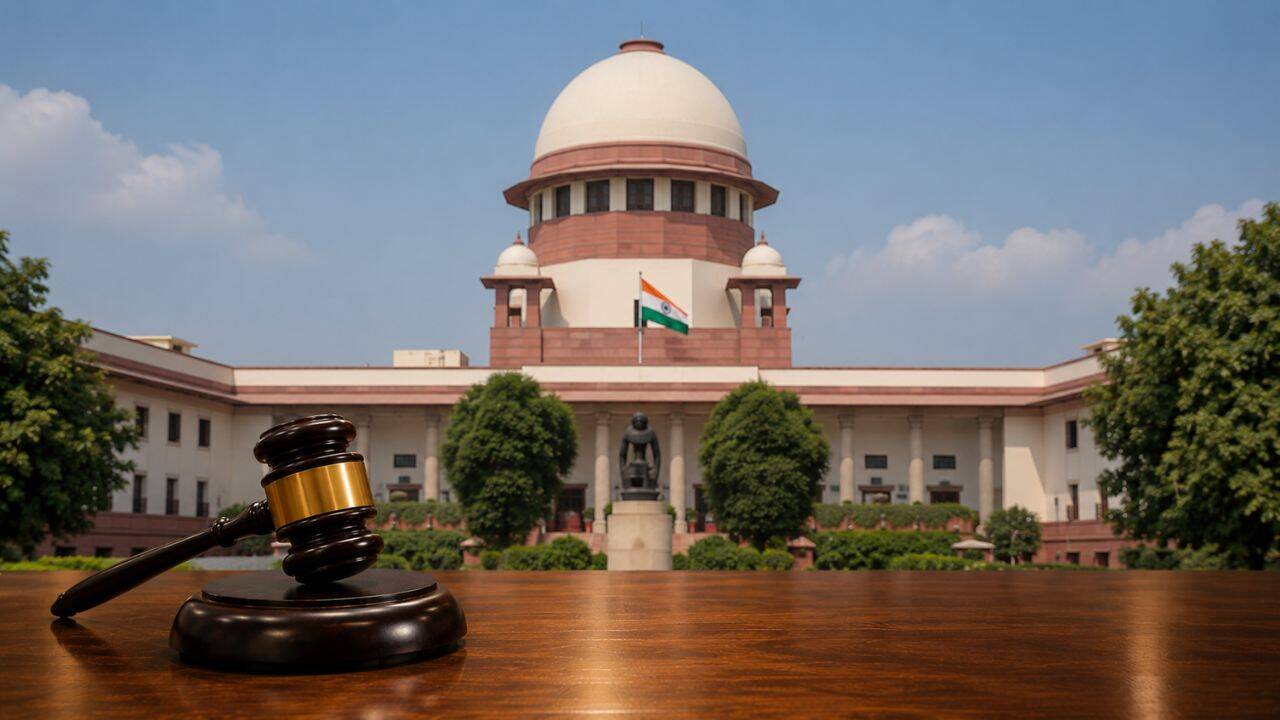
The Supreme Court of India has declined to abolish hanging as a method of execution, despite a plea to do so. The court's decision comes after considering the possibility of alternative methods, such as lethal injection, shooting, or electrocution. However, the court has left the door open for future reconsideration, should new scientific evidence emerge that suggests a more humane method of execution.
The Centre has been permitted to form an expert panel, which will examine alternative execution methods with the aim of reducing pain. This panel will review the available evidence and make recommendations on the most suitable methods. In the meantime, hanging will remain the primary method of execution in India.
The use of hanging as a method of execution has been a topic of debate in India for some time. While some argue that it is a necessary deterrent, others claim that it is an inhumane and outdated practice. The Supreme Court's decision to permit an expert panel to review alternative methods suggests that the court is open to reconsidering the use of hanging in the future.
The expert panel will be tasked with examining the available evidence on alternative execution methods, including lethal injection, shooting, and electrocution. The panel will also consider the ethical and humanitarian implications of each method, as well as their potential impact on the criminal justice system.
In recent years, there have been several high-profile cases in which the use of hanging as a method of execution has been called into question. These cases have highlighted the need for a more humane and effective method of execution, and have sparked a wider debate about the use of capital punishment in India.
The Supreme Court's decision to permit an expert panel to review alternative execution methods is a significant development in this debate. While the use of hanging will continue for the time being, the possibility of alternative methods being adopted in the future is a positive step towards a more humane and just criminal justice system.
The decision is also significant because it highlights the importance of scientific evidence in informing policy decisions. The court's willingness to consider new evidence and to permit an expert panel to review alternative methods suggests that the court is committed to ensuring that the criminal justice system is based on the best available evidence.
In conclusion, the Supreme Court's decision to reject the plea to abolish hanging is a significant development in the debate about the use of capital punishment in India. While the use of hanging will continue for the time being, the possibility of alternative methods being adopted in the future is a positive step towards a more humane and just criminal justice system.
Frequently asked questions
What is the current method of execution in India?
The current method of execution in India is hanging.
Will the use of hanging be abolished in the future?
The Supreme Court has left the door open for future reconsideration, should new scientific evidence emerge.