India Launches GOBARdhan Scheme for Biofuel Production
India aims to turn waste into fuel, targeting 10x growth in bioenergy.
'%3E%3Crect%20width%3D'96'%20height%3D'96'%20fill%3D'%23B3261E'%2F%3E%3Ccircle%20cx%3D'30'%20cy%3D'24'%20r%3D'44'%20fill%3D'%23fff'%20opacity%3D'.12'%2F%3E%3Ccircle%20cx%3D'60'%20cy%3D'74'%20r%3D'40'%20fill%3D'%23000'%20opacity%3D'.10'%2F%3E%3C%2Fg%3E%3Cg%20fill%3D'%23fff'%3E%3Crect%20x%3D'29'%20y%3D'49'%20width%3D'8'%20height%3D'19'%20rx%3D'1'%2F%3E%3Crect%20x%3D'39'%20y%3D'40'%20width%3D'9'%20height%3D'28'%20rx%3D'1'%2F%3E%3Crect%20x%3D'50'%20y%3D'45'%20width%3D'8'%20height%3D'23'%20rx%3D'1'%2F%3E%3Crect%20x%3D'60'%20y%3D'53'%20width%3D'7'%20height%3D'15'%20rx%3D'1'%2F%3E%3Crect%20x%3D'41'%20y%3D'34'%20width%3D'5'%20height%3D'6'%2F%3E%3C%2Fg%3E%3C%2Fsvg%3E)
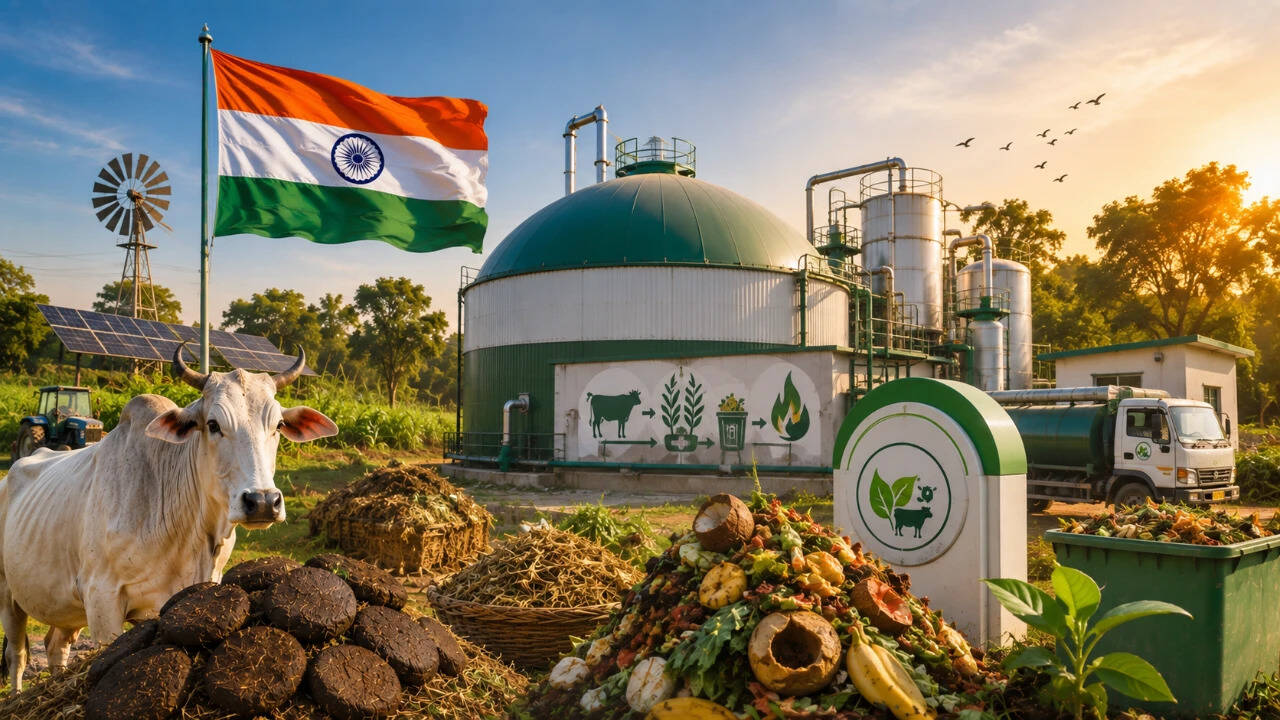
India has launched the GOBARdhan scheme, a groundbreaking initiative that seeks to convert agricultural residue, cattle dung, and other organic waste into compressed biogas, a valuable fuel source. The scheme aims to achieve a ten-fold growth in compressed biogas production, which will not only enhance energy security but also promote rural development.
The government has put in place a framework that provides capital assistance to producers, ensuring that they have the necessary resources to set up and operate biogas plants. Additionally, the government has assured a demand for the produced biogas, providing a stable market for the fuel.
The GOBARdhan scheme is a crucial step towards building a national bioenergy industry, which will utilize organic waste to produce fuel. This initiative will help reduce the country's dependence on fossil fuels, mitigate climate change, and create new employment opportunities in rural areas.
Agricultural residue and cattle dung are abundant in India, and converting them into fuel will help reduce waste disposal problems. The scheme will also promote the use of renewable energy sources, contributing to a cleaner and healthier environment.
The Indian government's efforts to promote bioenergy production are part of a broader strategy to enhance energy security and reduce greenhouse gas emissions. The GOBARdhan scheme is a significant step towards achieving these goals, and its success will have a positive impact on the country's energy landscape.
The scheme's focus on rural development is also noteworthy, as it will create new economic opportunities for farmers and rural communities. By providing a stable market for biogas, the government is encouraging farmers to adopt sustainable practices and reduce their dependence on fossil fuels.
In the coming years, the GOBARdhan scheme is expected to play a vital role in shaping India's energy future. As the country continues to grow and develop, the demand for energy will increase, and the scheme will help meet this demand in a sustainable and environmentally friendly manner.
The success of the GOBARdhan scheme will depend on the effective implementation of the government's policies and the participation of stakeholders, including farmers, producers, and consumers. However, the potential benefits of the scheme are significant, and it has the potential to transform India's energy landscape and promote sustainable development.
In conclusion, the GOBARdhan scheme is a pioneering initiative that aims to convert waste into fuel, promoting energy security, rural development, and environmental sustainability. As India continues to grow and develop, the scheme will play a crucial role in shaping the country's energy future and promoting a cleaner and healthier environment.
Frequently asked questions
What is the GOBARdhan scheme?
The GOBARdhan scheme is an initiative that aims to convert agricultural residue, cattle dung, and other organic waste into compressed biogas, a valuable fuel source.
What are the benefits of the GOBARdhan scheme?
The scheme promotes energy security, rural development, and environmental sustainability, while also reducing waste disposal problems and greenhouse gas emissions.