Madhya Pradesh Procures Only 30 Tonnes Of Urad At ₹8,400
Madhya Pradesh government faces low procurement of urad, farmers prefer moong.
'%3E%3Crect%20width%3D'96'%20height%3D'96'%20fill%3D'%23B3261E'%2F%3E%3Ccircle%20cx%3D'30'%20cy%3D'24'%20r%3D'44'%20fill%3D'%23fff'%20opacity%3D'.12'%2F%3E%3Ccircle%20cx%3D'60'%20cy%3D'74'%20r%3D'40'%20fill%3D'%23000'%20opacity%3D'.10'%2F%3E%3C%2Fg%3E%3Cg%20fill%3D'%23fff'%3E%3Crect%20x%3D'29'%20y%3D'49'%20width%3D'8'%20height%3D'19'%20rx%3D'1'%2F%3E%3Crect%20x%3D'39'%20y%3D'40'%20width%3D'9'%20height%3D'28'%20rx%3D'1'%2F%3E%3Crect%20x%3D'50'%20y%3D'45'%20width%3D'8'%20height%3D'23'%20rx%3D'1'%2F%3E%3Crect%20x%3D'60'%20y%3D'53'%20width%3D'7'%20height%3D'15'%20rx%3D'1'%2F%3E%3Crect%20x%3D'41'%20y%3D'34'%20width%3D'5'%20height%3D'6'%2F%3E%3C%2Fg%3E%3C%2Fsvg%3E)
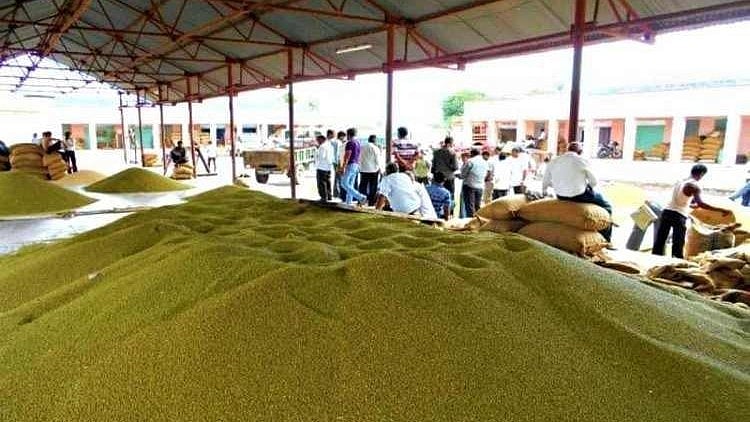
The Madhya Pradesh government has been urging farmers to produce more urad, also known as black gram, and tilhan, or oilseeds, instead of moong, or green gram. However, the farmers have been resistant to this proposal, leading to a standoff between the government and the farmers over the procurement of moong at the minimum support price (MSP).
The state government has been offering a price of ₹7,800 per quintal for urad, with an additional bonus of ₹600 per quintal, bringing the total price to ₹8,400 per quintal. Despite this, the government has only been able to procure 30 tonnes of urad since July 1, when the procurement process began.
According to sources, the market rate for urad varies between ₹6,500 and ₹10,200 per quintal, with farmers preferring to sell their produce to traders at mandis rather than to the government. The government's efforts to encourage farmers to grow urad have been unsuccessful, as farmers continue to prefer growing moong.
The output of urad in the state has been 4.73 lakh tonnes, but the low procurement rate has raised concerns about the effectiveness of the government's support price policy. The government's inability to procure urad at the MSP has led to tensions between the government and the farmers, with the farmers demanding better prices for their produce.
The situation has been further complicated by the fact that the market rates for urad are higher than the MSP, making it more lucrative for farmers to sell their produce to private traders rather than to the government. The government will need to re-evaluate its strategy to encourage farmers to grow urad and to improve the procurement process.
The standoff between the government and the farmers has significant implications for the agricultural sector in Madhya Pradesh. The government's support price policy is intended to provide a safety net for farmers, but the low procurement rate for urad suggests that the policy may not be effective in practice.
In conclusion, the Madhya Pradesh government's efforts to promote the growth of urad have been unsuccessful, leading to a low procurement rate and tensions between the government and the farmers. The government will need to reassess its strategy to support farmers and to improve the procurement process for urad.
The situation highlights the challenges faced by the government in implementing its support price policy and the need for a more effective approach to encourage farmers to grow urad. The government's inability to procure urad at the MSP has raised concerns about the effectiveness of the policy and the need for a review of the procurement process.
The issue has also sparked protests from farmers, who are demanding better prices for their produce. The government will need to address the concerns of the farmers and to find a solution to the standoff over the procurement of moong at the MSP.
In the end, the government's goal of promoting the growth of urad and supporting farmers through the MSP policy will require a more effective approach to procurement and a better understanding of the needs and concerns of farmers.
Frequently asked questions
What is the minimum support price of urad in Madhya Pradesh?
The minimum support price of urad in Madhya Pradesh is ₹8,400 per quintal, which includes a bonus of ₹600 per quintal.
How much urad has the Madhya Pradesh government procured?
The Madhya Pradesh government has procured only 30 tonnes of urad since July 1.