NCP Leadership Challenged
NCP faces rift, leadership challenged. Party secretary questions election validity.
'%3E%3Crect%20width%3D'96'%20height%3D'96'%20fill%3D'%231A5276'%2F%3E%3Ccircle%20cx%3D'30'%20cy%3D'24'%20r%3D'44'%20fill%3D'%23fff'%20opacity%3D'.12'%2F%3E%3Ccircle%20cx%3D'60'%20cy%3D'74'%20r%3D'40'%20fill%3D'%23000'%20opacity%3D'.10'%2F%3E%3C%2Fg%3E%3Cg%20fill%3D'%23fff'%3E%3Cpath%20d%3D'M31%2041%20L48%2031%20L65%2041%20Z'%2F%3E%3Crect%20x%3D'33'%20y%3D'43'%20width%3D'4'%20height%3D'17'%2F%3E%3Crect%20x%3D'41'%20y%3D'43'%20width%3D'4'%20height%3D'17'%2F%3E%3Crect%20x%3D'51'%20y%3D'43'%20width%3D'4'%20height%3D'17'%2F%3E%3Crect%20x%3D'59'%20y%3D'43'%20width%3D'4'%20height%3D'17'%2F%3E%3Crect%20x%3D'30'%20y%3D'62'%20width%3D'36'%20height%3D'4'%20rx%3D'1'%2F%3E%3C%2Fg%3E%3C%2Fsvg%3E)
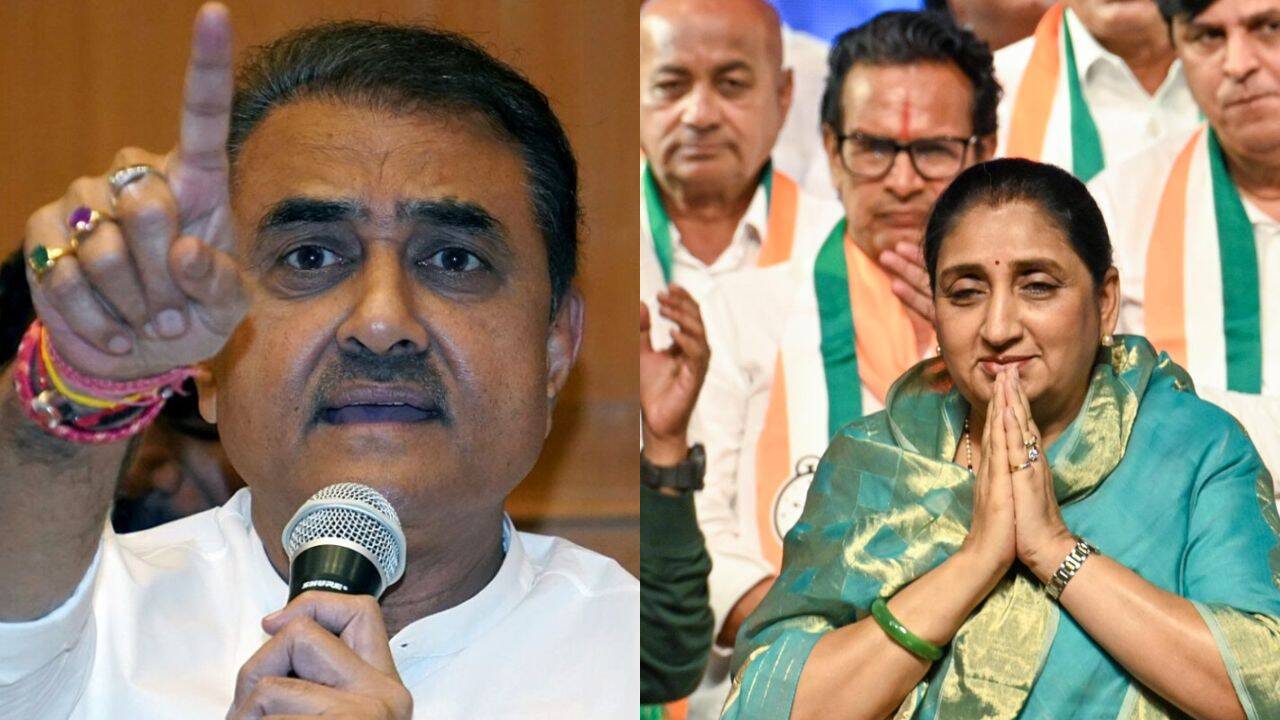
A significant rift has emerged within the Nationalist Congress Party (NCP) as a party secretary has issued a legal notice challenging the election of Sunetra Pawar as the national president. This development comes after senior leader Praful Patel acknowledged the existence of a leadership vacuum within the party and emphasized the need for corrective measures to address the issue.
The legal notice specifically questions the validity of the election process that led to Sunetra Pawar's takeover, suggesting that there were inconsistencies in the constitutional protocols followed during the election. Furthermore, it highlights discrepancies in the party's submissions to the Election Commission, which could potentially undermine the legitimacy of the election outcome.
The party secretary's challenge to Sunetra Pawar's election is based on allegations of irregularities in the electoral process. The notice demands that the party takes immediate action to declare the election and the subsequent list of office-bearers null and void within a period of fifteen days.
The NCP, founded by Sharad Pawar, has been a key player in Indian politics, particularly in the state of Maharashtra. The party has been part of several coalition governments, both at the state and national levels. However, internal conflicts and leadership struggles have been a recurring theme within the party, affecting its stability and cohesion.
Praful Patel's admission of a leadership vacuum and the need for corrective measures indicates a recognition of the deep-seated issues plaguing the party. The challenge to Sunetra Pawar's election serves as a manifestation of these internal struggles, which could have significant implications for the party's future.
The NCP's internal rift and the challenge to its leadership come at a critical time for Indian politics, with various state and national elections on the horizon. The party's ability to resolve its internal conflicts and present a united front will be crucial in determining its electoral fortunes and its continued relevance in the political landscape.
In the context of Maharashtra, where the NCP has a significant presence, the party's internal struggles could impact the state's political dynamics. The NCP has been a key ally in the state's coalition governments, and any instability within the party could have ripple effects on the state's political equations.
The outcome of the legal notice and the party's response to the challenge will be closely watched, as it could set the stage for further developments within the NCP. The party's leadership will need to navigate this challenging situation carefully to ensure the NCP's continued viability and relevance in Indian politics.
The significance of this development for Mumbai and the broader Indian political landscape lies in its potential to impact the balance of power within coalition governments and the future electoral prospects of the NCP. As the party navigates this internal crisis, its ability to maintain unity and cohesion will be critical in determining its role in shaping the country's political future.
In conclusion, the challenge to Sunetra Pawar's election as NCP president highlights the deep-seated internal conflicts within the party. The outcome of this challenge will have significant implications for the NCP's future and its continued relevance in Indian politics. As the party moves forward, it will be essential for its leadership to address the underlying issues driving these conflicts to ensure the NCP's stability and cohesion.