India Develops New Engines for Missiles and Drones
India successfully develops turbojet engine and rotating detonation engine, enhancing missile capabilities.
'%3E%3Crect%20width%3D'96'%20height%3D'96'%20fill%3D'%23B3261E'%2F%3E%3Ccircle%20cx%3D'30'%20cy%3D'24'%20r%3D'44'%20fill%3D'%23fff'%20opacity%3D'.12'%2F%3E%3Ccircle%20cx%3D'60'%20cy%3D'74'%20r%3D'40'%20fill%3D'%23000'%20opacity%3D'.10'%2F%3E%3C%2Fg%3E%3Cg%20fill%3D'%23fff'%3E%3Crect%20x%3D'29'%20y%3D'49'%20width%3D'8'%20height%3D'19'%20rx%3D'1'%2F%3E%3Crect%20x%3D'39'%20y%3D'40'%20width%3D'9'%20height%3D'28'%20rx%3D'1'%2F%3E%3Crect%20x%3D'50'%20y%3D'45'%20width%3D'8'%20height%3D'23'%20rx%3D'1'%2F%3E%3Crect%20x%3D'60'%20y%3D'53'%20width%3D'7'%20height%3D'15'%20rx%3D'1'%2F%3E%3Crect%20x%3D'41'%20y%3D'34'%20width%3D'5'%20height%3D'6'%2F%3E%3C%2Fg%3E%3C%2Fsvg%3E)
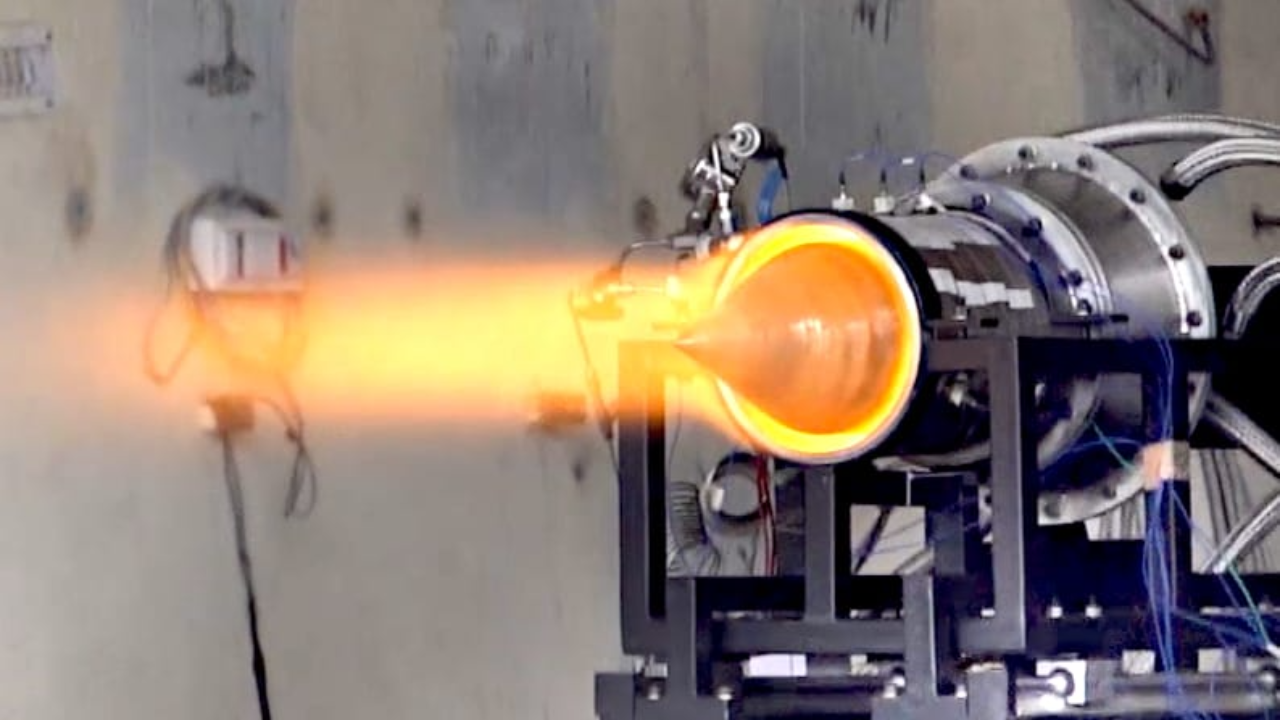
India has achieved a significant milestone in developing advanced propulsion systems, with the successful creation of a 350 kg class expendable turbojet engine for missiles. This engine, designed for use in missiles, has the potential to enhance the country's missile capabilities, allowing for faster and longer-range missiles.
The development of this engine is a result of extensive research and testing, and its success demonstrates India's growing capabilities in the field of advanced propulsion systems. In addition to the turbojet engine, India has also demonstrated a 5 kN thrust class rotating detonation engine, which promises to further enhance the country's missile capabilities.
The rotating detonation engine technology has the potential to provide a significant boost to India's missile program, enabling the development of faster and more agile missiles. This technology also has potential applications in other areas, such as drones and launch vehicle upper stages.
India's advancements in engine technology position the country among a select group of nations with advanced propulsion systems. This achievement is a testament to the country's growing expertise in the field of aerospace engineering and its commitment to developing cutting-edge technologies.
The development of these engines is expected to have a significant impact on India's defense capabilities, enabling the country to develop more advanced and effective missile systems. The technology also has potential applications in the civilian sector, such as in the development of drones and other unmanned aerial vehicles.
In the future, India plans to continue developing and refining its engine technology, with a focus on creating more advanced and efficient propulsion systems. This will enable the country to stay at the forefront of aerospace engineering and to develop new and innovative technologies.
The success of India's engine development program is a significant achievement, and it demonstrates the country's commitment to developing advanced technologies. As India continues to develop and refine its engine technology, it is likely to have a major impact on the country's defense and aerospace industries.
In terms of global implications, India's advancements in engine technology position the country as a major player in the field of aerospace engineering. This will enable India to develop more advanced and effective missile systems, and to compete with other major nations in the field of defense technology.
Overall, India's development of new engines for missiles and drones is a significant achievement, and it demonstrates the country's growing capabilities in the field of advanced propulsion systems. As the country continues to develop and refine its engine technology, it is likely to have a major impact on the country's defense and aerospace industries.
The development of these engines is a major step forward for India's defense capabilities, and it will enable the country to develop more advanced and effective missile systems. The technology also has potential applications in the civilian sector, and it is likely to have a significant impact on the country's aerospace industry.
In conclusion, India's development of new engines for missiles and drones is a significant achievement, and it demonstrates the country's commitment to developing advanced technologies. The success of this program will have a major impact on the country's defense and aerospace industries, and it will position India as a major player in the field of aerospace engineering.
Frequently asked questions
What type of engine has India developed for missiles?
India has developed a 350 kg class expendable turbojet engine for missiles.
What are the potential applications of India's new engine technology?
The technology has potential applications in drones, launch vehicle upper stages, and other areas.