Spanish Caves Uncover Repeated Cannibalism Evidence
Cannibalism found in Spanish caves, skull cups discovered, revealing violent past.
'%3E%3Crect%20width%3D'96'%20height%3D'96'%20fill%3D'%23B3261E'%2F%3E%3Ccircle%20cx%3D'30'%20cy%3D'24'%20r%3D'44'%20fill%3D'%23fff'%20opacity%3D'.12'%2F%3E%3Ccircle%20cx%3D'60'%20cy%3D'74'%20r%3D'40'%20fill%3D'%23000'%20opacity%3D'.10'%2F%3E%3C%2Fg%3E%3Cg%20fill%3D'%23fff'%3E%3Crect%20x%3D'29'%20y%3D'49'%20width%3D'8'%20height%3D'19'%20rx%3D'1'%2F%3E%3Crect%20x%3D'39'%20y%3D'40'%20width%3D'9'%20height%3D'28'%20rx%3D'1'%2F%3E%3Crect%20x%3D'50'%20y%3D'45'%20width%3D'8'%20height%3D'23'%20rx%3D'1'%2F%3E%3Crect%20x%3D'60'%20y%3D'53'%20width%3D'7'%20height%3D'15'%20rx%3D'1'%2F%3E%3Crect%20x%3D'41'%20y%3D'34'%20width%3D'5'%20height%3D'6'%2F%3E%3C%2Fg%3E%3C%2Fsvg%3E)
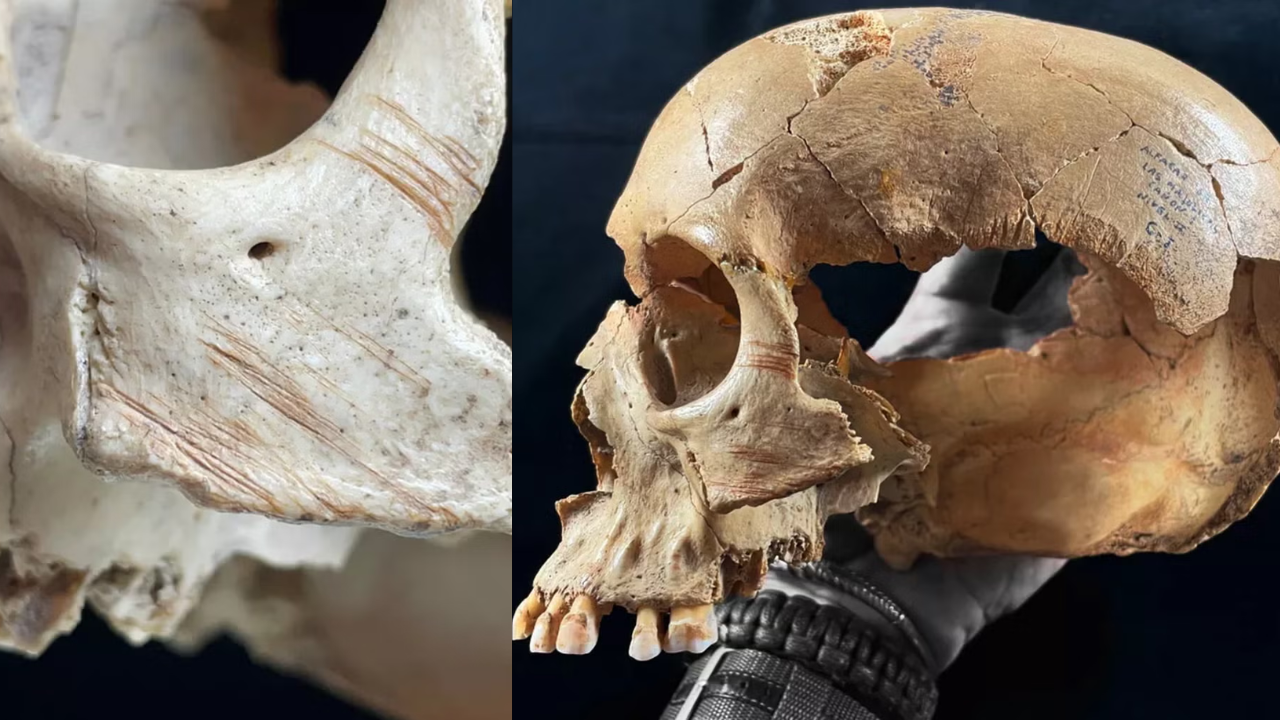
A recent discovery in Spanish caves has shed light on a dark and violent past, revealing evidence of repeated cannibalism. The caves, which have been the subject of archaeological excavations, have yielded a number of disturbing findings, including skull cups and other signs of violent behavior.
The evidence of cannibalism found in the caves suggests that it was a repeated and widespread practice, rather than an isolated incident. The discovery of skull cups, in particular, is a significant one, as it indicates that the cave's inhabitants were not only consuming human flesh but also using human skulls as vessels.
The caves, which are located in Spain, have been dated to the Mesolithic period, a time of significant cultural and social change in Europe. The discovery of cannibalism in the caves provides a unique insight into the lives and practices of the people who lived during this time.
The archaeological team that made the discovery has been studying the caves for several years, and their findings have been published in a number of academic journals. The team's research has provided a detailed picture of the cave's inhabitants and their practices, including their diet, social structure, and cultural beliefs.
The discovery of cannibalism in the Spanish caves is not the first time that evidence of this practice has been found in Europe. There have been several other discoveries of cannibalism in the region, including in the UK and France. However, the discovery in the Spanish caves is significant because of the scale and repetition of the practice.
The findings of the archaeological team have significant implications for our understanding of human history and the development of human societies. The discovery of cannibalism in the Spanish caves highlights the complexity and diversity of human cultures and practices, and challenges our assumptions about the nature of human society.
In addition to the discovery of skull cups, the archaeological team also found other signs of violent behavior, including evidence of torture and mutilation. The discovery of these practices provides a disturbing insight into the lives of the people who lived in the caves, and highlights the need for further research into the history of human violence.
The Spanish caves are a significant archaeological site, and the discovery of cannibalism and other violent practices has made them the subject of international attention. The site has been designated as a protected area, and further excavations are planned to uncover more about the lives and practices of the people who lived there.
The discovery of cannibalism in the Spanish caves is a reminder of the complexity and diversity of human history, and highlights the need for further research into the development of human societies. It also raises important questions about the nature of human violence and the factors that contribute to its development.
In conclusion, the discovery of repeated cannibalism in the Spanish caves is a significant one, providing a unique insight into the lives and practices of the people who lived during the Mesolithic period. The findings of the archaeological team have significant implications for our understanding of human history and the development of human societies, and highlight the need for further research into the history of human violence.
Frequently asked questions
What was discovered in the Spanish caves?
Evidence of repeated cannibalism, including skull cups and signs of violent behavior.
What period do the Spanish caves date back to?
The Mesolithic period, a time of significant cultural and social change in Europe.