Bank Strikes to Hit India from September 11
Bank services may be disrupted, Indian Bank, UCO Bank, BoM and PNB issue alerts. Strikes planned on September 11, 28, 29 and 30.
'%3E%3Crect%20width%3D'96'%20height%3D'96'%20fill%3D'%23B3261E'%2F%3E%3Ccircle%20cx%3D'30'%20cy%3D'24'%20r%3D'44'%20fill%3D'%23fff'%20opacity%3D'.12'%2F%3E%3Ccircle%20cx%3D'60'%20cy%3D'74'%20r%3D'40'%20fill%3D'%23000'%20opacity%3D'.10'%2F%3E%3C%2Fg%3E%3Cg%20fill%3D'%23fff'%3E%3Crect%20x%3D'29'%20y%3D'49'%20width%3D'8'%20height%3D'19'%20rx%3D'1'%2F%3E%3Crect%20x%3D'39'%20y%3D'40'%20width%3D'9'%20height%3D'28'%20rx%3D'1'%2F%3E%3Crect%20x%3D'50'%20y%3D'45'%20width%3D'8'%20height%3D'23'%20rx%3D'1'%2F%3E%3Crect%20x%3D'60'%20y%3D'53'%20width%3D'7'%20height%3D'15'%20rx%3D'1'%2F%3E%3Crect%20x%3D'41'%20y%3D'34'%20width%3D'5'%20height%3D'6'%2F%3E%3C%2Fg%3E%3C%2Fsvg%3E)
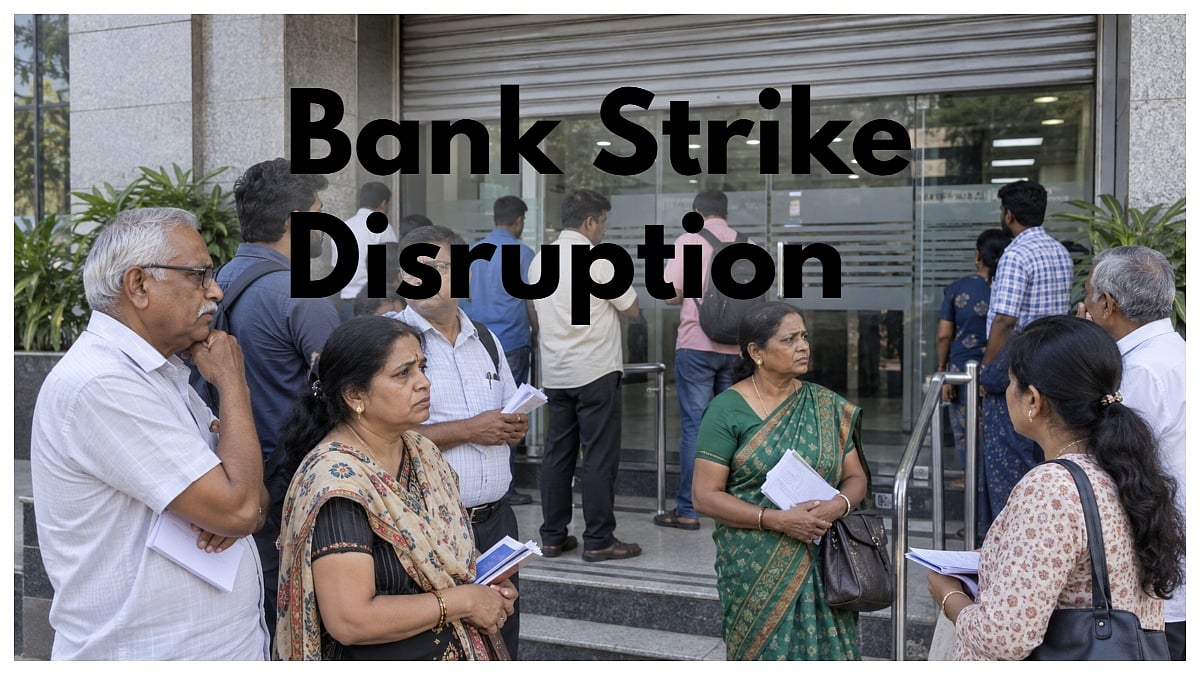
A nationwide bank strike is set to begin on September 11, with Indian Bank, UCO Bank, Bank of Maharashtra, and Punjab National Bank warning customers of possible service disruptions. The lenders have made arrangements to keep branches and offices operational, but normal banking services may be affected if employees participate in the proposed walkouts.
The United Forum of Bank Unions (UFBU), representing seven major employee and officer organisations, has called a one-day strike on September 11. The unions have also announced strikes on September 28, 29, and 30. Additionally, they have threatened to begin an indefinite strike from October 26, 2026, if their demands remain unresolved.
The key demands of the unions include the introduction of a five-day banking week and changes to the government's revised performance-linked incentive scheme for public-sector bank employees. They have argued that unresolved employment, welfare, and compensation issues require immediate attention. Discussions between employee representatives, banks, and the government are continuing.
The government has placed the performance-linked incentive scheme for 2025-26 on hold after employees sought changes to its structure. The decision followed a meeting between Finance Minister Nirmala Sitharaman and a delegation of public-sector bank employees led by the Bharatiya Mazdoor Sangh. Employees also raised concerns about ex-gratia payments and healthcare benefits for retired staff.
The strike may affect banking operations, including those of State Bank of India and Union Bank of India, which had earlier cautioned customers regarding the planned industrial action. The unions' demands are yet to be resolved, and the strike may cause disruptions to bank services across the country.
The banking sector is a critical part of the Indian economy, and any disruption to services may have a significant impact on businesses and individuals. The government and the unions are engaged in negotiations to resolve the issues, but the outcome is still uncertain.
In the meantime, customers are advised to check with their banks for any updates on the strike and its potential impact on services. The banks have assured that they will make arrangements to minimize the disruption, but it is essential for customers to be prepared for any eventuality.
The strike is a significant development in the banking sector, and its outcome may have far-reaching implications for the industry. The government and the unions must work together to resolve the issues and prevent any further disruptions to bank services.
The banking sector is a vital part of the Indian economy, and any disruption to services may have a significant impact on the country's economic growth. The strike may also affect the livelihoods of people who depend on banking services for their daily needs. Therefore, it is essential for the government and the unions to find a solution to the issues and prevent any further disruptions to bank services.
In conclusion, the nationwide bank strike is a significant development that may have a substantial impact on the banking sector and the Indian economy. The government and the unions must work together to resolve the issues and prevent any further disruptions to bank services. Customers are advised to be prepared for any eventuality and to check with their banks for any updates on the strike and its potential impact on services.
Frequently asked questions
What are the dates of the bank strike?
The strike is planned on September 11, 28, 29, and 30, with an indefinite strike from October 26, 2026.
What are the unions' key demands?
The unions are demanding a 5-day banking week and changes to the government's revised performance-linked incentive scheme for public-sector bank employees.