Hong Kong Punishes Tiananmen Vigil Organisers
Three to face punishment, civil society restricted
'%3E%3Crect%20width%3D'96'%20height%3D'96'%20fill%3D'%234A235A'%2F%3E%3Ccircle%20cx%3D'30'%20cy%3D'24'%20r%3D'44'%20fill%3D'%23fff'%20opacity%3D'.12'%2F%3E%3Ccircle%20cx%3D'60'%20cy%3D'74'%20r%3D'40'%20fill%3D'%23000'%20opacity%3D'.10'%2F%3E%3C%2Fg%3E%3Cg%20fill%3D'none'%20stroke%3D'%23fff'%20stroke-width%3D'3'%3E%3Ccircle%20cx%3D'48'%20cy%3D'48'%20r%3D'16'%2F%3E%3Cellipse%20cx%3D'48'%20cy%3D'48'%20rx%3D'6.5'%20ry%3D'16'%2F%3E%3Cline%20x1%3D'32'%20y1%3D'42'%20x2%3D'64'%20y2%3D'42'%2F%3E%3Cline%20x1%3D'32'%20y1%3D'54'%20x2%3D'64'%20y2%3D'54'%2F%3E%3C%2Fg%3E%3C%2Fsvg%3E)
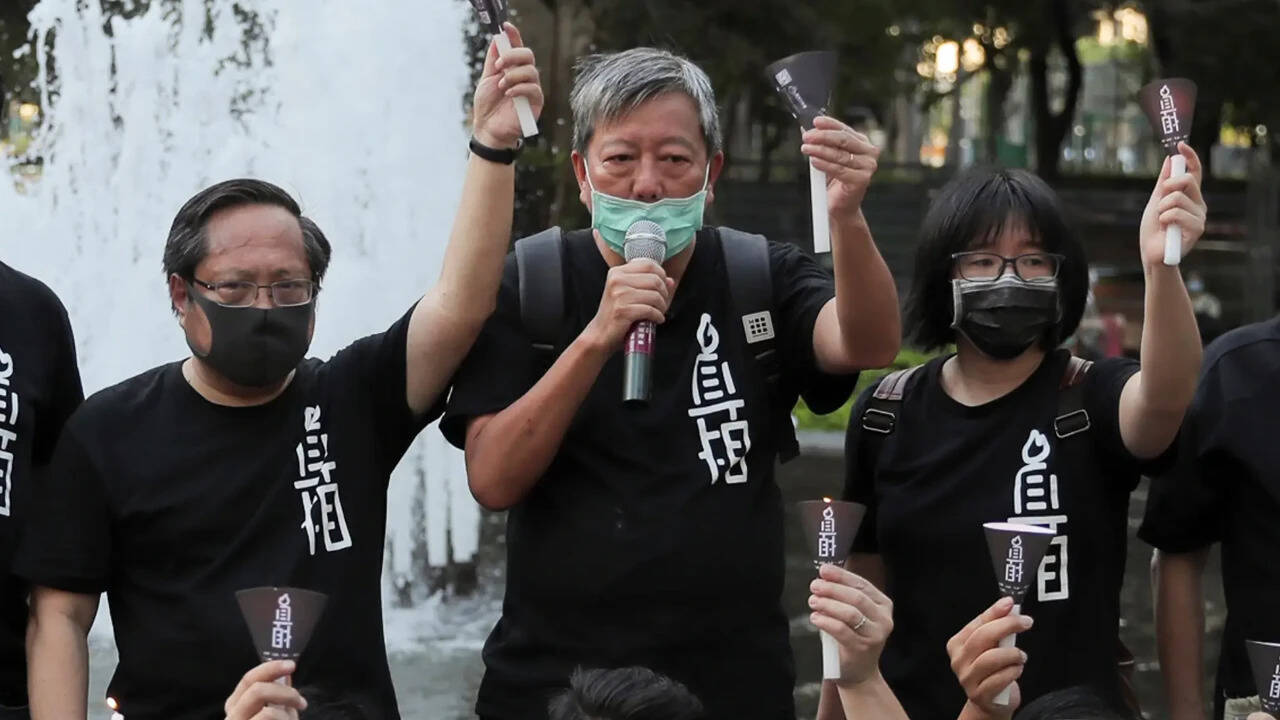
A Hong Kong court has ruled that three individuals who organised vigils for the Tiananmen massacre will be punished. This decision comes as the city's authorities continue to restrict political participation and prosecute prominent activists.
The Tiananmen massacre, which occurred in 1989, was a pivotal event in Chinese history, resulting in the deaths of hundreds of protesters. For years, Hong Kong has held annual vigils to commemorate the event, but these gatherings have become less frequent since the 2019 protest movement.
Since 2019, the Hong Kong authorities have taken a harder stance on civil society, restricting protests and prosecuting activists. Several civil society groups have shut down, including the alliance behind the Tiananmen gatherings. This crackdown has resulted in the prosecution of prominent media figures and activists.
In February, former pro-democracy media tycoon Jimmy Lai was sentenced to 20 years in prison under the security law. This sentence has been seen as a warning to others who dare to challenge the authorities. The punishment of the three individuals who organised the Tiananmen vigils is the latest in a series of moves to suppress dissent in Hong Kong.
The city's civil society has been significantly weakened since the 2019 protests. Many groups have disbanded, and those that remain are subject to strict regulations. The press has also become less open, with many media outlets facing pressure to self-censor.
The situation in Hong Kong has significant implications for the city's relationship with mainland China. The Chinese government has been increasingly assertive in its control over Hong Kong, and the city's autonomy has been eroded. The punishment of the three individuals who organised the Tiananmen vigils is a further example of this trend.
The international community has been critical of China's actions in Hong Kong. Many countries have expressed concern over the erosion of the city's autonomy and the suppression of dissent. The punishment of the three individuals who organised the Tiananmen vigils is likely to further strain relations between China and the international community.
In conclusion, the punishment of the three individuals who organised the Tiananmen vigils is a significant development in Hong Kong's ongoing struggle for autonomy and freedom. The city's civil society has been severely weakened, and the authorities continue to restrict political participation and prosecute activists. The international community must continue to monitor the situation in Hong Kong and speak out against the suppression of dissent.
The implications of this decision are far-reaching, and it remains to be seen how the situation in Hong Kong will unfold. One thing is certain, however: the punishment of the three individuals who organised the Tiananmen vigils is a blow to the city's civil society and a further erosion of its autonomy.
Frequently asked questions
What happened to the organisers of the Tiananmen vigils in Hong Kong?
Three individuals who organised the vigils will be punished.
What has happened to civil society in Hong Kong since the 2019 protests?
Civil society has been severely restricted, with many groups shutting down and activists being prosecuted.