China Glacier Sees 17% Ice Loss Drop
Cloud seeding experiment reduces ice loss. Scientists test new method.
'%3E%3Crect%20width%3D'96'%20height%3D'96'%20fill%3D'%234A235A'%2F%3E%3Ccircle%20cx%3D'30'%20cy%3D'24'%20r%3D'44'%20fill%3D'%23fff'%20opacity%3D'.12'%2F%3E%3Ccircle%20cx%3D'60'%20cy%3D'74'%20r%3D'40'%20fill%3D'%23000'%20opacity%3D'.10'%2F%3E%3C%2Fg%3E%3Cg%20fill%3D'none'%20stroke%3D'%23fff'%20stroke-width%3D'3'%3E%3Ccircle%20cx%3D'48'%20cy%3D'48'%20r%3D'16'%2F%3E%3Cellipse%20cx%3D'48'%20cy%3D'48'%20rx%3D'6.5'%20ry%3D'16'%2F%3E%3Cline%20x1%3D'32'%20y1%3D'42'%20x2%3D'64'%20y2%3D'42'%2F%3E%3Cline%20x1%3D'32'%20y1%3D'54'%20x2%3D'64'%20y2%3D'54'%2F%3E%3C%2Fg%3E%3C%2Fsvg%3E)
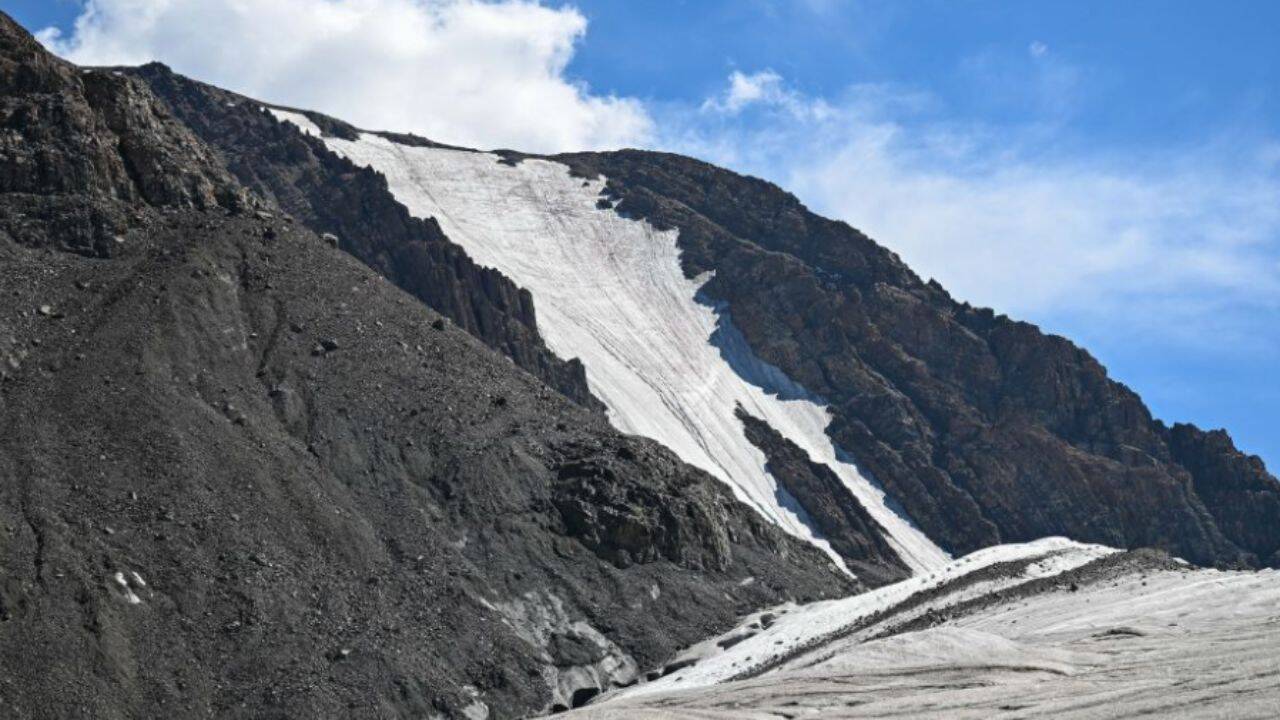
Scientists conducted an experiment in 2018 to test the effectiveness of cloud seeding over China's Muz Taw Glacier. The goal of the experiment was to create artificial snowfall and slow down ice loss. To achieve this, silver iodide generators were used to encourage snow formation.
The results of the experiment showed that the fresh snow made the glacier surface brighter and reduced the amount of ice lost over a short period. In fact, the ice loss fell by up to 17% after the cloud seeding.
The researchers involved in the experiment used a combination of field observations and remote sensing data to study the effects of cloud seeding on the glacier. They found that the artificial snowfall had a significant impact on the glacier's surface reflectivity, which in turn affected the amount of ice lost.
However, the researchers cautioned that the results are preliminary and need further testing to confirm their findings. They emphasized the need for more research to fully understand the effects of cloud seeding on glaciers and to determine its potential as a method for reducing ice loss.
Glaciers like the Muz Taw Glacier are important indicators of climate change, and their melting can have significant impacts on the environment. The loss of glacier ice can contribute to sea level rise, affect water supplies, and alter ecosystems.
The use of cloud seeding as a method for reducing ice loss is still in its early stages, and more research is needed to determine its effectiveness. However, the preliminary results of this experiment suggest that it may be a promising approach for mitigating the effects of climate change on glaciers.
The experiment's findings have implications for glacier conservation and management. If cloud seeding can be shown to be effective in reducing ice loss, it could be used as a tool for protecting glaciers and mitigating the impacts of climate change.
In conclusion, the cloud seeding experiment over China's Muz Taw Glacier has shown promising results, with a reduction in ice loss of up to 17%. While more research is needed to confirm these findings, the experiment highlights the potential of cloud seeding as a method for reducing ice loss and mitigating the effects of climate change on glaciers.
Frequently asked questions
What is cloud seeding?
Cloud seeding is a method of creating artificial snowfall by introducing substances like silver iodide into clouds.
How effective is cloud seeding in reducing ice loss?
The experiment showed a 17% drop in ice loss, but the results are preliminary and need further testing.