Bangladesh Seeks India's Stand on Hasina's Virtual Address
Bangladesh seeks India's clarification, fears destabilization. India's response awaited.
'%3E%3Crect%20width%3D'96'%20height%3D'96'%20fill%3D'%234A235A'%2F%3E%3Ccircle%20cx%3D'30'%20cy%3D'24'%20r%3D'44'%20fill%3D'%23fff'%20opacity%3D'.12'%2F%3E%3Ccircle%20cx%3D'60'%20cy%3D'74'%20r%3D'40'%20fill%3D'%23000'%20opacity%3D'.10'%2F%3E%3C%2Fg%3E%3Cg%20fill%3D'none'%20stroke%3D'%23fff'%20stroke-width%3D'3'%3E%3Ccircle%20cx%3D'48'%20cy%3D'48'%20r%3D'16'%2F%3E%3Cellipse%20cx%3D'48'%20cy%3D'48'%20rx%3D'6.5'%20ry%3D'16'%2F%3E%3Cline%20x1%3D'32'%20y1%3D'42'%20x2%3D'64'%20y2%3D'42'%2F%3E%3Cline%20x1%3D'32'%20y1%3D'54'%20x2%3D'64'%20y2%3D'54'%2F%3E%3C%2Fg%3E%3C%2Fsvg%3E)
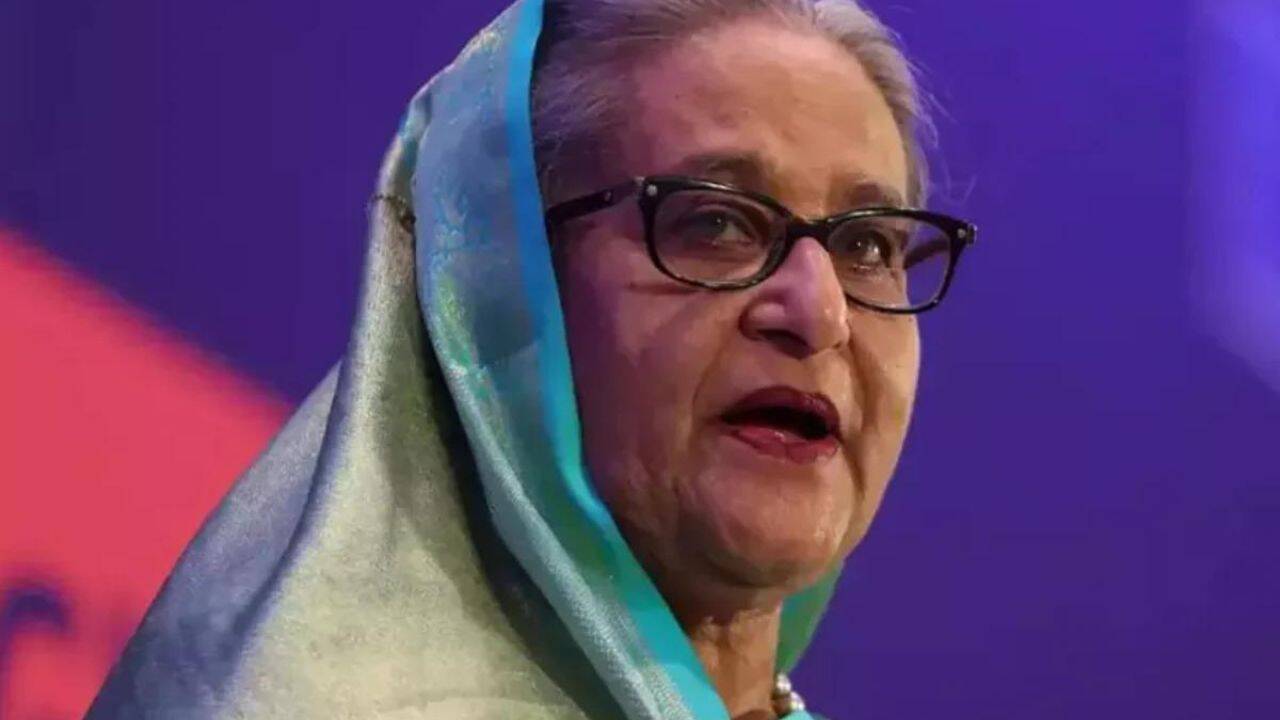
Bangladesh has sought India's clarification on its stand regarding Prime Minister Sheikh Hasina's upcoming virtual address on August 5. The Bangladesh government wants assurances from India that its territory will not be used for making any political statements that could potentially destabilize Bangladesh and harm bilateral ties between the two countries.
The Bangladesh government's concern stems from the fact that some fugitives, including those from the opposition party, have been using Indian territory to make political statements against the Sheikh Hasina government. India has previously indicated that it does not expect fugitives to make political statements from its territory.
The issue has gained significance in the wake of the upcoming BRICS Summit, where Prime Minister Tarique Rahman's attendance is still uncertain. However, it is worth noting that no decision has been made regarding his attendance at the summit.
Bangladesh and India have a long-standing relationship, with both countries cooperating on various issues, including trade, security, and connectivity. However, the recent developments have raised concerns in Dhaka about the potential use of Indian territory for anti-government activities.
The Sheikh Hasina government has been facing opposition from various quarters, including the Bangladesh Nationalist Party (BNP), which has been accusing the government of suppressing political dissent. The upcoming virtual address by Sheikh Hasina is seen as an attempt to reach out to the people and address the concerns of the opposition.
India's response to Bangladesh's request will be crucial in determining the future course of bilateral ties between the two countries. Any indication of support for the opposition parties could potentially harm the relationship, while a clarification that Indian territory will not be used for political statements could help to ease tensions.
The development is also being seen as a test of India's commitment to its 'neighbourhood first' policy, which aims to strengthen ties with neighboring countries. India has been trying to balance its relationships with various countries in the region, including Bangladesh, Nepal, and Sri Lanka.
In the coming days, India's response to Bangladesh's request will be closely watched, as it could have significant implications for bilateral ties and regional stability. The Indian government will need to balance its commitment to democracy and freedom of speech with its obligation to maintain good relations with its neighbors.
The situation highlights the complexities of regional politics and the need for careful diplomacy to maintain peace and stability in the region. As the situation unfolds, it remains to be seen how India will respond to Bangladesh's request and what implications it will have for the future of bilateral ties between the two countries.
In conclusion, Bangladesh's request for clarification from India on its stand regarding Sheikh Hasina's virtual address has raised important questions about the future of bilateral ties between the two countries. India's response will be crucial in determining the course of the relationship and regional stability.
Frequently asked questions
What is Bangladesh seeking from India?
Bangladesh is seeking clarification from India on its stand regarding Prime Minister Sheikh Hasina's upcoming virtual address on August 5.
Why is Bangladesh concerned about India's stand?
Bangladesh is concerned that India's territory might be used for making political statements that could destabilize Bangladesh and harm bilateral ties.