SC Judge Flags Delayed Bail, Restrictive Conditions
SC judge expresses concern, cites cases of prolonged jail time for minor offenses.
'%3E%3Crect%20width%3D'96'%20height%3D'96'%20fill%3D'%231A5276'%2F%3E%3Ccircle%20cx%3D'30'%20cy%3D'24'%20r%3D'44'%20fill%3D'%23fff'%20opacity%3D'.12'%2F%3E%3Ccircle%20cx%3D'60'%20cy%3D'74'%20r%3D'40'%20fill%3D'%23000'%20opacity%3D'.10'%2F%3E%3C%2Fg%3E%3Cg%20fill%3D'%23fff'%3E%3Cpath%20d%3D'M31%2041%20L48%2031%20L65%2041%20Z'%2F%3E%3Crect%20x%3D'33'%20y%3D'43'%20width%3D'4'%20height%3D'17'%2F%3E%3Crect%20x%3D'41'%20y%3D'43'%20width%3D'4'%20height%3D'17'%2F%3E%3Crect%20x%3D'51'%20y%3D'43'%20width%3D'4'%20height%3D'17'%2F%3E%3Crect%20x%3D'59'%20y%3D'43'%20width%3D'4'%20height%3D'17'%2F%3E%3Crect%20x%3D'30'%20y%3D'62'%20width%3D'36'%20height%3D'4'%20rx%3D'1'%2F%3E%3C%2Fg%3E%3C%2Fsvg%3E)
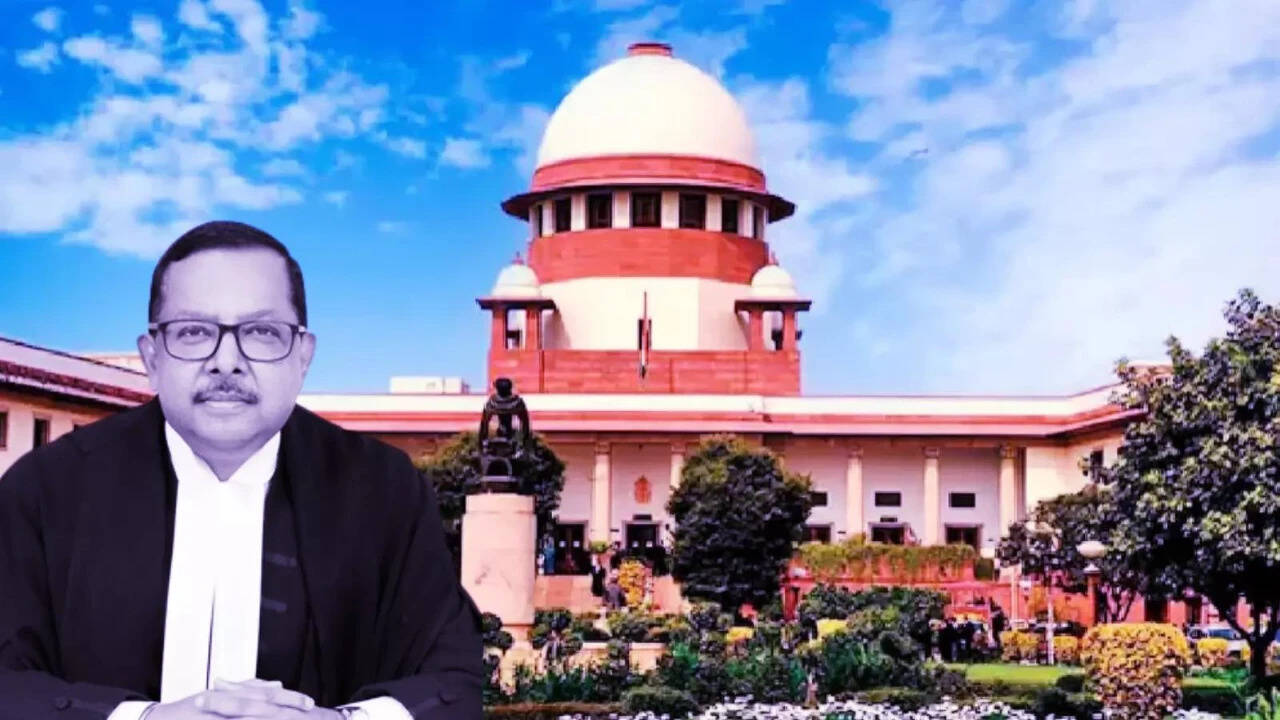
Justice Ujjal Bhuyan of the Supreme Court has expressed concern over the shrinking public space for dissent in India. He noted that courts often grant relief belatedly and impose restrictive bail conditions, which can discourage citizens from exercising their fundamental right to express their views.
The judge cited cases where individuals have faced prolonged jail time for minor offenses, highlighting the need for a critical examination of judicial decisions to improve the system. He emphasized that the judiciary must ensure that the fundamental rights of citizens are protected and that the justice system is fair and efficient.
Justice Bhuyan's comments come at a time when there is a growing debate about the need to balance individual freedoms with the need to maintain public order. The judge's remarks suggest that the courts must be mindful of the impact of their decisions on the ability of citizens to express themselves freely.
The issue of delayed bail and restrictive conditions has been a subject of concern for many activists and lawyers, who argue that such practices can be used to silence dissenting voices. Justice Bhuyan's comments are likely to add to the debate and highlight the need for the judiciary to be more proactive in protecting the rights of citizens.
In one instance, Justice Bhuyan noted that there is no law that prohibits eating chicken over the Ganga river, yet people are being arrested and jailed for such minor offenses. This, he said, highlights the need for the judiciary to be more nuanced in its approach and to ensure that the rights of citizens are not being unfairly restricted.
The judge's comments are a reminder that the judiciary has a critical role to play in protecting the fundamental rights of citizens and ensuring that the justice system is fair and efficient. As the country continues to grapple with the challenges of balancing individual freedoms with the need to maintain public order, Justice Bhuyan's remarks are likely to be seen as a timely reminder of the need for the judiciary to be more mindful of its impact on society.
In conclusion, Justice Bhuyan's comments highlight the need for the judiciary to be more proactive in protecting the rights of citizens and ensuring that the justice system is fair and efficient. The issue of delayed bail and restrictive conditions is a complex one, and it requires a nuanced approach that balances individual freedoms with the need to maintain public order.
The judge's remarks are likely to add to the debate and highlight the need for the judiciary to be more mindful of its impact on society. As the country continues to evolve and grow, it is essential that the judiciary plays a critical role in protecting the fundamental rights of citizens and ensuring that the justice system is fair and efficient.
The significance of Justice Bhuyan's comments lies in the fact that they highlight the need for the judiciary to be more proactive in protecting the rights of citizens. In a country where individual freedoms are fundamental, it is essential that the judiciary ensures that these rights are protected and that the justice system is fair and efficient.
Overall, Justice Bhuyan's comments are a timely reminder of the need for the judiciary to be more mindful of its impact on society. As the country continues to grapple with the challenges of balancing individual freedoms with the need to maintain public order, the judge's remarks are likely to be seen as a call to action for the judiciary to be more proactive in protecting the rights of citizens.
Frequently asked questions
What is the main concern expressed by Justice Ujjal Bhuyan?
Justice Ujjal Bhuyan expressed concern over the shrinking public space for dissent in India and the impact of delayed bail and restrictive conditions on citizens' fundamental rights.
What is the significance of Justice Bhuyan's comments?
The significance of Justice Bhuyan's comments lies in the fact that they highlight the need for the judiciary to be more proactive in protecting the rights of citizens and ensuring that the justice system is fair and efficient.