Japanese Engineer Questions India's Signalling Choice For Bullet Train
A Japanese engineer has raised concerns over India's decision to adopt a European signalling system for the Mumbai-Ahmedabad Bullet Train project, citing potential impacts on the project and bilateral cooperation.
'%3E%3Crect%20width%3D'96'%20height%3D'96'%20fill%3D'%23B3261E'%2F%3E%3Ccircle%20cx%3D'30'%20cy%3D'24'%20r%3D'44'%20fill%3D'%23fff'%20opacity%3D'.12'%2F%3E%3Ccircle%20cx%3D'60'%20cy%3D'74'%20r%3D'40'%20fill%3D'%23000'%20opacity%3D'.10'%2F%3E%3C%2Fg%3E%3Cg%20fill%3D'%23fff'%3E%3Crect%20x%3D'29'%20y%3D'49'%20width%3D'8'%20height%3D'19'%20rx%3D'1'%2F%3E%3Crect%20x%3D'39'%20y%3D'40'%20width%3D'9'%20height%3D'28'%20rx%3D'1'%2F%3E%3Crect%20x%3D'50'%20y%3D'45'%20width%3D'8'%20height%3D'23'%20rx%3D'1'%2F%3E%3Crect%20x%3D'60'%20y%3D'53'%20width%3D'7'%20height%3D'15'%20rx%3D'1'%2F%3E%3Crect%20x%3D'41'%20y%3D'34'%20width%3D'5'%20height%3D'6'%2F%3E%3C%2Fg%3E%3C%2Fsvg%3E)
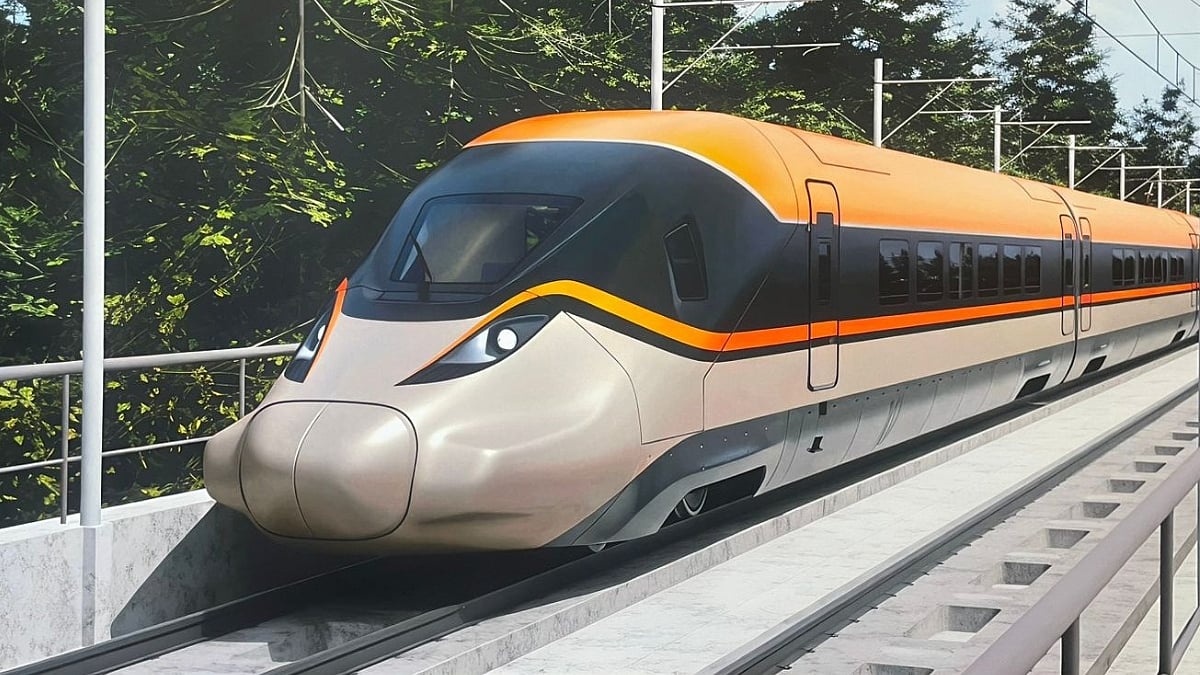
A Japanese railway engineer has expressed concerns over the progress of India's Mumbai-Ahmedabad High-Speed Rail project, specifically the decision to move away from Japan's Shinkansen signalling system.
The engineer, Hideki Makihara, who was previously involved with the project, claimed that India's handling of the project has been marked by repeated changes in commitments and decision-making, stalling progress.
Makihara, who currently works as a metro vehicle consultant in Delhi, shared his concerns in a detailed blog post following Japanese Prime Minister Sanae Takaichi's visit to India earlier this month. He alleged that India repeatedly changed its position during negotiations and pursued its own interests, adding that he believed the delays in the project were entirely on the Indian side.
The 508-km Mumbai-Ahmedabad High-Speed Rail corridor is being built with Japanese Shinkansen technology and financed through Japanese yen loans. The line is designed for trains operating at speeds of up to 320 kmph. However, Makihara claimed that the project's implementation has been far from smooth.
One of the key concerns highlighted by Makihara is India's decision to adopt the European Train Control System Level-2 (ETCS-L2) instead of Japan's DS-ATC signalling technology. The National High Speed Rail Corporation Limited (NHSRCL) floated a tender in January 2025 specifying ETCS-L2 as the signalling standard for the entire corridor.
Makihara argued that the decision effectively ruled out the adoption of Japan's proprietary signalling system, stating that two different signalling systems cannot operate simultaneously on the same high-speed rail line. He claimed this marked a major departure from the spirit of the 2015 India-Japan cooperation agreement on the Bullet Train project.
Makihara also questioned why Japanese authorities did not strongly object to the move, saying it could be interpreted as tacit acceptance of India's decision. According to him, the change may have wider implications beyond the Mumbai-Ahmedabad corridor, potentially limiting the future adoption of Japanese railway technology in India's expanding high-speed rail network.
The Mumbai-Ahmedabad Bullet Train project is a significant infrastructure development in India, with the potential to transform the country's transportation landscape. The project's success is crucial for the development of India's high-speed rail network, and any delays or setbacks could have significant implications for the country's economic growth.
The decision to adopt a European signalling system instead of Japan's Shinkansen technology has raised concerns about the project's viability and the potential impact on bilateral cooperation between India and Japan. The Indian government has not yet responded to Makihara's concerns, but the issue is likely to be closely watched by stakeholders in the project.
In conclusion, the concerns raised by the Japanese engineer highlight the complexities and challenges involved in the Mumbai-Ahmedabad Bullet Train project. The project's success will depend on the ability of the Indian government and other stakeholders to navigate these challenges and ensure that the project is completed on time and within budget. The decision to adopt a European signalling system instead of Japan's Shinkansen technology has significant implications for the project and bilateral cooperation, and it remains to be seen how the issue will be resolved.
The outcome of this project will have a significant impact on the future of India's high-speed rail network and the country's economic growth. It is essential for the Indian government to address the concerns raised by Makihara and ensure that the project is completed successfully. The success of the Mumbai-Ahmedabad Bullet Train project will be a major milestone in India's infrastructure development and will have far-reaching implications for the country's transportation landscape.