MNS Leader Slams Govt Over Sonam Wangchuk's Hospitalisation
Amit Thackeray criticises Centre, Delhi Police shifts Wangchuk to hospital
'%3E%3Crect%20width%3D'96'%20height%3D'96'%20fill%3D'%231A5276'%2F%3E%3Ccircle%20cx%3D'30'%20cy%3D'24'%20r%3D'44'%20fill%3D'%23fff'%20opacity%3D'.12'%2F%3E%3Ccircle%20cx%3D'60'%20cy%3D'74'%20r%3D'40'%20fill%3D'%23000'%20opacity%3D'.10'%2F%3E%3C%2Fg%3E%3Cg%20fill%3D'%23fff'%3E%3Cpath%20d%3D'M31%2041%20L48%2031%20L65%2041%20Z'%2F%3E%3Crect%20x%3D'33'%20y%3D'43'%20width%3D'4'%20height%3D'17'%2F%3E%3Crect%20x%3D'41'%20y%3D'43'%20width%3D'4'%20height%3D'17'%2F%3E%3Crect%20x%3D'51'%20y%3D'43'%20width%3D'4'%20height%3D'17'%2F%3E%3Crect%20x%3D'59'%20y%3D'43'%20width%3D'4'%20height%3D'17'%2F%3E%3Crect%20x%3D'30'%20y%3D'62'%20width%3D'36'%20height%3D'4'%20rx%3D'1'%2F%3E%3C%2Fg%3E%3C%2Fsvg%3E)
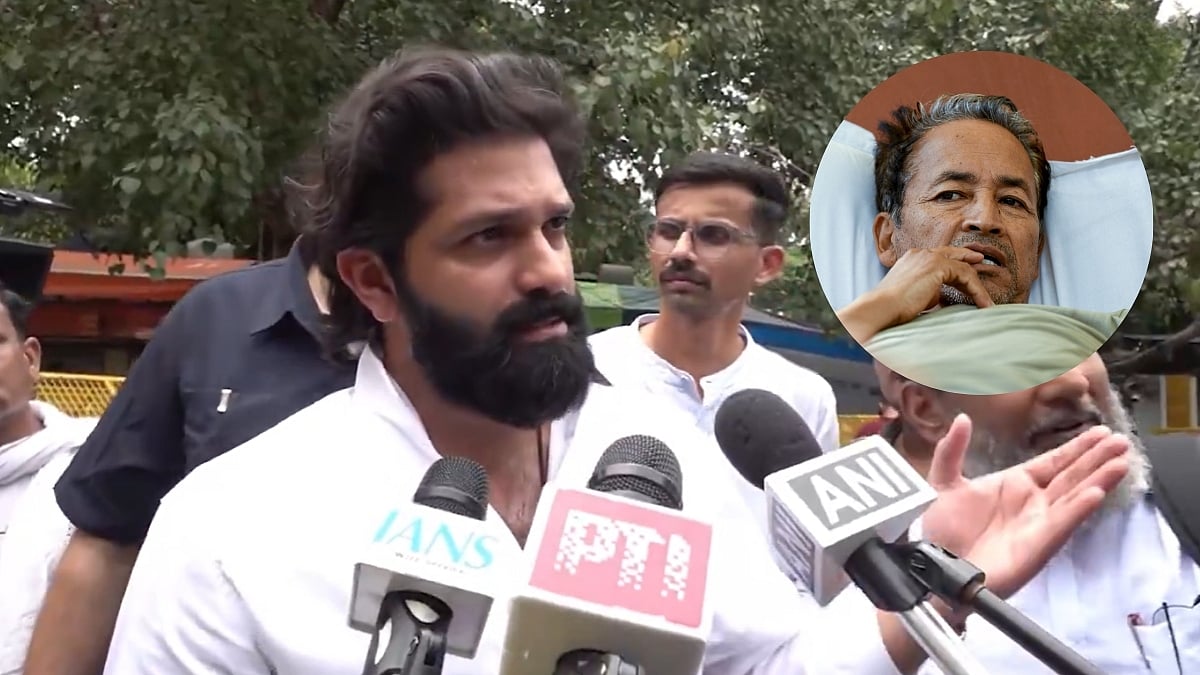
A major controversy has erupted in Indian politics after climate activist Sonam Wangchuk was shifted to Safdarjung Hospital on the 21st day of his indefinite hunger strike. Maharashtra Navnirman Sena (MNS) leader Amit Thackeray strongly criticised the Centre over the incident, terming it 'one of the darkest days in the history of Indian politics.'
Amit Thackeray visited the protest site at Delhi's Jantar Mantar on Saturday and reacted to Delhi Police's decision to remove Wangchuk from the site. He expressed disappointment that the central government was not engaging in conversation with Wangchuk, despite his deteriorating health after more than three weeks of fasting.
Delhi Police shifted Wangchuk to Safdarjung Hospital, citing his deteriorating health and complying with the Delhi High Court's directions. The police stated that the decision was based on expert medical advice and was necessary to provide Wangchuk with essential medical care.
The protest at Jantar Mantar, led by the Cockroach Janta Party (CJP), has been ongoing since June 20, demanding the resignation of Union Education Minister Dharmendra Pradhan over alleged irregularities in the NEET examination. The protesters are also seeking a judicial probe into the alleged examination scam and broader reforms in the country's examination system.
Amit Thackeray's criticism of the Centre and Delhi Police has highlighted the growing tensions between the government and protesters. The incident has sparked a debate about the government's handling of protests and the treatment of activists like Sonam Wangchuk.
Sonam Wangchuk's hospitalisation has also raised concerns about his health and well-being. His wife has stated that no treatment should be given without the family's consent, and she has rushed to Safdarjung Hospital to be with her husband.
The incident has significant implications for Indian politics, highlighting the need for the government to engage with protesters and address their concerns. The use of police force to remove Wangchuk from the protest site has been widely criticised, and the incident is likely to have far-reaching consequences for the government and the protest movement.
In the context of Indian politics, the incident is a reminder of the ongoing struggles between the government and civil society. The protest at Jantar Mantar is part of a larger movement demanding accountability and transparency in the country's examination system.
The incident also highlights the importance of protecting the rights of protesters and activists. The government's handling of the protest has been widely criticised, and the incident is likely to have significant implications for the government's relationship with civil society.
In conclusion, the hospitalisation of Sonam Wangchuk is a significant development in Indian politics, highlighting the need for the government to engage with protesters and address their concerns. The incident has sparked a debate about the government's handling of protests and the treatment of activists, and is likely to have far-reaching consequences for the government and the protest movement.
The incident is a reminder of the ongoing struggles between the government and civil society, and the need for the government to protect the rights of protesters and activists. As the protest movement continues to grow, it is likely that the government will face increasing pressure to address the concerns of protesters and ensure that their rights are protected.
The significance of the incident extends beyond the protest movement, highlighting the need for greater accountability and transparency in Indian politics. The government's handling of the protest has been widely criticised, and the incident is likely to have significant implications for the government's relationship with civil society.
In the coming days, it is likely that the protest movement will continue to grow, with more and more people demanding action from the government. The incident is a reminder of the power of protest and the importance of protecting the rights of citizens. As the government faces increasing pressure to address the concerns of protesters, it is likely that the incident will have significant implications for Indian politics.
The incident is also a reminder of the importance of a free and fair press, which plays a critical role in holding the government accountable. The media coverage of the incident has highlighted the need for greater transparency and accountability in Indian politics, and the importance of protecting the rights of protesters and activists.
In conclusion, the hospitalisation of Sonam Wangchuk is a significant development in Indian politics, highlighting the need for the government to engage with protesters and address their concerns. The incident has sparked a debate about the government's handling of protests and the treatment of activists, and is likely to have far-reaching consequences for the government and the protest movement.