FIFA Drops $4.2 Billion Commercial Stake Sale Plan
FIFA withdraws plan after UEFA opposition. Proposal aimed to raise $4.2 billion.
'%3E%3Crect%20width%3D'96'%20height%3D'96'%20fill%3D'%231B5E20'%2F%3E%3Ccircle%20cx%3D'30'%20cy%3D'24'%20r%3D'44'%20fill%3D'%23fff'%20opacity%3D'.12'%2F%3E%3Ccircle%20cx%3D'60'%20cy%3D'74'%20r%3D'40'%20fill%3D'%23000'%20opacity%3D'.10'%2F%3E%3C%2Fg%3E%3Cg%3E%3Ccircle%20cx%3D'48'%20cy%3D'48'%20r%3D'15'%20fill%3D'%23fff'%2F%3E%3Cpath%20d%3D'M43%2034%20Q50%2048%2043%2062'%20fill%3D'none'%20stroke%3D'%238a94a6'%20stroke-width%3D'2.4'%2F%3E%3Cpath%20d%3D'M47%2033%20Q54%2048%2047%2063'%20fill%3D'none'%20stroke%3D'%238a94a6'%20stroke-width%3D'1.8'%20stroke-dasharray%3D'1.5%203'%2F%3E%3C%2Fg%3E%3C%2Fsvg%3E)
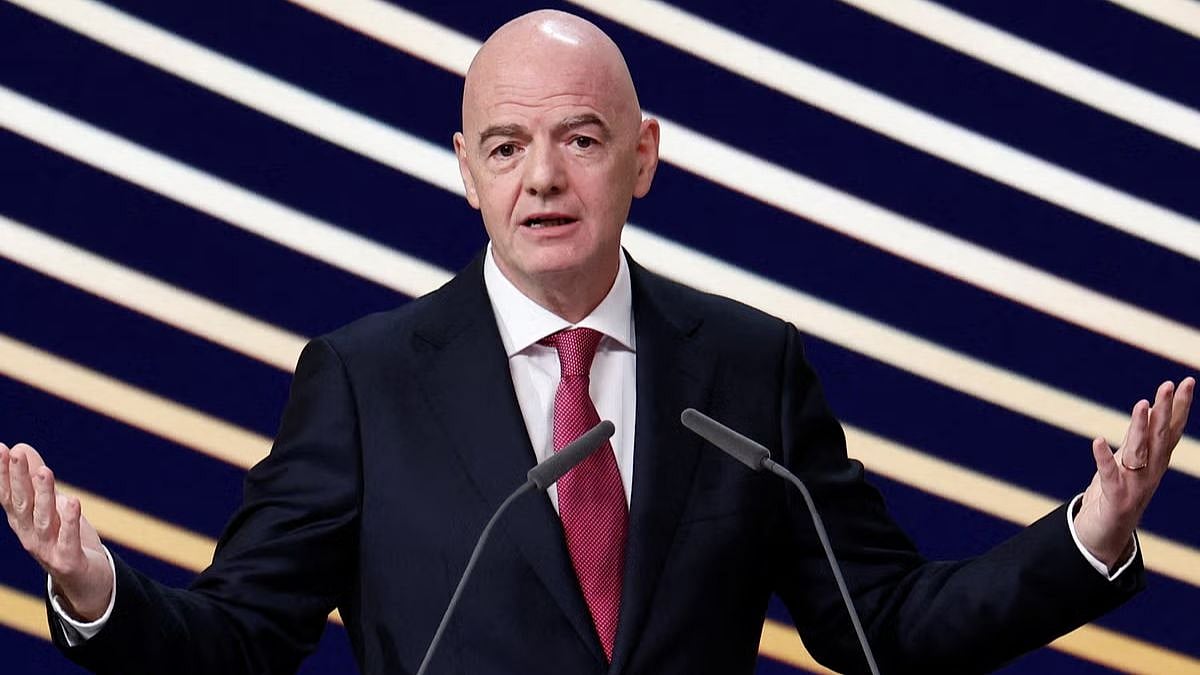
FIFA, the world football governing body, has dropped its proposal to sell a stake in its commercial business after facing strong opposition from several member associations, including UEFA. The plan, which aimed to raise $4.2 billion by selling around a 20% stake in a newly created commercial entity, was intended to manage FIFA events, including the FIFA World Cup, valuing the business at approximately $20 billion.
The proposal was first unveiled on Tuesday and faced immediate opposition from UEFA, European football's governing body. On Thursday, UEFA voted to boycott the plan, accusing FIFA of effectively putting the sport's 'soul' up for sale by seeking outside investment in its commercial operations.
FIFA President Gianni Infantino announced the decision to drop the proposal in a statement late on Friday evening, citing the divisions created by the project. 'Having listened carefully to all the views, it has become clear that the project has created divisions of a nature that, regardless of the level of support, are no longer in the interest of the objective set out in the first place,' Infantino said.
The proposal had also faced criticism from within FIFA, with senior adviser Carlos Cordeiro resigning with immediate effect, calling the proposal 'a bad deal for football.' FIFA Chief Operating Officer Kevin Lamour also criticized the plan, saying staff had been 'deceived' by Infantino and describing the proposed sale as 'the project of one person.'
The FIFA Forward Enterprise project was intended to provide a basis for further strengthening FIFA Member Associations and the sport worldwide, especially in countries where support is most needed. However, the opposition from member associations and criticism from within FIFA led to the decision to drop the proposal.
Infantino stated that his intent is to bring all interested parties back together in the coming days and weeks, with the objective of continuing to grow football everywhere, particularly in countries that need the most support. The decision to drop the proposal is seen as a significant setback for FIFA's plans to raise revenue and invest in the sport.
The opposition from UEFA and other member associations highlights the challenges faced by FIFA in its efforts to reform and commercialize the sport. The decision to drop the proposal is likely to have significant implications for the future of football, and FIFA will need to reconsider its plans for raising revenue and investing in the sport.
In the coming days and weeks, FIFA will need to work with its member associations and stakeholders to find alternative solutions for raising revenue and investing in the sport. The decision to drop the proposal is a significant development in the world of football, and its implications will be closely watched by fans and stakeholders around the world.
The future of football remains uncertain, and FIFA will need to navigate the complex landscape of international football to find a solution that works for all parties involved. The decision to drop the proposal is a significant step back for FIFA, but it also provides an opportunity for the organization to reassess its priorities and work towards a more unified and sustainable future for the sport.
In conclusion, the decision by FIFA to drop its proposal to sell a stake in its commercial business is a significant development in the world of football. The opposition from UEFA and other member associations highlights the challenges faced by FIFA in its efforts to reform and commercialize the sport. As FIFA moves forward, it will need to work with its member associations and stakeholders to find alternative solutions for raising revenue and investing in the sport.
Frequently asked questions
Why did FIFA drop its commercial stake sale plan?
FIFA dropped its proposal due to strong opposition from several member associations, including UEFA.
How much was FIFA aiming to raise from the sale?
FIFA was aiming to raise $4.2 billion by selling around a 20% stake in its commercial business.