Students Protest in Delhi Over Education Minister
Tens of thousands of students protest in Delhi, demanding Education Minister's resignation. Protest turns violent as police use batons and tear gas.
'%3E%3Crect%20width%3D'96'%20height%3D'96'%20fill%3D'%231A5276'%2F%3E%3Ccircle%20cx%3D'30'%20cy%3D'24'%20r%3D'44'%20fill%3D'%23fff'%20opacity%3D'.12'%2F%3E%3Ccircle%20cx%3D'60'%20cy%3D'74'%20r%3D'40'%20fill%3D'%23000'%20opacity%3D'.10'%2F%3E%3C%2Fg%3E%3Cg%20fill%3D'%23fff'%3E%3Cpath%20d%3D'M31%2041%20L48%2031%20L65%2041%20Z'%2F%3E%3Crect%20x%3D'33'%20y%3D'43'%20width%3D'4'%20height%3D'17'%2F%3E%3Crect%20x%3D'41'%20y%3D'43'%20width%3D'4'%20height%3D'17'%2F%3E%3Crect%20x%3D'51'%20y%3D'43'%20width%3D'4'%20height%3D'17'%2F%3E%3Crect%20x%3D'59'%20y%3D'43'%20width%3D'4'%20height%3D'17'%2F%3E%3Crect%20x%3D'30'%20y%3D'62'%20width%3D'36'%20height%3D'4'%20rx%3D'1'%2F%3E%3C%2Fg%3E%3C%2Fsvg%3E)
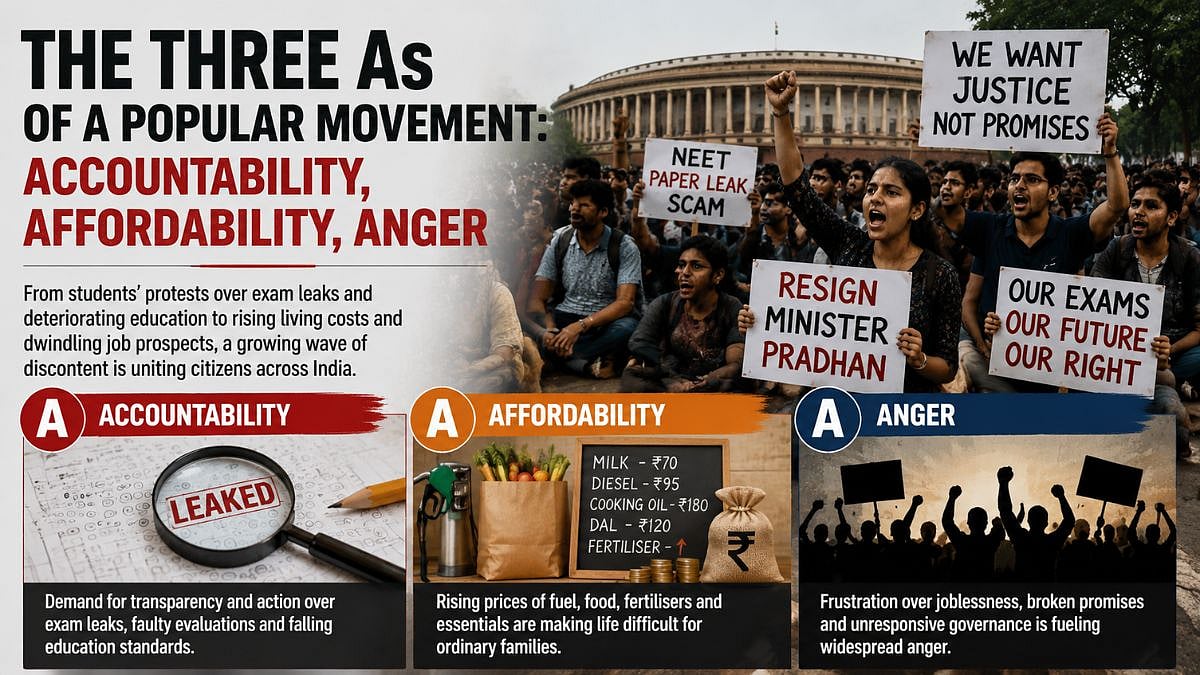
Tens of thousands of students gathered in Delhi to protest against the government, demanding the resignation of Education Minister Dharmendra Pradhan. The protest, which began at Jantar Mantar and was supposed to march to Parliament House, turned violent as the Delhi Police and paratroopers used batons and fired tear gas at the peaceful students.
The students were protesting against the recent scandal involving leaked medical examination papers and faulty school-leaving marksheets. They were also demanding accountability from the government over the issue. The protest is seen as a reflection of the growing discontent among students in India, who are worried about their education and job prospects.
The current regime has been criticized for its handling of the education system, which has been deteriorating over the past several decades. The education on offer in India today no longer guarantees gainful employment, particularly with the rise of artificial intelligence threatening to take away jobs. The ruling party had promised to reinvigorate the education system from top to bottom when it first came to power 12 years ago, but has failed to deliver.
The involvement of the Rashtriya Swayamsevak Sangh (RSS) and its students’ wing, the Akhil Bharatiya Vidyarthi Parishad (ABVP), in directing education policy has also been a point of contention. Education Minister Pradhan is an RSS member and former ABVP leader, which has led to accusations of bias and favoritism in education policy.
The government's response to the protest has been criticized, with many seeing it as an attempt to suppress dissent. The Prime Minister and his close aides have been accused of developing a kind of hubris that brooks no public dissidence, even if it relates to relevant issues.
The protest in Delhi is seen as a sign of the growing frustration among students in India, who are demanding accountability and action from the government. The government's handling of the situation will be closely watched, as it has the potential to escalate into a larger movement.
The students' demands are not just limited to the resignation of the Education Minister, but also include improvements to the education system and guarantees of gainful employment. The government will need to address these concerns in order to placate the protesting students and prevent further unrest.
In conclusion, the protest in Delhi is a reflection of the growing discontent among students in India, who are demanding accountability and action from the government. The government's handling of the situation will be crucial in determining the outcome of the protest and the future of the education system in India.
The protest has also raised questions about the government's commitment to education and its willingness to listen to the concerns of students. The use of force against peaceful protesters has been widely criticized, and the government will need to take steps to address the concerns of the students and prevent further violence.
As the situation continues to unfold, it remains to be seen how the government will respond to the demands of the protesting students. One thing is certain, however, that the protest has highlighted the need for urgent reforms in the education system and the need for the government to listen to the concerns of students.
Frequently asked questions
What are the students protesting about in Delhi?
The students are protesting against the government, demanding the resignation of Education Minister Dharmendra Pradhan and improvements to the education system.
Why did the protest turn violent?
The protest turned violent as the Delhi Police and paratroopers used batons and fired tear gas at the peaceful students.