RSS Chief Mohan Bhagwat Calls For Dialogue With Youth
RSS chief Mohan Bhagwat says Gen Z protesters are not anti-nationals, calls for dialogue and democratic processes.
'%3E%3Crect%20width%3D'96'%20height%3D'96'%20fill%3D'%231A5276'%2F%3E%3Ccircle%20cx%3D'30'%20cy%3D'24'%20r%3D'44'%20fill%3D'%23fff'%20opacity%3D'.12'%2F%3E%3Ccircle%20cx%3D'60'%20cy%3D'74'%20r%3D'40'%20fill%3D'%23000'%20opacity%3D'.10'%2F%3E%3C%2Fg%3E%3Cg%20fill%3D'%23fff'%3E%3Cpath%20d%3D'M31%2041%20L48%2031%20L65%2041%20Z'%2F%3E%3Crect%20x%3D'33'%20y%3D'43'%20width%3D'4'%20height%3D'17'%2F%3E%3Crect%20x%3D'41'%20y%3D'43'%20width%3D'4'%20height%3D'17'%2F%3E%3Crect%20x%3D'51'%20y%3D'43'%20width%3D'4'%20height%3D'17'%2F%3E%3Crect%20x%3D'59'%20y%3D'43'%20width%3D'4'%20height%3D'17'%2F%3E%3Crect%20x%3D'30'%20y%3D'62'%20width%3D'36'%20height%3D'4'%20rx%3D'1'%2F%3E%3C%2Fg%3E%3C%2Fsvg%3E)
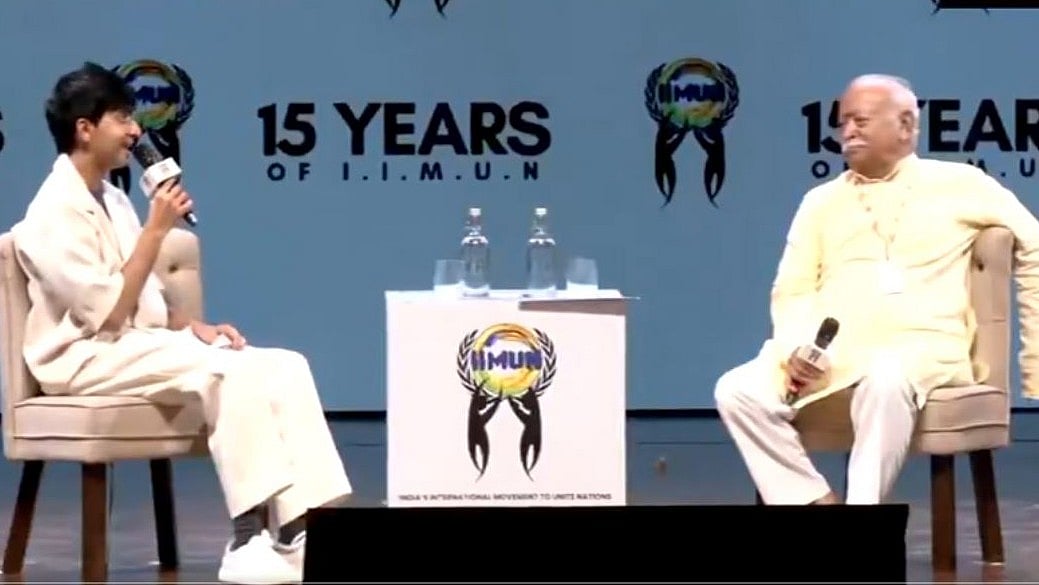
RSS chief Mohan Bhagwat on Thursday addressed a youth conference at the Nita Mukesh Ambani Cultural Centre in Mumbai, where he interacted with over 2,000 students from across the country. During the event, Bhagwat spoke about the recent student protests, stating that young people raising their voices over issues affecting them should not be branded as anti-national.
Bhagwat emphasized that the concerns of the younger generation must be heard and addressed through dialogue and democratic processes. He said that if Gen Z is protesting, they are not anti-nationals, but rather their own people and the next generation. The RSS chief noted that the younger generation is not seeking conflict, but is instead trying to draw attention to genuine concerns.
The event marked the 15th anniversary celebrations of the International Movement to Unite Nations (IIMUN) and focused on the theme, 'The Role of Youth in Uniting the World, the Indian Way.' Bhagwat's remarks came against the backdrop of recent student-led protests in Delhi, which culminated in the resignation of Union Education Minister Dharmendra Pradhan.
Bhagwat emphasized the importance of debate in a democratic society, saying that protest is a legitimate means of building consensus when grievances remain unaddressed. He added that agitation should be aimed at correcting the system, not creating divisions. The RSS chief also highlighted the changing mindset of younger generations, saying that Gen Z and Gen Alpha are more inclined to question authority and demand logical explanations.
Bhagwat compared modern democratic discourse with the Indian tradition of 'shastrarth', a process of debate and exchange of ideas aimed at discovering truth through multiple perspectives. He noted that young people today expect reasoned answers rather than unquestioning obedience. The event was attended by students from over 100 cities across the country, providing a platform for them to engage with the RSS chief and discuss their concerns.
The RSS chief's call for dialogue with youth is significant, as it acknowledges the importance of listening to the concerns of the younger generation. By emphasizing the need for democratic processes and dialogue, Bhagwat is encouraging a more inclusive and participatory approach to addressing the issues that affect young people.
In the context of recent student protests, Bhagwat's remarks suggest that the RSS is willing to engage with the younger generation and listen to their concerns. This approach is likely to be seen as a positive step towards building a more inclusive and democratic society. As India continues to evolve and grow, it is essential to listen to the voices of the younger generation and address their concerns through dialogue and democratic processes.
In conclusion, Mohan Bhagwat's call for dialogue with youth is a significant step towards building a more inclusive and democratic society. By acknowledging the importance of listening to the concerns of the younger generation, the RSS chief is encouraging a more participatory approach to addressing the issues that affect young people. This approach is likely to have a positive impact on the country, as it recognizes the importance of engaging with the younger generation and addressing their concerns through democratic processes.
Overall, the event highlighted the importance of dialogue and democratic processes in addressing the concerns of the younger generation. It provided a platform for students to engage with the RSS chief and discuss their concerns, and it emphasized the need for a more inclusive and participatory approach to building a democratic society.
Frequently asked questions
What did RSS chief Mohan Bhagwat say about Gen Z protesters?
Bhagwat said that Gen Z protesters are not anti-nationals, but rather their own people and the next generation.
What is the significance of Bhagwat's call for dialogue with youth?
Bhagwat's call for dialogue with youth acknowledges the importance of listening to the concerns of the younger generation and encourages a more inclusive and participatory approach to addressing their issues.