Reality TV Obsession Is Normal, Says Science
Your brain is wired to watch reality TV, it's not just nosiness. Science explains why you're hooked.
'%3E%3Crect%20width%3D'96'%20height%3D'96'%20fill%3D'%23B3261E'%2F%3E%3Ccircle%20cx%3D'30'%20cy%3D'24'%20r%3D'44'%20fill%3D'%23fff'%20opacity%3D'.12'%2F%3E%3Ccircle%20cx%3D'60'%20cy%3D'74'%20r%3D'40'%20fill%3D'%23000'%20opacity%3D'.10'%2F%3E%3C%2Fg%3E%3Cg%20fill%3D'%23fff'%3E%3Crect%20x%3D'29'%20y%3D'49'%20width%3D'8'%20height%3D'19'%20rx%3D'1'%2F%3E%3Crect%20x%3D'39'%20y%3D'40'%20width%3D'9'%20height%3D'28'%20rx%3D'1'%2F%3E%3Crect%20x%3D'50'%20y%3D'45'%20width%3D'8'%20height%3D'23'%20rx%3D'1'%2F%3E%3Crect%20x%3D'60'%20y%3D'53'%20width%3D'7'%20height%3D'15'%20rx%3D'1'%2F%3E%3Crect%20x%3D'41'%20y%3D'34'%20width%3D'5'%20height%3D'6'%2F%3E%3C%2Fg%3E%3C%2Fsvg%3E)
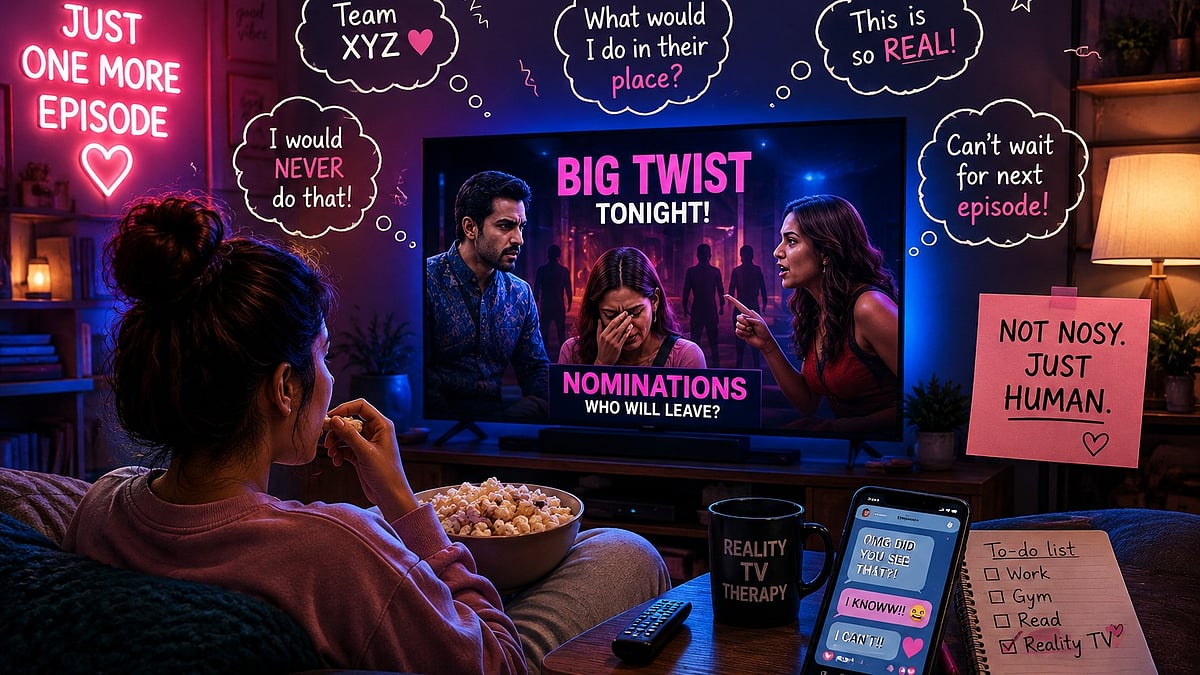
On a typical Tuesday night, many of us find ourselves glued to the screen, watching reality TV shows despite having early meetings and other responsibilities. This phenomenon is not unique to a few individuals, as reality TV has become a staple in many households. In 2026, shows like Bigg Boss, Lock Upp, Khatron Ke Khiladi, and Alliance have gained immense popularity, with the Bigg Boss franchise alone reaching over 500 million viewers in 2025.
According to Mehezabin Dordi, a Clinical Psychologist at the Department of Rehabilitation & Sports Medicine, Sir H. N. Reliance Foundation Hospital, our brains are naturally inclined to observe the thoughts and behaviors of others to better understand our social surroundings. Reality shows combine conflict, competitions, humor, romance, and surprises, which are all features that grab our attention. The anticipation of what will happen next also engages the reward centers of our brain, making us eager to watch more.
This explains why we get hooked on reality TV, with every cliffhanger and twist keeping us engaged. The show's format is designed to keep us guessing, and our brains respond to this anticipation by releasing tiny hits of dopamine. But there's more to it than just entertainment. When we watch contestants on reality TV, we're also measuring ourselves against them. This phenomenon is known as social comparison, and it's a common psychological process that helps us learn, analyze, and understand our own life experiences.
Reality TV shows provide us with a platform to judge, relate, cringe, and reflect on our own values and behaviors. It's a mirror that allows us to see ourselves in others, and a debate that sparks conversations with others. Chandni Shah, a devotee of reality TV, is not alone in her obsession. With the rise of reality TV, it's clear that this genre of entertainment is here to stay.
The numbers are staggering, with the Bigg Boss franchise clocking over 438 billion viewing minutes across its language editions. This suggests that reality TV is no longer just background noise for lazy weekends, but a main event that draws in millions of viewers. So, the next time you find yourself binge-watching your favorite reality TV show, don't feel guilty. Your brain is simply doing what comes naturally – observing human behavior, anticipating what's next, and measuring yourself against others.
In conclusion, reality TV is not just a guilty pleasure, but a reflection of our natural curiosity about human affairs. It's a way for us to understand our social surroundings, learn from others, and engage in cultural conversations. So, go ahead and indulge in your favorite reality TV show – your brain is wired for it.
The popularity of reality TV shows can be attributed to their ability to provide entertainment, escapism, and social comparison. As Mehezabin Dordi explains, reality TV shows give people a platform to observe human behavior, learn from others, and analyze their own life experiences. This makes reality TV a unique and engaging form of entertainment that continues to captivate audiences worldwide.
As the reality TV genre continues to evolve, it's likely that we'll see even more innovative and engaging shows in the future. With the rise of streaming platforms and social media, reality TV has become more accessible than ever, allowing fans to engage with their favorite shows and contestants in new and exciting ways. Whether you're a fan of Bigg Boss, Lock Upp, or Alliance, there's no denying the impact that reality TV has had on our entertainment landscape.
In the end, reality TV is not just a form of entertainment, but a reflection of our society and our values. It provides a platform for us to observe human behavior, learn from others, and engage in cultural conversations. So, the next time you're watching your favorite reality TV show, remember that you're not just watching TV – you're participating in a global phenomenon that's changing the way we consume entertainment.
The significance of reality TV lies in its ability to provide a unique form of entertainment that combines human drama, competition, and social comparison. As our brains are wired to respond to these elements, it's no wonder that reality TV has become a staple in many households. Whether you're a fan of reality TV or not, it's clear that this genre of entertainment is here to stay, and its impact on our society and culture will only continue to grow.
In conclusion, the popularity of reality TV can be attributed to its ability to provide entertainment, escapism, and social comparison. As our brains are wired to respond to these elements, it's no wonder that reality TV has become a staple in many households. Whether you're a fan of reality TV or not, it's clear that this genre of entertainment is here to stay, and its impact on our society and culture will only continue to grow.
The future of reality TV looks bright, with new and innovative shows being developed all the time. As technology continues to evolve, it's likely that we'll see even more interactive and engaging reality TV shows in the future. Whether you're a fan of competition shows, documentary-style reality TV, or something else entirely, there's no denying the impact that reality TV has had on our entertainment landscape.
In the end, reality TV is a reflection of our society and our values. It provides a platform for us to observe human behavior, learn from others, and engage in cultural conversations. So, the next time you're watching your favorite reality TV show, remember that you're not just watching TV – you're participating in a global phenomenon that's changing the way we consume entertainment.
Frequently asked questions
Why do people watch reality TV?
People watch reality TV because it provides entertainment, escapism, and social comparison.
Is it normal to be obsessed with reality TV?
Yes, it's normal to be obsessed with reality TV, as our brains are wired to respond to the elements of human drama, competition, and social comparison that reality TV provides.