Yale Report Highlights Decline In Trust In Higher Education
Yale University report identifies key factors behind declining trust in higher education. Soaring tuition prices and complex admissions system are major concerns.
'%3E%3Crect%20width%3D'96'%20height%3D'96'%20fill%3D'%23B3261E'%2F%3E%3Ccircle%20cx%3D'30'%20cy%3D'24'%20r%3D'44'%20fill%3D'%23fff'%20opacity%3D'.12'%2F%3E%3Ccircle%20cx%3D'60'%20cy%3D'74'%20r%3D'40'%20fill%3D'%23000'%20opacity%3D'.10'%2F%3E%3C%2Fg%3E%3Cg%20fill%3D'%23fff'%3E%3Crect%20x%3D'29'%20y%3D'49'%20width%3D'8'%20height%3D'19'%20rx%3D'1'%2F%3E%3Crect%20x%3D'39'%20y%3D'40'%20width%3D'9'%20height%3D'28'%20rx%3D'1'%2F%3E%3Crect%20x%3D'50'%20y%3D'45'%20width%3D'8'%20height%3D'23'%20rx%3D'1'%2F%3E%3Crect%20x%3D'60'%20y%3D'53'%20width%3D'7'%20height%3D'15'%20rx%3D'1'%2F%3E%3Crect%20x%3D'41'%20y%3D'34'%20width%3D'5'%20height%3D'6'%2F%3E%3C%2Fg%3E%3C%2Fsvg%3E)
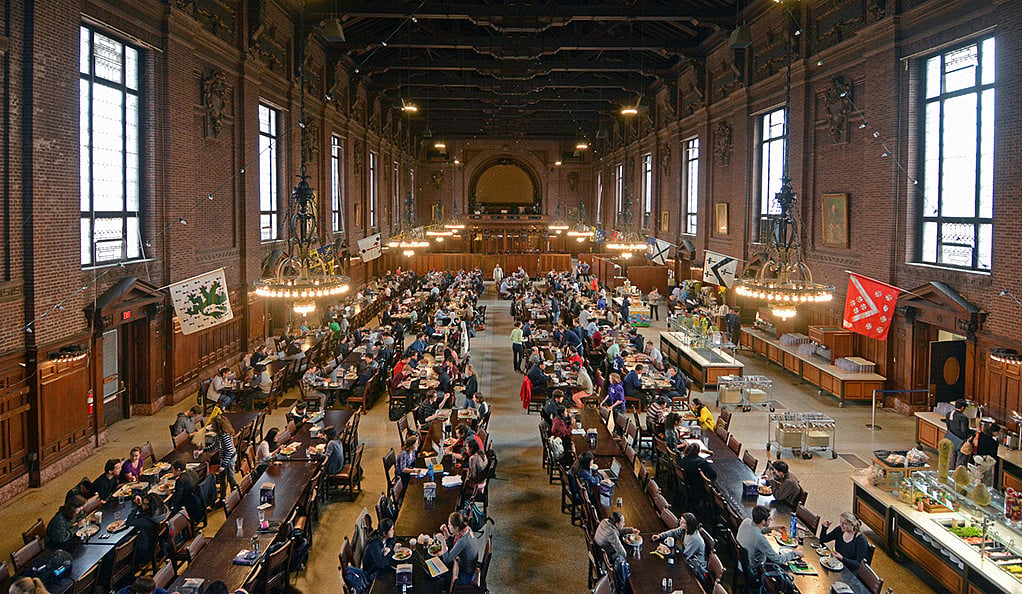
A recent report by Yale University has shed light on the declining trust in higher education in the United States. The report, submitted in April 2026, was compiled by a committee of professors appointed by the university's president in April 2025. The committee was tasked with examining the problem of declining trust in higher education and engaging with various perspectives from within and outside the university.
The report discusses several key issues, including tuition prices and admission policy, political bias on campus, technology in the classroom, self-censorship, and university governance. It also touches on the issue of grade inflation and the impact of new technologies on higher education. While the report is specific to Yale, it draws lessons that can be applied to university administrations across the board.
One of the primary concerns highlighted in the report is the decline in public trust in higher education. For centuries, universities have been entrusted with the preservation, creation, and sharing of knowledge. However, recent public surveys have shown that nearly 70% of Americans believe that higher education in the country is headed in the wrong direction. The report identifies three key factors contributing to this perception: soaring tuition prices, complex college admissions systems, and concerns about free speech, self-censorship, and political bias on university campuses.
The report also notes that trust is earned by doing what you say you're going to do and doing it well. However, in recent years, universities have struggled to respond to conflicting expectations, leading to growing uncertainty about their role and purpose. This has eroded public trust in higher education, which is critical for the functioning of civic institutions. If the public ceases to believe that colleges and universities are imparting professional skills, expertise, and knowledge to their students, then trust necessarily suffers.
The report emphasizes that trust is relational and requires agreement on values, goals, and methods between all parties involved. However, there has grown a wide gap between what the public wants from its institutions of higher education and what they appear to deliver. Universities must balance their role in the larger society with the need to maintain academic freedom and independence.
In the context of the United States, the report notes that public trust in all civic institutions has been declining since the 1970s. However, it is particularly important for higher education to succeed, as it is critical for imparting professional skills, expertise, and knowledge to students. The report's findings have implications for university administrations across the country, highlighting the need to address the concerns of soaring tuition prices, complex admissions systems, and political bias on campus.
Ultimately, the report stresses the importance of academic freedom and the need for universities to maintain their independence and autonomy. By doing so, they can rebuild public trust and ensure that they continue to play a vital role in preserving, creating, and sharing knowledge.
The decline in trust in higher education has significant implications for the future of education in the United States. As universities struggle to respond to conflicting expectations, it is essential that they prioritize academic freedom, transparency, and accountability. By doing so, they can rebuild public trust and ensure that they continue to play a vital role in shaping the minds of future generations.
In conclusion, the Yale report highlights the need for universities to address the concerns of declining trust in higher education. By prioritizing academic freedom, transparency, and accountability, universities can rebuild public trust and ensure that they continue to play a vital role in preserving, creating, and sharing knowledge.
The report's findings are a wake-up call for university administrations across the country, highlighting the need to address the concerns of soaring tuition prices, complex admissions systems, and political bias on campus. As the higher education landscape continues to evolve, it is essential that universities prioritize academic freedom, transparency, and accountability to rebuild public trust and ensure their continued relevance in the years to come.
The importance of academic freedom cannot be overstated, as it is essential for the pursuit of knowledge and the development of critical thinking skills. Universities must balance their role in the larger society with the need to maintain academic freedom and independence, ensuring that they continue to play a vital role in shaping the minds of future generations.
In the end, the Yale report serves as a reminder of the importance of trust in higher education. As universities navigate the complexities of the modern education landscape, it is essential that they prioritize academic freedom, transparency, and accountability to rebuild public trust and ensure their continued relevance in the years to come.
Frequently asked questions
What are the main factors contributing to the decline in trust in higher education?
The main factors contributing to the decline in trust in higher education are soaring tuition prices, complex college admissions systems, and concerns about free speech, self-censorship, and political bias on university campuses.
Why is academic freedom important for universities?
Academic freedom is essential for universities as it allows them to pursue knowledge and develop critical thinking skills without external interference or pressure.