Crude Oil Prices Drop 5% As Trump Resumes Iran Talks
Oil prices plummet, WTI down 5.88%, Brent down 5.07%. Trump halts military strike plans.
'%3E%3Crect%20width%3D'96'%20height%3D'96'%20fill%3D'%230B6E4F'%2F%3E%3Ccircle%20cx%3D'30'%20cy%3D'24'%20r%3D'44'%20fill%3D'%23fff'%20opacity%3D'.12'%2F%3E%3Ccircle%20cx%3D'60'%20cy%3D'74'%20r%3D'40'%20fill%3D'%23000'%20opacity%3D'.10'%2F%3E%3C%2Fg%3E%3Cg%20fill%3D'none'%20stroke%3D'%23fff'%20stroke-width%3D'3.2'%20stroke-linecap%3D'round'%20stroke-linejoin%3D'round'%3E%3Cpolyline%20points%3D'31%2C59%2041%2C49%2049%2C54%2063%2C37'%2F%3E%3Cpolyline%20points%3D'55%2C37%2063%2C37%2063%2C45'%2F%3E%3C%2Fg%3E%3C%2Fsvg%3E)
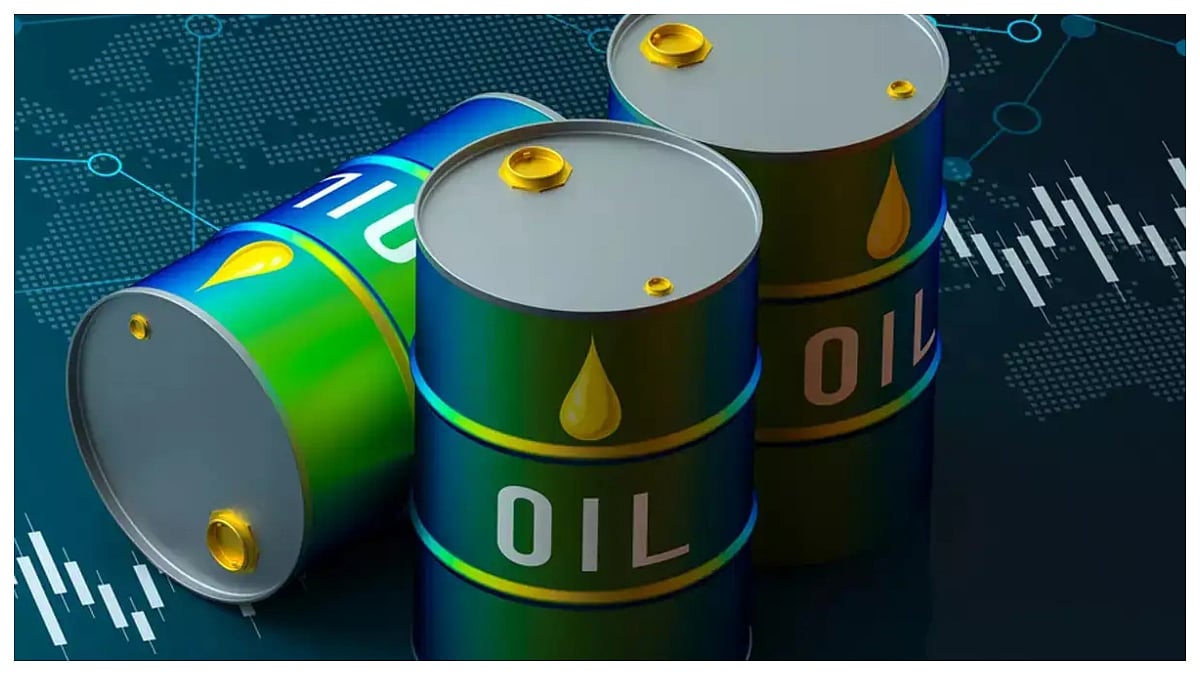
Oil prices declined sharply in early Asian trading on Monday after US President Donald Trump halted plans for further military strikes on Iran. This move raised expectations that diplomatic efforts could help reopen the Strait of Hormuz and prevent a wider regional conflict.
The West Texas Intermediate (WTI) futures were trading at $79.77 per barrel, down 5.88%, while Brent crude futures declined to $83.47 per barrel, falling 5.07%. The latest decline follows a highly volatile July, during which both major crude benchmarks gained more than 20%.
Rising tensions between the United States and Iran, along with Houthi attacks and concerns over disruptions to Saudi shipping routes, had increased fears of prolonged supply problems through the Strait of Hormuz and the Red Sea. Concerns intensified over the weekend after Trump warned that the US was preparing a major military strike against Iran.
However, he later called off the planned action, stating that regional leaders had indicated a possible agreement was close. Markets reacted positively to the possibility of reduced tensions, leading to a sharp drop in crude prices when trading began on Monday.
Analysts noted that it remains uncertain whether the latest diplomatic efforts will result in a lasting resolution. Shipping developments also influenced market sentiment. Two Saudi oil tankers successfully passed through the Bab el-Mandeb Strait over the weekend, suggesting that some shipping activity remains operational.
The UK Maritime Trade Operations agency reported three additional tanker attacks since Saturday, indicating that security risks in the region remain significant. Adding further pressure on prices, OPEC+ approved an increase in production quotas of around 188,000 barrels per day for September.
The move completes another stage of reversing voluntary production cuts. However, its immediate impact is limited as actual production increases remain affected by regional disruptions. Diplomatic efforts are also continuing from Iran’s side.
Iranian officials said negotiations with Oman over a new shipping arrangement through the Strait of Hormuz are nearing completion. Tehran has indicated that future shipping routes may differ from previous arrangements, even if the strait is reopened.
If regional negotiations progress and shipping activity normalises, the geopolitical risk premium built into oil prices during July could continue to decline. However, any fresh military escalation or disruption to Gulf oil exports could quickly push crude prices higher again.
Indian Oil also reported a ₹2,661 crore Q1 loss due to increased crude costs caused by the West Asia conflict. Despite this, revenue jumped 26% in the same period.
The decline in oil prices is a welcome development for India, which has been struggling with high crude costs. However, the situation remains volatile, and any further escalation in tensions could lead to increased prices again.
In conclusion, the drop in crude oil prices is a result of the resumption of diplomatic talks between the US and Iran. While this development is positive, the situation remains uncertain, and any further escalation could lead to increased prices again.
The impact of the decline in oil prices will be closely watched by India, which is heavily dependent on crude imports. A lasting resolution to the conflict could lead to a decline in the geopolitical risk premium built into oil prices, resulting in lower crude costs for India.
However, the situation remains volatile, and any further escalation could lead to increased prices again. The Indian government will be closely monitoring the situation and taking steps to mitigate the impact of any further price increases.
The decline in oil prices is also expected to have an impact on the global economy. A lasting resolution to the conflict could lead to increased economic activity, resulting in higher demand for crude oil.
However, the situation remains uncertain, and any further escalation could lead to decreased economic activity, resulting in lower demand for crude oil. The global economy will be closely watching the developments in the region and taking steps to mitigate the impact of any further escalation.
In the end, the decline in crude oil prices is a welcome development, but the situation remains volatile, and any further escalation could lead to increased prices again. The Indian government and the global economy will be closely monitoring the situation and taking steps to mitigate the impact of any further price increases.
Frequently asked questions
Why did oil prices drop on Monday?
Oil prices dropped due to the resumption of diplomatic talks between the US and Iran, which raised expectations that the Strait of Hormuz could be reopened and a wider regional conflict could be prevented.
What was the impact of the decline in oil prices on Indian Oil?
Indian Oil reported a ₹2,661 crore Q1 loss due to increased crude costs caused by the West Asia conflict, despite a 26% jump in revenue.