Britain Deploys Reef Cubes to Revive Oysters
Britain restores oyster populations, volunteers clean and attach oysters to reef cubes.
'%3E%3Crect%20width%3D'96'%20height%3D'96'%20fill%3D'%23B3261E'%2F%3E%3Ccircle%20cx%3D'30'%20cy%3D'24'%20r%3D'44'%20fill%3D'%23fff'%20opacity%3D'.12'%2F%3E%3Ccircle%20cx%3D'60'%20cy%3D'74'%20r%3D'40'%20fill%3D'%23000'%20opacity%3D'.10'%2F%3E%3C%2Fg%3E%3Cg%20fill%3D'%23fff'%3E%3Crect%20x%3D'29'%20y%3D'49'%20width%3D'8'%20height%3D'19'%20rx%3D'1'%2F%3E%3Crect%20x%3D'39'%20y%3D'40'%20width%3D'9'%20height%3D'28'%20rx%3D'1'%2F%3E%3Crect%20x%3D'50'%20y%3D'45'%20width%3D'8'%20height%3D'23'%20rx%3D'1'%2F%3E%3Crect%20x%3D'60'%20y%3D'53'%20width%3D'7'%20height%3D'15'%20rx%3D'1'%2F%3E%3Crect%20x%3D'41'%20y%3D'34'%20width%3D'5'%20height%3D'6'%2F%3E%3C%2Fg%3E%3C%2Fsvg%3E)
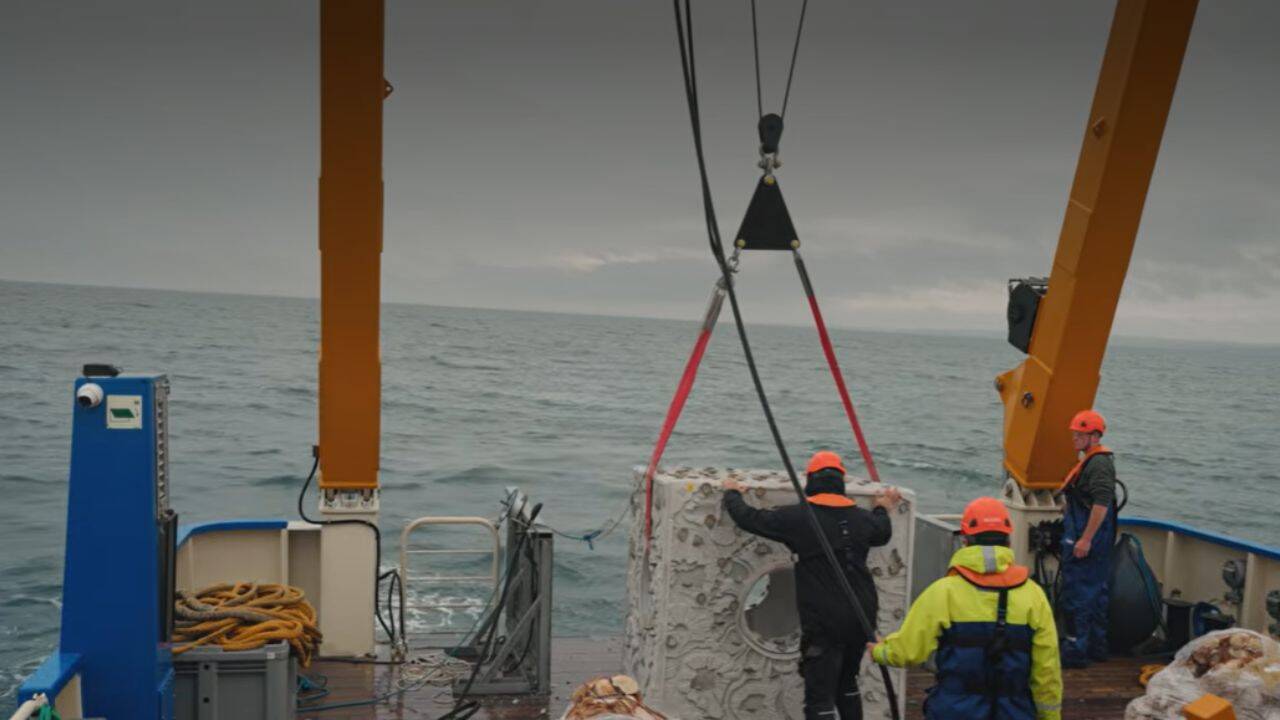
Britain is taking a significant step to restore its native oyster populations by deploying engineered concrete cubes in the North Sea. These reef cubes provide a stable foundation for oysters to grow and also serve as a habitat for other marine life. The project aims to rebuild the ecosystem that has collapsed due to a significant decline in oyster numbers.
The decline of native oyster populations in Britain has been a concern for environmentalists and marine biologists. The introduction of reef cubes is a novel approach to address this issue. Volunteers are playing a crucial role in the project by cleaning and attaching oysters to the reef cubes. This hands-on approach not only helps in the restoration process but also raises awareness about the importance of marine conservation.
The reef cubes are designed to mimic the natural habitat of oysters, providing them with a stable surface to grow on. The structures are also expected to attract other marine species, which will help in rebuilding the collapsed ecosystem. The project is a testament to the efforts being made to restore Britain's marine biodiversity.
The native oyster population in Britain has been declining due to various factors, including overfishing, habitat destruction, and climate change. The restoration of oyster populations is crucial not only for the ecosystem but also for the fishing industry. Oysters play a vital role in maintaining the balance of the marine ecosystem, and their decline can have far-reaching consequences.
The use of engineered concrete cubes to restore oyster populations is an innovative approach. The cubes are designed to be durable and long-lasting, providing a stable foundation for oysters to grow on. The project is also expected to have a positive impact on the local economy, as a healthy oyster population can support the fishing industry.
The involvement of volunteers in the project is a significant aspect of the restoration efforts. Volunteers are not only helping in the cleaning and attachment of oysters to the reef cubes but also spreading awareness about the importance of marine conservation. The project is a great example of community-led conservation efforts.
The restoration of native oyster populations in Britain is a complex process that requires a multi-faceted approach. The deployment of reef cubes is just one aspect of the project, and it is expected to have a positive impact on the ecosystem. The project is a testament to the efforts being made to restore Britain's marine biodiversity and promote sustainable fishing practices.
In conclusion, the deployment of reef cubes in Britain's North Sea is a significant step towards restoring native oyster populations. The project is a great example of community-led conservation efforts and innovative approaches to address environmental concerns. The restoration of oyster populations is crucial for maintaining the balance of the marine ecosystem, and it is expected to have a positive impact on the local economy and the fishing industry.
Frequently asked questions
Why is Britain restoring its native oyster populations?
Britain is restoring its native oyster populations to rebuild a collapsed ecosystem and promote sustainable fishing practices.
How are volunteers involved in the project?
Volunteers are involved in cleaning and attaching oysters to the reef cubes, and also in spreading awareness about the importance of marine conservation.