UK Examines 109-Year-Old War Loan Claim From Sehore Businessman
The British Government is examining a claim to repay a war loan lent by Seth Jumma Lal Ruthiya in 1917. The loan was for ₹35,000 to support World War I expenses.
'%3E%3Crect%20width%3D'96'%20height%3D'96'%20fill%3D'%23B3261E'%2F%3E%3Ccircle%20cx%3D'30'%20cy%3D'24'%20r%3D'44'%20fill%3D'%23fff'%20opacity%3D'.12'%2F%3E%3Ccircle%20cx%3D'60'%20cy%3D'74'%20r%3D'40'%20fill%3D'%23000'%20opacity%3D'.10'%2F%3E%3C%2Fg%3E%3Cg%20fill%3D'%23fff'%3E%3Crect%20x%3D'29'%20y%3D'49'%20width%3D'8'%20height%3D'19'%20rx%3D'1'%2F%3E%3Crect%20x%3D'39'%20y%3D'40'%20width%3D'9'%20height%3D'28'%20rx%3D'1'%2F%3E%3Crect%20x%3D'50'%20y%3D'45'%20width%3D'8'%20height%3D'23'%20rx%3D'1'%2F%3E%3Crect%20x%3D'60'%20y%3D'53'%20width%3D'7'%20height%3D'15'%20rx%3D'1'%2F%3E%3Crect%20x%3D'41'%20y%3D'34'%20width%3D'5'%20height%3D'6'%2F%3E%3C%2Fg%3E%3C%2Fsvg%3E)
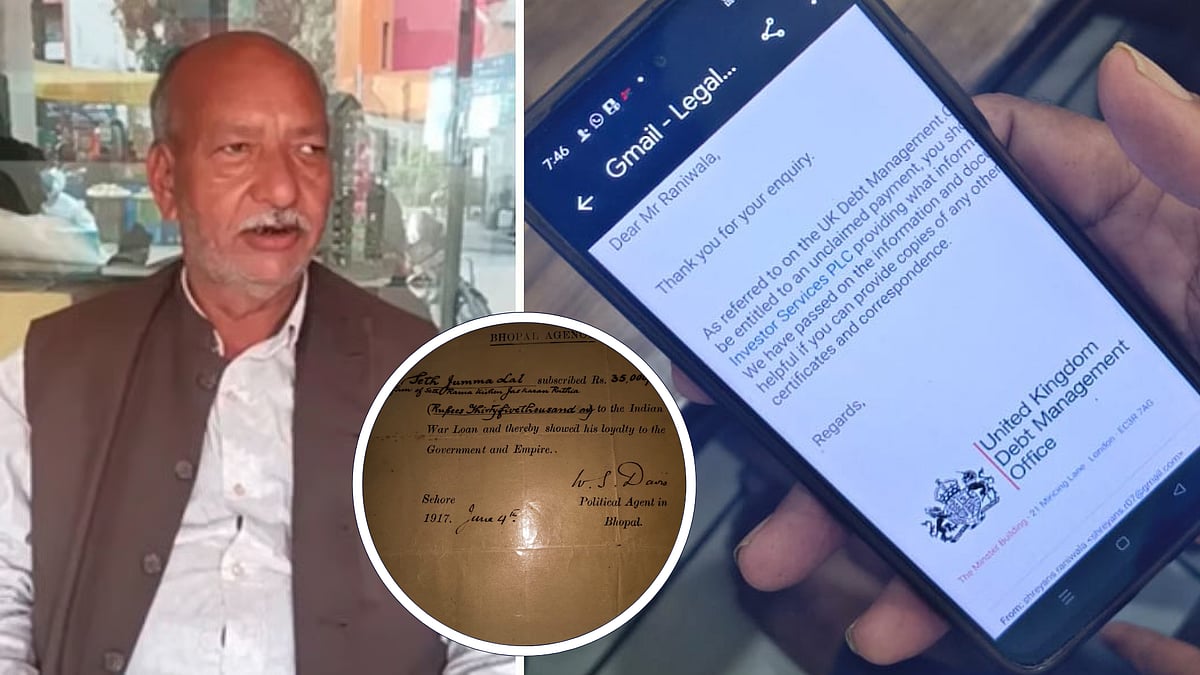
The British Government has decided to examine a claim to repay a war loan borrowed from a prominent businessman from Madhya Pradesh's Sehore in 1917 during World War I.
The development came six months after an elderly man from Sehore sent a legal notice to the British government, claiming that a 109-year-old loan given by his grandfather, Seth Jumma Lal Ruthiya, had remained unpaid.
In 1917, Ruthiya had reportedly provided ₹35,000 to the British government to support administrative expenses in Bhopal State. The loan was given during a time when India was under British rule, and the colonial government was raising funds from princely states and wealthy families to meet expenses related to the war.
The Ruthiya family claims that official documents related to the loan were preserved in their ancestral records. The matter came to light when Nagar Seth Vinay Ruthiya and his younger brother Vivek Ruthiya were examining old family documents and found the original papers related to the 1917 loan.
The family believes that the value of the loan, after considering interest and inflation over more than a century, would amount to several crores of rupees today. The family, through their lawyer Shriyans Raniwal, sent a legal notice to the UK government's Debt Management Office, which has now responded to the notice.
Instead of rejecting the claim, authorities have sought additional information and documents related to the loan. The documents will reportedly be examined by the UK's Gilt Registrar.
Vinay Ruthiya, grandson of Seth Jummalal, said the family was preparing to submit all required documents to the UK government to take the matter forward. He said that under international legal principles, a sovereign country is expected to honour its valid financial obligations.
The family is now waiting for the next steps after submitting the requested records. Seth Jummalal Ruthiya passed away in 1937, but the documents related to the historic transaction remained preserved with his family.
The case has sparked interest in the community, with many waiting to see how the British government will handle the claim. The outcome of the case could have significant implications for the family and the community.
In the broader context, the case highlights the complex history between India and the UK, particularly during the time of British rule. The fact that the British government is examining the claim is a significant development, and it will be interesting to see how the case unfolds.
The significance of this case lies in the fact that it raises questions about the responsibility of governments to honour their financial obligations, even if they were made over a century ago. It also highlights the importance of preserving historical documents and records, which can provide valuable insights into the past and help to resolve disputes like this one.
In conclusion, the British government's decision to examine the claim is a significant step forward, and it will be interesting to see how the case progresses. The outcome of the case could have significant implications for the family, the community, and the broader relationship between India and the UK.
Frequently asked questions
What is the amount of the war loan claimed by the Ruthiya family?
The loan was for ₹35,000, which the family claims would be worth several crores of rupees today with interest and inflation.
Why is the British government examining the claim?
The British government is examining the claim after the Ruthiya family sent a legal notice seeking repayment of the loan, which was given in 1917 to support World War I expenses.