Uttarakhand Man Successfully Tests Electric Flying Car Prototype
Ravi Tamta's flying car takes to the skies, India's electric flight tech advances
'%3E%3Crect%20width%3D'96'%20height%3D'96'%20fill%3D'%23B3261E'%2F%3E%3Ccircle%20cx%3D'30'%20cy%3D'24'%20r%3D'44'%20fill%3D'%23fff'%20opacity%3D'.12'%2F%3E%3Ccircle%20cx%3D'60'%20cy%3D'74'%20r%3D'40'%20fill%3D'%23000'%20opacity%3D'.10'%2F%3E%3C%2Fg%3E%3Cg%20fill%3D'%23fff'%3E%3Crect%20x%3D'29'%20y%3D'49'%20width%3D'8'%20height%3D'19'%20rx%3D'1'%2F%3E%3Crect%20x%3D'39'%20y%3D'40'%20width%3D'9'%20height%3D'28'%20rx%3D'1'%2F%3E%3Crect%20x%3D'50'%20y%3D'45'%20width%3D'8'%20height%3D'23'%20rx%3D'1'%2F%3E%3Crect%20x%3D'60'%20y%3D'53'%20width%3D'7'%20height%3D'15'%20rx%3D'1'%2F%3E%3Crect%20x%3D'41'%20y%3D'34'%20width%3D'5'%20height%3D'6'%2F%3E%3C%2Fg%3E%3C%2Fsvg%3E)
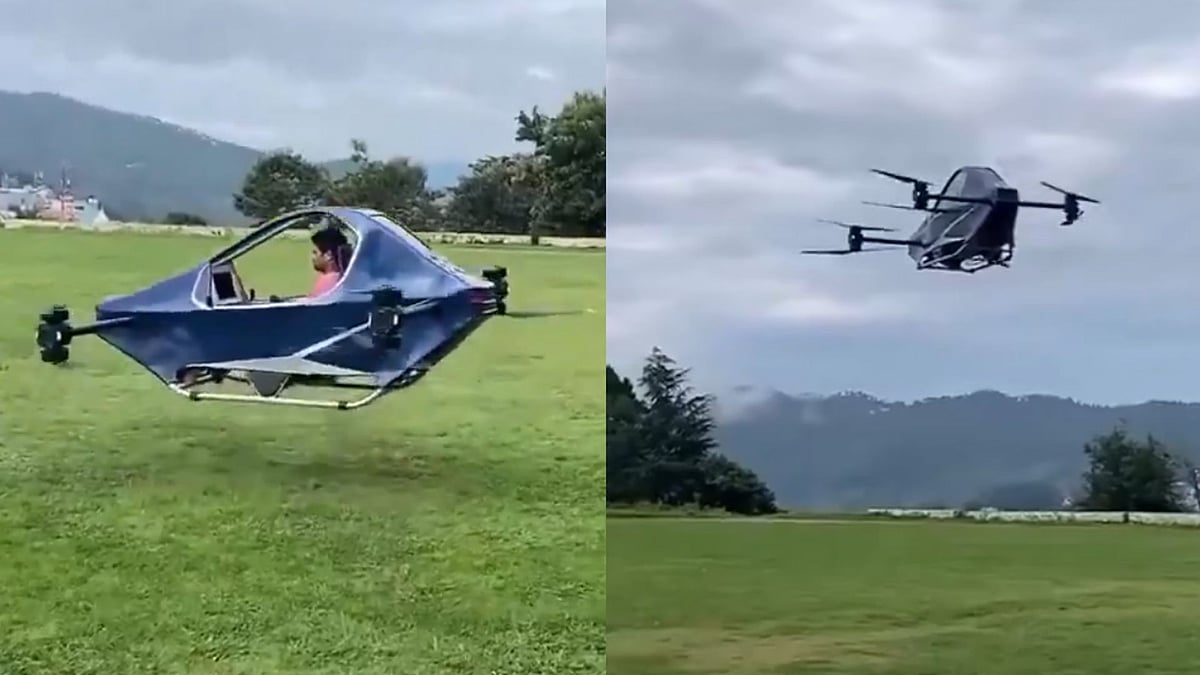
Ravi Tamta, an innovator from Uttarakhand, has successfully demonstrated his self-developed electric flying vehicle in Almora. The single-seat electric flying car, called HAPIDA SKYNeX, is a project of Tamta's startup, Hapida Sky Private Limited.
The latest demonstration marks an important stage in the development of HAPIDA SKYNeX, which uses modified drone technology to support personal sky mobility. Unlike conventional aircraft that rely on aviation fuel, the vehicle has been designed to operate using electricity.
Tamta, who hails from Kaflikhan village near Jageshwar Dham in Almora district, has been working on the project for several years. His goal is to bring personal air mobility closer to reality and create a cleaner form of personal transportation.
The successful test has also brought attention to the potential of electric-powered flight technology being developed by independent innovators in India. Tamta shared a video on Instagram showing glimpses of the work and development that went into building the flying vehicle.
Following the demonstration, Tamta received numerous calls from people eager to see the flying car. He also shared his experience of not being able to speak with the media immediately after the test, but later congratulated the entire nation for the achievement.
The video offered viewers a closer look at the prototype and the effort behind its development, further increasing public interest in the project. Social media users have been praising Tamta's innovation, with many congratulating him on his achievement.
The development of HAPIDA SKYNeX is focused on creating a new possibility for short-distance aerial mobility. The project has the potential to revolutionize personal transportation and make it more environmentally friendly.
The success of Tamta's flying car prototype is a significant milestone in the development of electric flight technology in India. It highlights the potential of independent innovators in the country to develop cutting-edge technology and create new possibilities for the future.
In the context of India's growing focus on electric vehicles and sustainable transportation, the development of HAPIDA SKYNeX is a significant step forward. The project has the potential to contribute to the country's efforts to reduce its carbon footprint and create a more environmentally friendly transportation system.
Overall, the successful test of Tamta's flying car prototype is a major achievement that highlights the potential of Indian innovators to develop cutting-edge technology and create new possibilities for the future.
The project's success also underscores the importance of supporting and encouraging innovation in India, particularly in the field of sustainable transportation. As the country continues to grow and develop, it is likely that we will see more innovative projects like HAPIDA SKYNeX that have the potential to transform the way we live and travel.
In conclusion, the development of HAPIDA SKYNeX is a significant achievement that highlights the potential of Indian innovators to develop cutting-edge technology and create new possibilities for the future. The project has the potential to contribute to India's efforts to reduce its carbon footprint and create a more environmentally friendly transportation system, and its success is a major milestone in the development of electric flight technology in the country.
Frequently asked questions
What is HAPIDA SKYNeX?
HAPIDA SKYNeX is a single-seat electric flying vehicle developed by Ravi Tamta's startup, Hapida Sky Private Limited.
What is the significance of the project?
The project aims to bring personal air mobility closer to reality and create a cleaner form of personal transportation, contributing to India's efforts to reduce its carbon footprint.