NGT Flags Madhya Pradesh River Pollution Crisis
18 of 48 major rivers fail BOD standards, sewage treatment gap highlighted
'%3E%3Crect%20width%3D'96'%20height%3D'96'%20fill%3D'%23B3261E'%2F%3E%3Ccircle%20cx%3D'30'%20cy%3D'24'%20r%3D'44'%20fill%3D'%23fff'%20opacity%3D'.12'%2F%3E%3Ccircle%20cx%3D'60'%20cy%3D'74'%20r%3D'40'%20fill%3D'%23000'%20opacity%3D'.10'%2F%3E%3C%2Fg%3E%3Cg%20fill%3D'%23fff'%3E%3Crect%20x%3D'29'%20y%3D'49'%20width%3D'8'%20height%3D'19'%20rx%3D'1'%2F%3E%3Crect%20x%3D'39'%20y%3D'40'%20width%3D'9'%20height%3D'28'%20rx%3D'1'%2F%3E%3Crect%20x%3D'50'%20y%3D'45'%20width%3D'8'%20height%3D'23'%20rx%3D'1'%2F%3E%3Crect%20x%3D'60'%20y%3D'53'%20width%3D'7'%20height%3D'15'%20rx%3D'1'%2F%3E%3Crect%20x%3D'41'%20y%3D'34'%20width%3D'5'%20height%3D'6'%2F%3E%3C%2Fg%3E%3C%2Fsvg%3E)
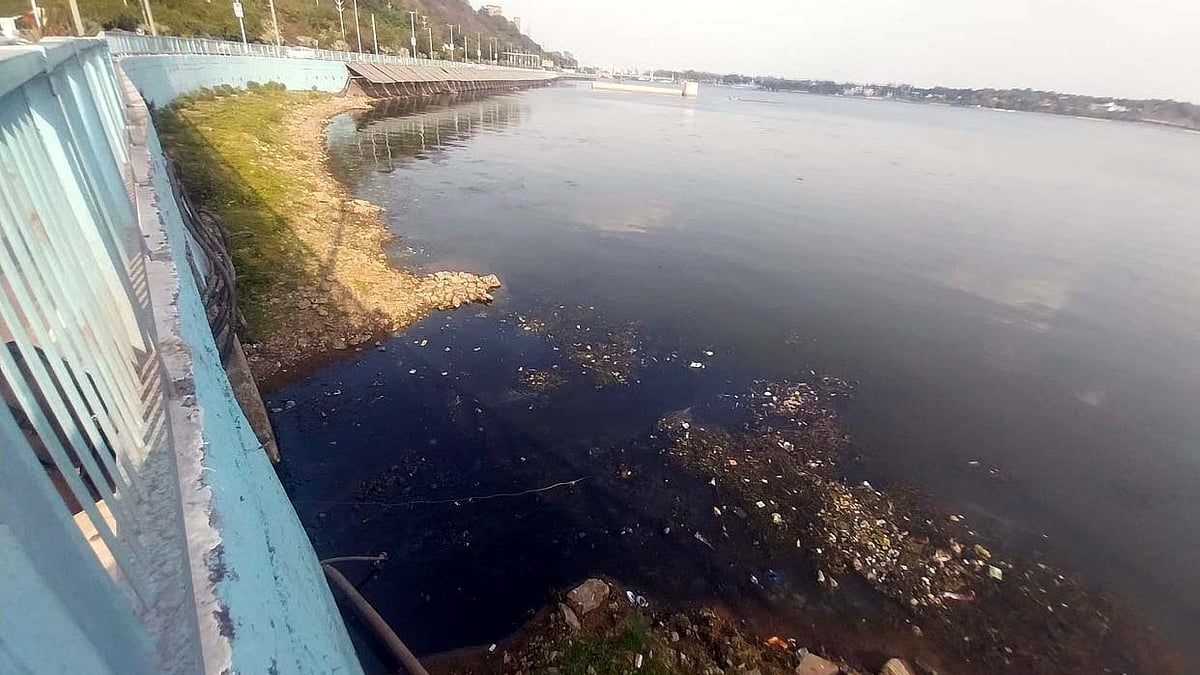
The National Green Tribunal (NGT) has raised serious concerns over untreated sewage entering major rivers in Madhya Pradesh, including the Narmada, Chambal, Betwa and Tapi.
The NGT's Central Zone Bench noted that Madhya Pradesh generates around 2,183.7 million litres of sewage per day, with a large gap between sewage generation and treatment across the state.
The state has an installed sewage treatment capacity of 1,311.99 MLD, but only 696.03 MLD is actually being utilised, meaning just around 32 per cent of the total sewage generated is being treated.
According to Central Pollution Control Board (CPCB) data, water quality monitoring was conducted at 164 locations across 48 rivers during 2022 and 2023, with 36 monitoring locations covering 18 rivers found non-compliant with prescribed water quality standards for biochemical oxygen demand (BOD).
The NGT also expressed concern over the slow expansion of sewer infrastructure, with Madhya Pradesh currently having around 3,629.65 km of sewer network, while 7,166.93 km has been planned under AMRUT 2.0.
However, none of the planned AMRUT 2.0 sewer network had been completed at the time of the report.
The NGT observed that inadequate household connections, ageing infrastructure, poor maintenance and delays in project implementation are contributing to ineffective sewage management.
The Tribunal has directed state authorities to submit detailed district-wise information on sewage generation, untreated wastewater, treatment capacity, ongoing and proposed projects, timelines and infrastructure gaps.
It also called for improved monitoring of sewage treatment plants (STPs), expansion of household sewer connections, GIS mapping of sewer networks and septic tanks, GPS tracking of desludging vehicles and measures to prevent untreated sewage from entering rivers, lakes and other water bodies.
The NGT has sought replies from the environment department, urban development and housing department and Madhya Pradesh Pollution Control Board within four weeks.
The matter will be heard next on September 28.
The NGT's concerns highlight the need for urgent action to address the river pollution crisis in Madhya Pradesh, with significant implications for the state's environment and public health.
The state government must take immediate steps to bridge the sewage treatment gap and expand sewer infrastructure to prevent further pollution of its rivers.
Frequently asked questions
What is the current sewage treatment capacity in Madhya Pradesh?
The state has an installed sewage treatment capacity of 1,311.99 MLD, but only 696.03 MLD is actually being utilised.
How many rivers in Madhya Pradesh have failed to meet BOD standards?
18 of 48 major rivers have failed to meet the prescribed water quality standards for biochemical oxygen demand (BOD).