Supreme Court Acquits Former Government Store In-Charge In 1993 Corruption Case
The Supreme Court has expressed concern over delays in corruption cases and acquitted a former government store in-charge. The court noted that unnecessary evidence burdens courts.
'%3E%3Crect%20width%3D'96'%20height%3D'96'%20fill%3D'%231A5276'%2F%3E%3Ccircle%20cx%3D'30'%20cy%3D'24'%20r%3D'44'%20fill%3D'%23fff'%20opacity%3D'.12'%2F%3E%3Ccircle%20cx%3D'60'%20cy%3D'74'%20r%3D'40'%20fill%3D'%23000'%20opacity%3D'.10'%2F%3E%3C%2Fg%3E%3Cg%20fill%3D'%23fff'%3E%3Cpath%20d%3D'M31%2041%20L48%2031%20L65%2041%20Z'%2F%3E%3Crect%20x%3D'33'%20y%3D'43'%20width%3D'4'%20height%3D'17'%2F%3E%3Crect%20x%3D'41'%20y%3D'43'%20width%3D'4'%20height%3D'17'%2F%3E%3Crect%20x%3D'51'%20y%3D'43'%20width%3D'4'%20height%3D'17'%2F%3E%3Crect%20x%3D'59'%20y%3D'43'%20width%3D'4'%20height%3D'17'%2F%3E%3Crect%20x%3D'30'%20y%3D'62'%20width%3D'36'%20height%3D'4'%20rx%3D'1'%2F%3E%3C%2Fg%3E%3C%2Fsvg%3E)
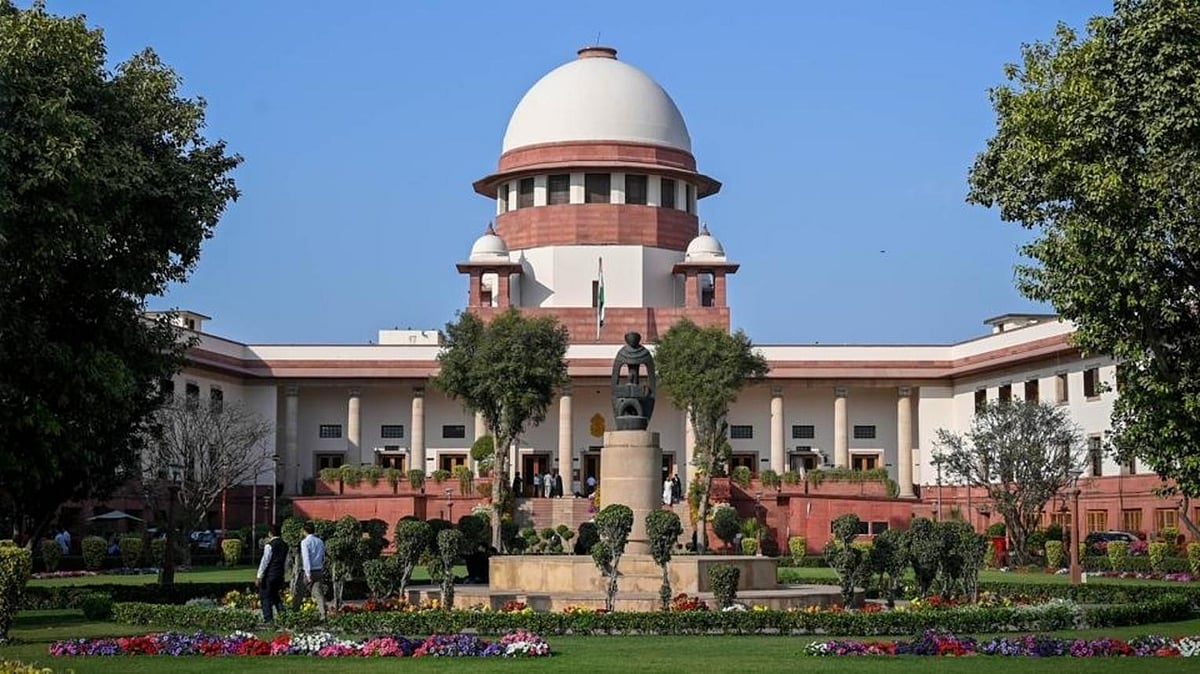
The Supreme Court has expressed concern over the long pendency of corruption cases, citing the burden of unnecessary and irrelevant evidence on courts. This observation was made while acquitting a former government store in-charge who was convicted under the Prevention of Corruption Act, 1988, in a 1993 case.
The case involved fake medicine supply bills, with the Veterinary Department of Assam alleging a loss of Rs 5,97,200. The prosecution examined 62 witnesses, most of whom were irrelevant to the issue before the court. The trial court convicted four individuals, including the store in-charge, while acquitting three.
The Gauhati High Court later acquitted the accountant but upheld the conviction of the store in-charge and storekeeper under Section 13(1)(d) of the Prevention of Corruption Act. The appellant then approached the Supreme Court against the High Court's decision.
The Supreme Court noted that the case depended on a narrow question: whether a conviction under Section 13(1)(d) of the Prevention of Corruption Act could be sustained when there was a clear finding that the appellant had not obtained any pecuniary advantage. The court observed that the provision requires a public servant to obtain a valuable thing or pecuniary advantage for himself or another through corrupt or illegal means.
The bench, comprising Justice JB Pardiwala and Justice Vinod K Chandran, said that without a pecuniary advantage, there could be no conviction under Section 13(1)(d). The court also pointed out that the evidence could have supported charges under the Indian Penal Code, but the High Court had failed to consider this aspect.
The Supreme Court's decision highlights the need for a more focused approach in corruption cases, avoiding unnecessary evidence that can intimidate courts and distract from the actual allegations. The court's observation is significant, as it emphasizes the importance of efficient and effective prosecution in corruption cases.
The case has implications for the prosecution of corruption cases in India, where delays and unnecessary evidence can hinder the delivery of justice. The Supreme Court's decision is likely to influence the approach of lower courts in handling corruption cases, emphasizing the need for relevance and efficiency in the presentation of evidence.
In conclusion, the Supreme Court's acquittal of the former government store in-charge and its observation on the burden of unnecessary evidence in corruption cases are significant developments in the Indian judiciary. The decision underscores the importance of a focused and efficient approach in corruption cases, ensuring that justice is delivered in a timely and effective manner.
The Supreme Court's decision is a reminder that the Indian judiciary is committed to upholding the principles of justice and ensuring that the rights of individuals are protected. The case highlights the need for a more efficient and effective approach in corruption cases, avoiding unnecessary delays and evidence that can hinder the delivery of justice.
The Indian judiciary has been working to improve the efficiency and effectiveness of the justice delivery system, and the Supreme Court's decision is a step in this direction. The decision is likely to have a positive impact on the prosecution of corruption cases in India, ensuring that justice is delivered in a timely and effective manner.
The case has also highlighted the importance of the role of the prosecution in corruption cases, emphasizing the need for a focused and efficient approach in presenting evidence. The Supreme Court's decision is a reminder that the prosecution must be careful and meticulous in presenting evidence, avoiding unnecessary delays and evidence that can hinder the delivery of justice.
In the end, the Supreme Court's decision is a significant development in the Indian judiciary, emphasizing the importance of a focused and efficient approach in corruption cases. The decision is likely to have a positive impact on the prosecution of corruption cases in India, ensuring that justice is delivered in a timely and effective manner.
Frequently asked questions
What was the case about?
The case involved fake medicine supply bills, with the Veterinary Department of Assam alleging a loss of Rs 5,97,200.
What was the Supreme Court's decision?
The Supreme Court acquitted the former government store in-charge, noting that there was no pecuniary advantage and that the evidence could have supported charges under the Indian Penal Code.