Cong's Aiyar Praises Fearless Students
Congress leader Mani Shankar Aiyar hails protesting students, says they are fearless.
'%3E%3Crect%20width%3D'96'%20height%3D'96'%20fill%3D'%231A5276'%2F%3E%3Ccircle%20cx%3D'30'%20cy%3D'24'%20r%3D'44'%20fill%3D'%23fff'%20opacity%3D'.12'%2F%3E%3Ccircle%20cx%3D'60'%20cy%3D'74'%20r%3D'40'%20fill%3D'%23000'%20opacity%3D'.10'%2F%3E%3C%2Fg%3E%3Cg%20fill%3D'%23fff'%3E%3Cpath%20d%3D'M31%2041%20L48%2031%20L65%2041%20Z'%2F%3E%3Crect%20x%3D'33'%20y%3D'43'%20width%3D'4'%20height%3D'17'%2F%3E%3Crect%20x%3D'41'%20y%3D'43'%20width%3D'4'%20height%3D'17'%2F%3E%3Crect%20x%3D'51'%20y%3D'43'%20width%3D'4'%20height%3D'17'%2F%3E%3Crect%20x%3D'59'%20y%3D'43'%20width%3D'4'%20height%3D'17'%2F%3E%3Crect%20x%3D'30'%20y%3D'62'%20width%3D'36'%20height%3D'4'%20rx%3D'1'%2F%3E%3C%2Fg%3E%3C%2Fsvg%3E)
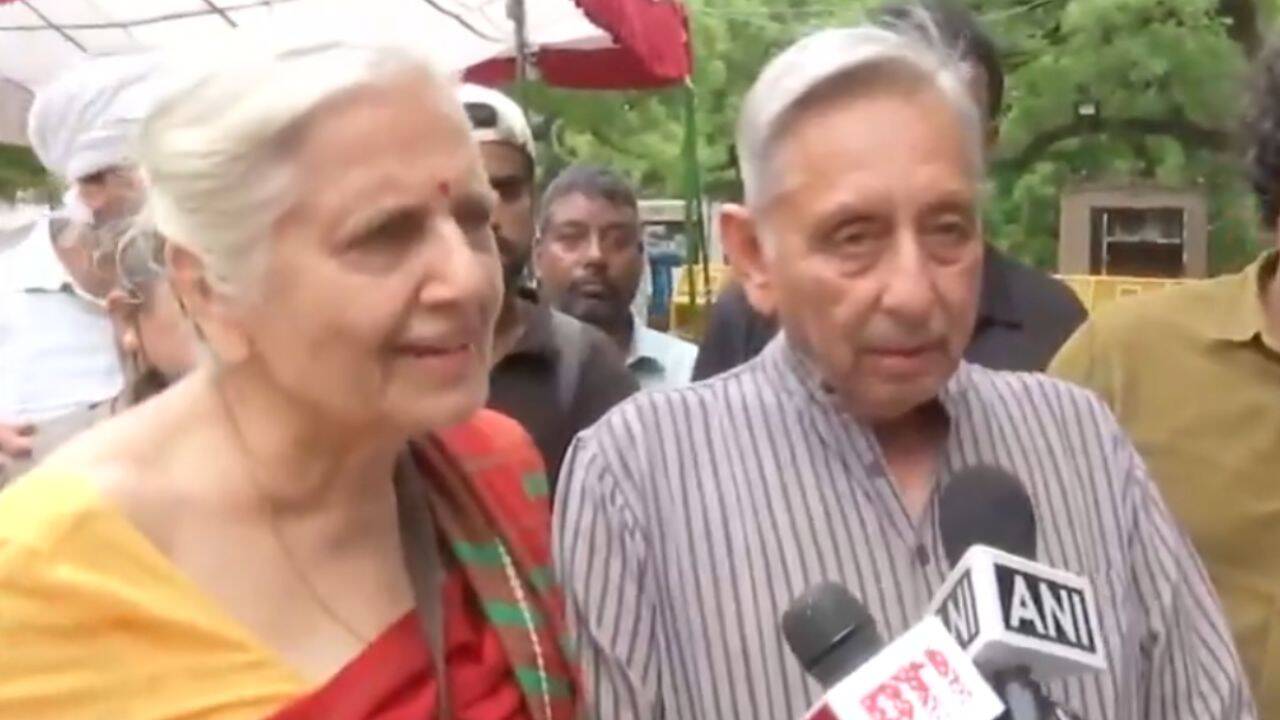
Congress leader Mani Shankar Aiyar has praised the protesting students, saying they are fearless. He stated that the current generation of students is not intimidated by anyone, including Prime Minister Narendra Modi and Home Minister Amit Shah.
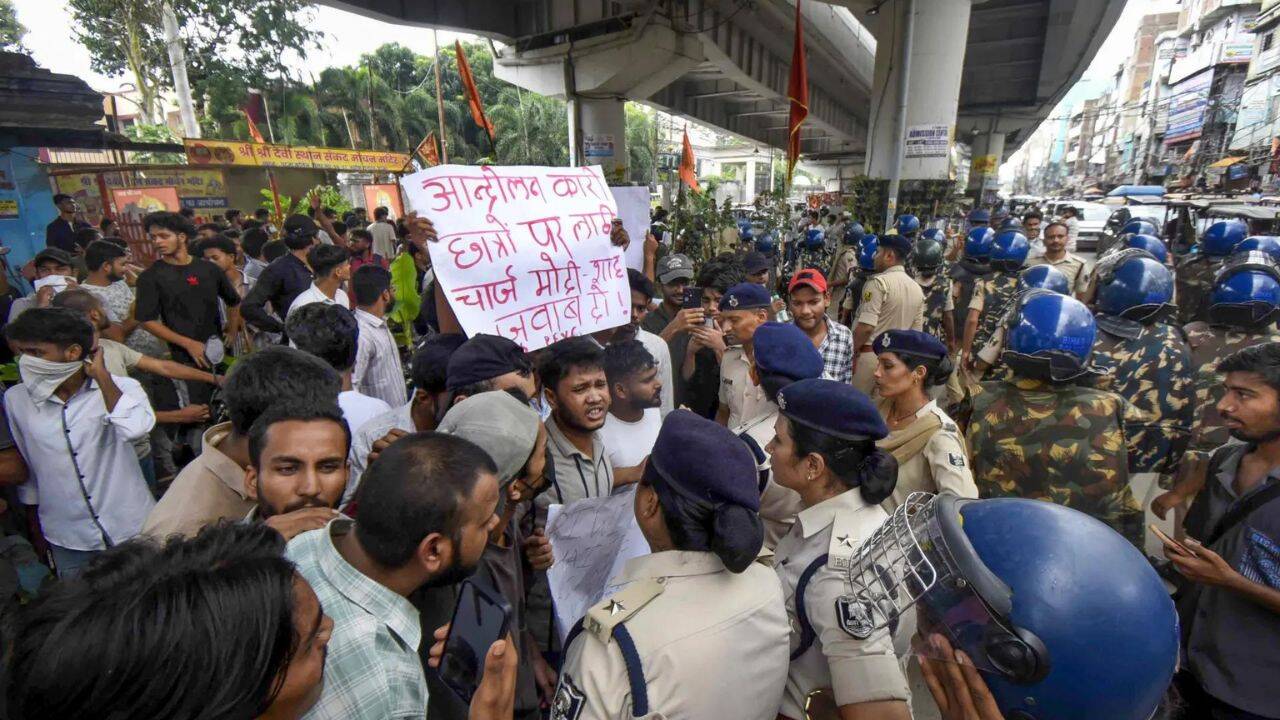
Aiyar's comments come at a time when students across the country are protesting against the Citizenship Amendment Act (CAA) and the National Register of Citizens (NRC). The protests have been ongoing for several weeks, with students from various universities and colleges participating.
According to Aiyar, the fearlessness of the students is a significant departure from the past, when politicians like him were scared of the consequences of speaking out against the government. He said that he and his colleagues were scared of Modi and Shah, but the students are not.
The Congress leader's comments are being seen as a reflection of the changing dynamics of Indian politics, where the younger generation is becoming increasingly vocal and assertive. The protests against the CAA and NRC have been led largely by students, who are demanding that the government repeal the laws.
Aiyar's praise for the students is also being seen as an attempt by the Congress party to reach out to the younger generation and tap into their energy and idealism. The party has been struggling to connect with young voters in recent years, and Aiyar's comments may be an attempt to change that.
The protests against the CAA and NRC have been marked by clashes between students and the police, with several instances of violence and intimidation reported. Despite this, the students have continued to protest, with many saying that they are willing to face the consequences of their actions.
The government has maintained that the CAA and NRC are necessary for national security and to protect the rights of Indian citizens. However, the opposition parties, including the Congress, have argued that the laws are discriminatory and target specific communities.
As the protests continue, it remains to be seen how the government will respond to the demands of the students. Aiyar's comments have added to the debate, with many praising the students for their fearlessness and others criticizing the Congress leader for his remarks.
In the context of Indian politics, Aiyar's comments are significant because they reflect the growing assertiveness of the younger generation. The students' protests have been a major challenge to the government, and their fearlessness has inspired many others to speak out against the laws.
The Congress party has been trying to capitalize on the protests, with many of its leaders visiting the protesting students and expressing solidarity with them. Aiyar's comments are part of this effort, and they may help to boost the party's image among young voters.
Overall, Aiyar's praise for the protesting students is a significant development in Indian politics, and it reflects the changing dynamics of the country's political landscape.
The significance of Aiyar's comments lies in the fact that they highlight the growing divide between the older generation of politicians and the younger generation of students. While the older generation may be scared of the consequences of speaking out against the government, the younger generation is more fearless and willing to challenge the status quo.
In conclusion, Aiyar's comments are a reflection of the changing times in Indian politics, where the younger generation is becoming increasingly vocal and assertive. The protests against the CAA and NRC have been a major challenge to the government, and the students' fearlessness has inspired many others to speak out against the laws.
Frequently asked questions
What is Mani Shankar Aiyar's view on protesting students?
Mani Shankar Aiyar has praised the protesting students, saying they are fearless.
What are the students protesting against?
The students are protesting against the Citizenship Amendment Act (CAA) and the National Register of Citizens (NRC).