Lake Malawi Larvae Defy Depth Limits
Insects found to survive deep water, challenging assumptions. Lake fly larvae exhibit daily vertical migration.
'%3E%3Crect%20width%3D'96'%20height%3D'96'%20fill%3D'%23B3261E'%2F%3E%3Ccircle%20cx%3D'30'%20cy%3D'24'%20r%3D'44'%20fill%3D'%23fff'%20opacity%3D'.12'%2F%3E%3Ccircle%20cx%3D'60'%20cy%3D'74'%20r%3D'40'%20fill%3D'%23000'%20opacity%3D'.10'%2F%3E%3C%2Fg%3E%3Cg%20fill%3D'%23fff'%3E%3Crect%20x%3D'29'%20y%3D'49'%20width%3D'8'%20height%3D'19'%20rx%3D'1'%2F%3E%3Crect%20x%3D'39'%20y%3D'40'%20width%3D'9'%20height%3D'28'%20rx%3D'1'%2F%3E%3Crect%20x%3D'50'%20y%3D'45'%20width%3D'8'%20height%3D'23'%20rx%3D'1'%2F%3E%3Crect%20x%3D'60'%20y%3D'53'%20width%3D'7'%20height%3D'15'%20rx%3D'1'%2F%3E%3Crect%20x%3D'41'%20y%3D'34'%20width%3D'5'%20height%3D'6'%2F%3E%3C%2Fg%3E%3C%2Fsvg%3E)
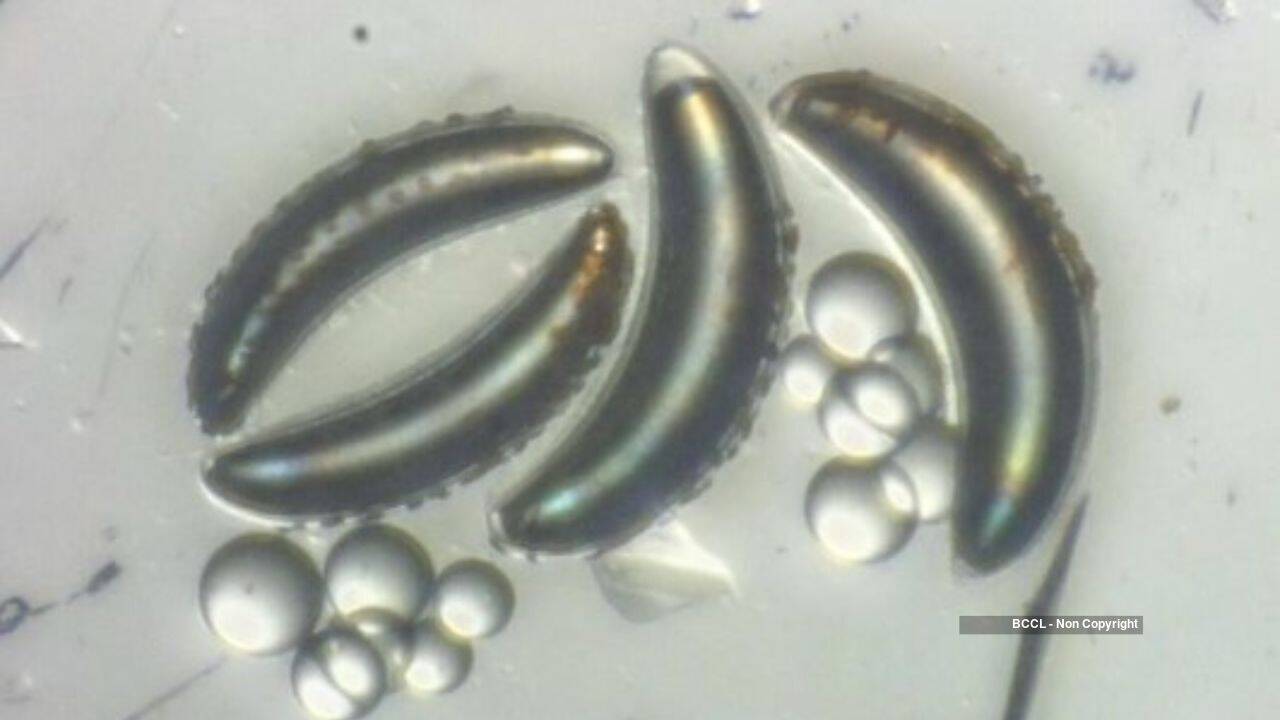
A remarkable discovery has been made in Lake Malawi, where scientists have found that lake fly larvae are capable of surviving in deep water. The Chaoborus edulis larvae have been observed to exhibit a daily vertical migration, moving up and down the water column with ease.
This unique behavior is made possible by the larvae's specialized air sacs, which allow them to control their buoyancy and maintain their position in the water. But what's even more impressive is the larvae's ability to withstand extreme pressures, challenging previous scientific assumptions that insects could not survive in deep water.
The larvae's ability to manage their depth is due to a unique pH-powered mechanism, which allows them to precisely control their movements. This mechanism is still not fully understood, but it has significant implications for our understanding of insect evolution and potential material science applications.
The discovery of these deep-water larvae has sent shockwaves through the scientific community, as it challenges long-held assumptions about the limits of insect survival. For decades, scientists have believed that insects were unable to survive in deep water, due to the extreme pressures and lack of oxygen. However, the lake fly larvae of Lake Malawi have proven that this is not the case.
Lake Malawi is a unique ecosystem, with a depth of over 700 meters and a complex system of water currents and chemistry. The lake is home to a diverse array of aquatic life, including fish, crustaceans, and insects. The discovery of the lake fly larvae's ability to survive in deep water has significant implications for our understanding of this ecosystem and the potential for other insects to thrive in similar environments.
The study of these larvae also has potential applications in material science, as scientists seek to develop new materials and technologies that can withstand extreme pressures and conditions. The unique mechanisms that allow the lake fly larvae to survive in deep water could inspire new designs and innovations, from deep-sea submersibles to medical devices.
In conclusion, the discovery of the lake fly larvae's ability to survive in deep water is a significant breakthrough, challenging our assumptions about the limits of insect survival and offering insights into insect evolution and potential material science applications. As scientists continue to study these remarkable insects, we can expect to learn more about the complex ecosystems of deep-water lakes and the potential for new technologies and innovations.
The implications of this discovery are far-reaching, and it will be exciting to see how it shapes our understanding of the natural world and inspires new developments in science and technology. For now, the lake fly larvae of Lake Malawi remain an fascinating example of the incredible diversity and adaptability of life on Earth.
Frequently asked questions
What is unique about the lake fly larvae in Lake Malawi?
They can survive in deep water and exhibit a daily vertical migration, thanks to specialized air sacs and a pH-powered mechanism.
What are the implications of this discovery?
It challenges previous scientific assumptions about insect survival and offers insights into insect evolution and potential material science applications.