MMRDA Tunnel Boring Machine Crosses 7 Railway Tracks
MMRDA achieves milestone, TBM crosses railway tracks without disrupting services. Tunnel project to reduce travel time between Orange Gate and Marine Drive.
'%3E%3Crect%20width%3D'96'%20height%3D'96'%20fill%3D'%23B3261E'%2F%3E%3Ccircle%20cx%3D'30'%20cy%3D'24'%20r%3D'44'%20fill%3D'%23fff'%20opacity%3D'.12'%2F%3E%3Ccircle%20cx%3D'60'%20cy%3D'74'%20r%3D'40'%20fill%3D'%23000'%20opacity%3D'.10'%2F%3E%3C%2Fg%3E%3Cg%20fill%3D'%23fff'%3E%3Crect%20x%3D'29'%20y%3D'49'%20width%3D'8'%20height%3D'19'%20rx%3D'1'%2F%3E%3Crect%20x%3D'39'%20y%3D'40'%20width%3D'9'%20height%3D'28'%20rx%3D'1'%2F%3E%3Crect%20x%3D'50'%20y%3D'45'%20width%3D'8'%20height%3D'23'%20rx%3D'1'%2F%3E%3Crect%20x%3D'60'%20y%3D'53'%20width%3D'7'%20height%3D'15'%20rx%3D'1'%2F%3E%3Crect%20x%3D'41'%20y%3D'34'%20width%3D'5'%20height%3D'6'%2F%3E%3C%2Fg%3E%3C%2Fsvg%3E)
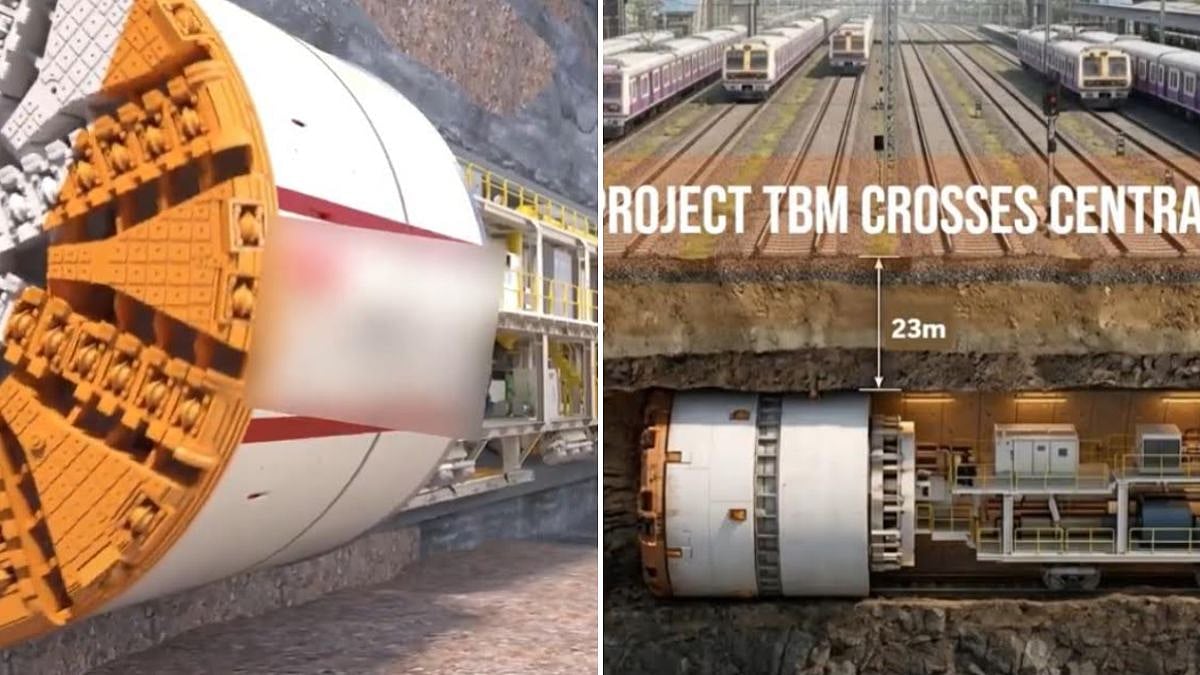
The Mumbai Metropolitan Region Development Authority (MMRDA) has achieved a significant milestone in its Orange Gate–Marine Drive Urban Road Tunnel project. The south-bound Tunnel Boring Machine (TBM) has successfully crossed beneath seven operational Central and Harbour Railway tracks without affecting train operations.
The complex underground operation was carried out beneath one of Mumbai's busiest railway corridors, with railway services continuing uninterrupted above the tunnelling zone. The operation was executed under 24x7 instrumentation and survey monitoring, along with stringent railway safety protocols and close coordination with Central Railway and the Commission of Railway Safety.
The successful crossing marks an important engineering achievement for the project, which involves constructing twin underground road tunnels connecting Orange Gate with Marine Drive. The tunnel is being constructed in challenging urban and coastal geological conditions and requires the TBM to pass beneath existing transport infrastructure, including railway corridors and Mumbai Metro Line 3.
The TBM, launched by Chief Minister Devendra Fadnavis and Deputy Chief Minister and MMRDA Chairman Eknath Shinde on December 3, 2025, is India's largest slurry shield TBM deployed for an urban road tunnel. The machine underwent a series of preparatory operations before commencing the main tunnelling drive on February 28, 2026.
By March 26, the machine had excavated 70 metres of the planned 3,720-metre drive. The Orange Gate–Marine Drive project comprises twin tunnels spanning more than 7 km, with the first tunnel under construction being around 3.45 km long and reaching depths of up to 52 metres.
The alignment passes beneath major existing transportation infrastructure, making construction particularly challenging in the densely built-up city. Once completed, the project is expected to bring the travel time between Orange Gate and Marine Drive down to around five minutes. It will also provide an important east-west road connection, with integration with the Coastal Road and Atal Setu.
The underground link is expected to help reduce congestion on surface roads, while also lowering fuel consumption and reducing travel time for commuters. The project is a significant step towards improving Mumbai's infrastructure and reducing traffic congestion in the city.
The MMRDA's achievement is a testament to the authority's commitment to delivering complex infrastructure projects in challenging environments. The successful crossing of the railway tracks is a major milestone in the project's timeline and paves the way for the completion of the tunnel.
The project's completion is expected to have a significant impact on Mumbai's traffic situation, providing a faster and more efficient route for commuters. The reduced travel time and increased connectivity will also have a positive impact on the city's economy and quality of life.
In conclusion, the MMRDA's Orange Gate–Marine Drive Urban Road Tunnel project is a significant infrastructure development that will improve Mumbai's traffic situation and provide a faster and more efficient route for commuters. The successful crossing of the railway tracks is a major milestone in the project's timeline and demonstrates the authority's commitment to delivering complex infrastructure projects in challenging environments.
Frequently asked questions
What is the length of the Orange Gate–Marine Drive tunnel project?
The project comprises twin tunnels spanning more than 7 km.
How will the project impact travel time between Orange Gate and Marine Drive?
The project is expected to bring the travel time down to around five minutes.