RBI Absorbs ₹6 Lakh Crore in Reverse Repo Auctions
RBI absorbs excess funds, banks prefer overnight liquidity window. Surplus exceeds ₹11 lakh crore.
'%3E%3Crect%20width%3D'96'%20height%3D'96'%20fill%3D'%230B6E4F'%2F%3E%3Ccircle%20cx%3D'30'%20cy%3D'24'%20r%3D'44'%20fill%3D'%23fff'%20opacity%3D'.12'%2F%3E%3Ccircle%20cx%3D'60'%20cy%3D'74'%20r%3D'40'%20fill%3D'%23000'%20opacity%3D'.10'%2F%3E%3C%2Fg%3E%3Cg%20fill%3D'none'%20stroke%3D'%23fff'%20stroke-width%3D'3.2'%20stroke-linecap%3D'round'%20stroke-linejoin%3D'round'%3E%3Cpolyline%20points%3D'31%2C59%2041%2C49%2049%2C54%2063%2C37'%2F%3E%3Cpolyline%20points%3D'55%2C37%2063%2C37%2063%2C45'%2F%3E%3C%2Fg%3E%3C%2Fsvg%3E)
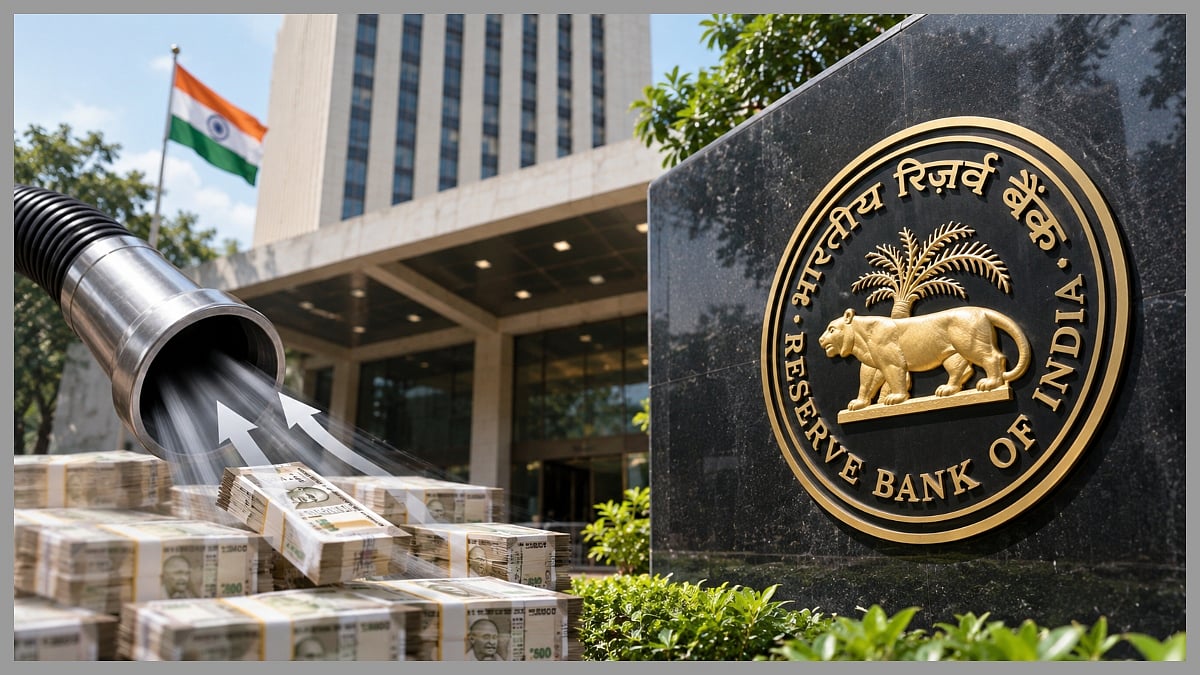
The Reserve Bank of India (RBI) has absorbed over ₹6 lakh crore of surplus banking funds through two variable rate reverse repo (VRRR) auctions.
The 30-day auction received bids of ₹2.59 lakh crore against the notified ₹7 lakh crore, reflecting a weak response.
The central bank subsequently announced an additional overnight auction, which saw improved demand with banks submitting bids worth ₹3,53,390 crore against the notified amount of ₹5 lakh crore.
The bids represented more than 70 percent of the offered amount, indicating that lenders were more comfortable parking surplus cash for a shorter period.
The RBI accepted the full bids received in both auctions, with the cut-off and weighted average rates standing at 5.24 percent for both the 30-day and overnight operations.
A VRRR auction allows the RBI to temporarily absorb excess cash from banks and keep short-term interest rates aligned with its monetary policy rate.
Banking system liquidity was estimated to be in surplus of around ₹11.16 lakh crore as of September 6.
The RBI has intensified absorption operations after banks received substantial funds through special foreign currency deposit and borrowing measures.
These measures mobilised USD 136.38 billion by August 31, comprising USD 127.23 billion through FCNR(B) deposits, USD 5.26 billion through overseas foreign currency borrowings, and USD 3.89 billion through external commercial borrowings.
The FCNR(B) window was closed one month early on August 31 following a strong response.
However, the overseas foreign currency borrowing and external commercial borrowing facilities will remain open until December 31.
The RBI conducted 32 VRRR auctions between August and early September, with maturities ranging from overnight to 14 days, to absorb surplus funds and align money-market rates with the repo rate.
The absorption of excess funds by the RBI is a significant step in managing the surplus liquidity in the banking system.
This move is expected to have a positive impact on the overall economy, as it will help to maintain stability in the financial markets.
The RBI's decision to absorb excess funds is also a reflection of its efforts to maintain a balance between liquidity and monetary policy.
In conclusion, the RBI's absorption of over ₹6 lakh crore through VRRR auctions is a significant development in the banking sector, and its impact will be closely watched by economists and financial experts in the coming days.
Frequently asked questions
What is the purpose of VRRR auctions?
VRRR auctions allow the RBI to temporarily absorb excess cash from banks and keep short-term interest rates aligned with its monetary policy rate.
How much surplus liquidity is in the banking system?
Banking system liquidity was estimated to be in surplus of around ₹11.16 lakh crore as of September 6.