Supreme Court Draws Line Between Vulgar and Obscene Speech
The Supreme Court has ruled that swearing is vulgar but not obscene. The court made this distinction in a recent judgement.
'%3E%3Crect%20width%3D'96'%20height%3D'96'%20fill%3D'%231A5276'%2F%3E%3Ccircle%20cx%3D'30'%20cy%3D'24'%20r%3D'44'%20fill%3D'%23fff'%20opacity%3D'.12'%2F%3E%3Ccircle%20cx%3D'60'%20cy%3D'74'%20r%3D'40'%20fill%3D'%23000'%20opacity%3D'.10'%2F%3E%3C%2Fg%3E%3Cg%20fill%3D'%23fff'%3E%3Cpath%20d%3D'M31%2041%20L48%2031%20L65%2041%20Z'%2F%3E%3Crect%20x%3D'33'%20y%3D'43'%20width%3D'4'%20height%3D'17'%2F%3E%3Crect%20x%3D'41'%20y%3D'43'%20width%3D'4'%20height%3D'17'%2F%3E%3Crect%20x%3D'51'%20y%3D'43'%20width%3D'4'%20height%3D'17'%2F%3E%3Crect%20x%3D'59'%20y%3D'43'%20width%3D'4'%20height%3D'17'%2F%3E%3Crect%20x%3D'30'%20y%3D'62'%20width%3D'36'%20height%3D'4'%20rx%3D'1'%2F%3E%3C%2Fg%3E%3C%2Fsvg%3E)
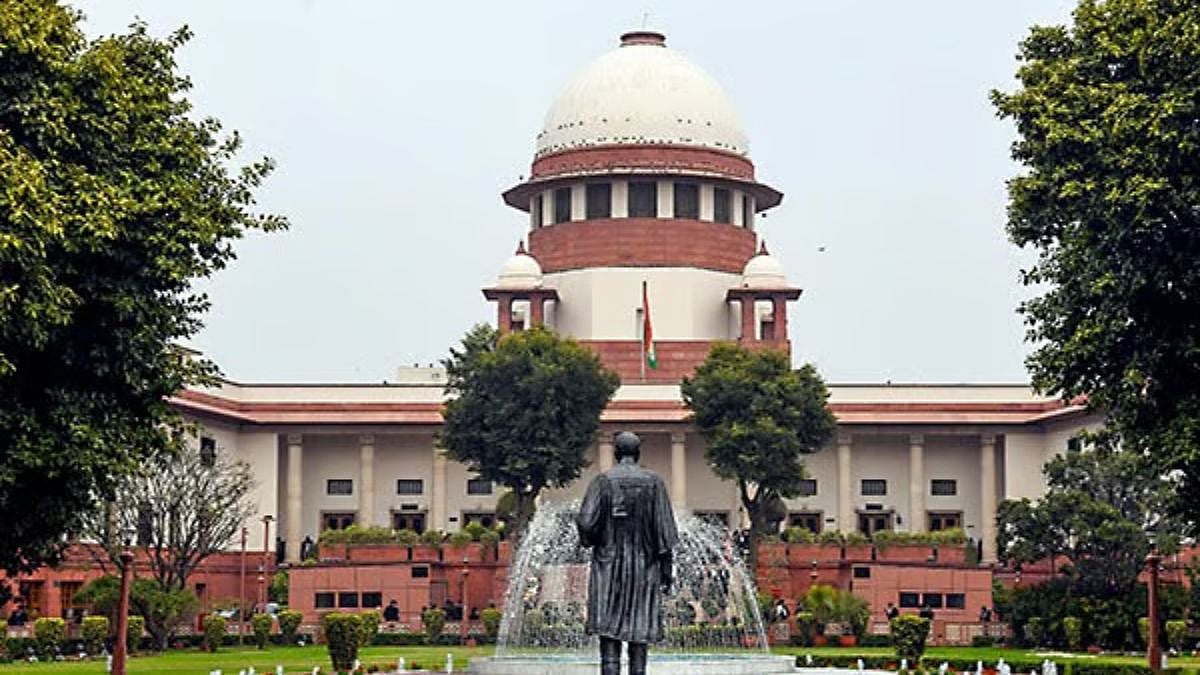
The Supreme Court has performed an important service to both free speech and the criminal justice system by drawing a clear distinction between what is merely vulgar and what is legally obscene.
The use of swear words, profanities, and vulgar expletives is certainly not a mark of civility, and such language is distasteful and has no place in courteous public discourse. However, human beings are not always calm or rational, and heated arguments often produce words that would never have been spoken after reflection.
A bench headed by Justice Sanjay Karol interpreted Section 294 (b) of the Indian Penal Code and its corresponding provision in the Bharatiya Nyaya Sanhita, which deal with obscene acts and utterances. The case arose from a land dispute in Tamil Nadu in which one party repeatedly hurled a notorious four-letter abuse at another during a quarrel in 2017.
The court rightly held that merely using foul language does not automatically amount to obscenity. Quoting dictionaries, it reiterated that obscenity must satisfy the “community standards test”. The expression must be lascivious, appeal to prurient interests, and possess the tendency to deprave and corrupt those who hear or read it. It must also genuinely cause annoyance to others.
In the case before it, the words used by the now 70-year-old accused were described as “at best, abusive or vulgar in nature”, falling well short of the legal threshold of obscenity. The ruling is consistent with earlier judicial pronouncements, recognising that obscenity is not a fixed concept. Standards of morality evolve with time and vary across societies.
The court has also consistently distinguished vulgarity from obscenity. Vulgarity may evoke disgust or revulsion, but obscenity is something that corrupts morals and appeals to prurient instincts. The changing fortunes of Lady Chatterley’s Lover illustrate how society’s perceptions of obscenity evolve over time.
The judgement should serve as a reminder to the police that criminal law is not a weapon for punishing every instance of bad manners. Offensive language deserves social disapproval, but only speech that crosses the carefully defined legal threshold should invite criminal prosecution. Such restraint is essential in a democracy that values both decency and freedom of expression.
The Supreme Court's decision has significant implications for the criminal justice system and free speech in India. It highlights the importance of distinguishing between vulgarity and obscenity, and ensures that the law is not used to punish individuals for using offensive language that does not meet the legal threshold of obscenity.
In conclusion, the Supreme Court's judgement is a welcome clarification of the law on obscenity and free speech. It reinforces the importance of protecting freedom of expression while also maintaining social decency and morality.
The ruling will have a positive impact on the functioning of the criminal justice system, as it will help to prevent the misuse of the law to punish individuals for using offensive language that is not obscene. It will also promote a more nuanced understanding of the distinction between vulgarity and obscenity, and ensure that the law is applied in a fair and consistent manner.
Overall, the Supreme Court's decision is a significant step forward in the development of the law on free speech and obscenity in India. It demonstrates the court's commitment to protecting individual rights and freedoms, while also upholding social decency and morality.
This judgement is a reminder that the law should be used to punish only those instances of speech that cross the carefully defined legal threshold of obscenity, and not to suppress freedom of expression or punish individuals for using offensive language that is not obscene.
The Supreme Court's decision will have far-reaching implications for the criminal justice system, free speech, and social morality in India. It will help to promote a more nuanced understanding of the distinction between vulgarity and obscenity, and ensure that the law is applied in a fair and consistent manner.
In the end, the Supreme Court's judgement is a significant contribution to the development of the law on free speech and obscenity in India. It reinforces the importance of protecting individual rights and freedoms, while also upholding social decency and morality.
Frequently asked questions
What is the difference between vulgarity and obscenity?
Vulgarity may evoke disgust or revulsion, but obscenity is something that corrupts morals and appeals to prurient instincts.
What is the legal threshold for obscenity?
Obscenity must satisfy the community standards test, be lascivious, appeal to prurient interests, and possess the tendency to deprave and corrupt those who hear or read it.