India's Mental Health Approach Evolves Since 1947
India's mental health care has transformed over 80 years. From colonial-era isolation to community-based care.
'%3E%3Crect%20width%3D'96'%20height%3D'96'%20fill%3D'%231B5E20'%2F%3E%3Ccircle%20cx%3D'30'%20cy%3D'24'%20r%3D'44'%20fill%3D'%23fff'%20opacity%3D'.12'%2F%3E%3Ccircle%20cx%3D'60'%20cy%3D'74'%20r%3D'40'%20fill%3D'%23000'%20opacity%3D'.10'%2F%3E%3C%2Fg%3E%3Cg%3E%3Ccircle%20cx%3D'48'%20cy%3D'48'%20r%3D'15'%20fill%3D'%23fff'%2F%3E%3Cpath%20d%3D'M43%2034%20Q50%2048%2043%2062'%20fill%3D'none'%20stroke%3D'%238a94a6'%20stroke-width%3D'2.4'%2F%3E%3Cpath%20d%3D'M47%2033%20Q54%2048%2047%2063'%20fill%3D'none'%20stroke%3D'%238a94a6'%20stroke-width%3D'1.8'%20stroke-dasharray%3D'1.5%203'%2F%3E%3C%2Fg%3E%3C%2Fsvg%3E)
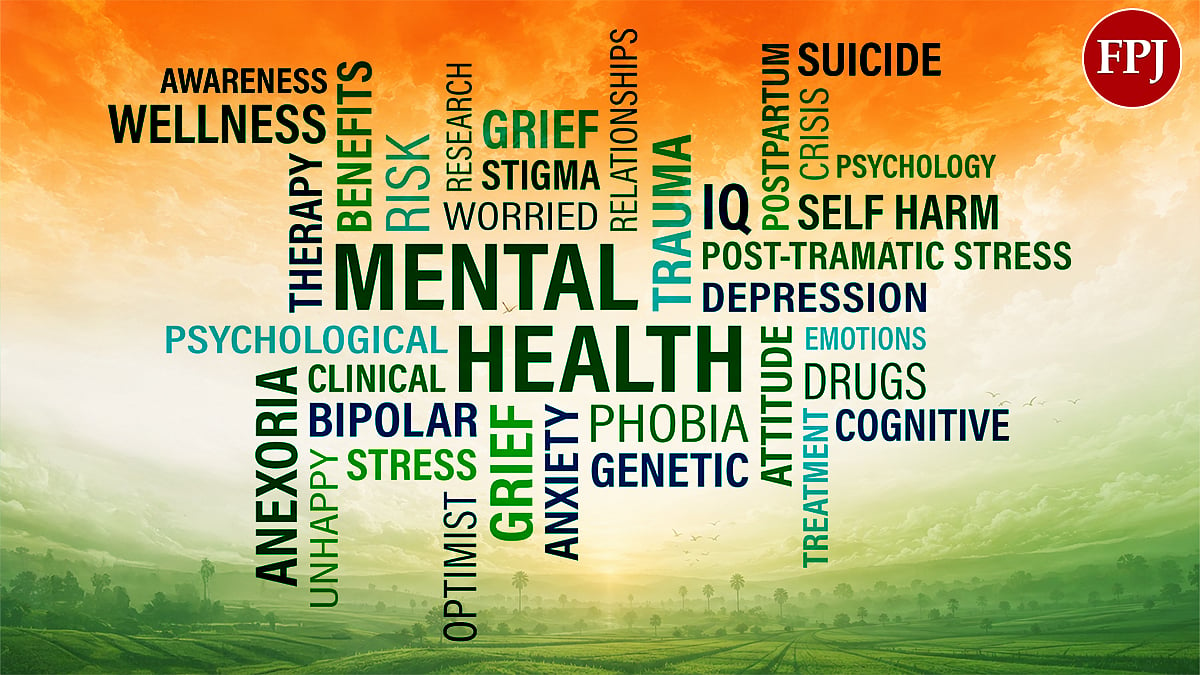
As India celebrates its 80th Independence Day, the nation reflects on its journey towards true independence, including liberating citizens from mental health issues. Since 1947, India's approach to mental healthcare has undergone a significant transformation.
At the time of independence, India inherited a colonial framework that prioritized control over compassion. The Indian Lunacy Act of 1912 was the legal foundation of psychiatric care, which aimed to remove individuals with psychiatric conditions from society rather than heal them. Mental hospitals operated like prisons, keeping patients isolated from mainstream medical care and social life.
Mental illness was shrouded in silence, often attributed to supernatural beliefs, personal failure, or poor character. Dr. Aneri Amin, a consultant-psychiatrist, notes that India's past approach to mental health was inadequate. The custodial model placed a heavy burden on Indian families, who bore the weight of caregiving in secrecy due to the fear of social ostracization.
Women, in particular, faced a double-edged silence, as their psychological distress was often dismissed as a personal or moral defect rather than a genuine health condition. Rhea Sharma, founder of DiverseAI and DesiWoman.ai, recalls that mental health was not discussed openly in her family. Women struggling with mental health issues were often labeled as difficult, weak, or needing to adjust more.
The shift away from institutional isolation began with the integration of psychiatric care into general medical hospitals. The launch of the National Mental Health Programme in 1982 and the District Mental Health Programme in 1996 marked a decisive policy shift. These initiatives aimed to decentralize psychiatric care, bringing basic diagnostic and therapeutic services to primary health centers and rural communities.
Today, India's approach to mental healthcare is more rights-based, digitally enabled, and community-integrated. The nation has made significant progress in addressing mental health issues, but there is still a long way to go. As India celebrates its independence, it is essential to acknowledge the evolution of its mental health care system and continue working towards a more compassionate and inclusive society.
The transformation of India's mental health care system is a testament to the nation's commitment to the well-being of its citizens. As the country moves forward, it is crucial to prioritize mental health care and work towards creating a society that is supportive and inclusive of individuals struggling with mental health issues.
In conclusion, India's approach to mental healthcare has undergone a profound transformation since 1947. From a colonial apparatus of custodial detention to a rights-based, digitally enabled, and community-integrated health framework, the nation has made significant progress in addressing mental health issues. As India celebrates its 80th Independence Day, it is essential to acknowledge this evolution and continue working towards a more compassionate and inclusive society.
Frequently asked questions
What was the Indian Lunacy Act of 1912
The Indian Lunacy Act of 1912 was a colonial statute designed to remove individuals with psychiatric conditions from society rather than heal them.
What is the National Mental Health Programme
The National Mental Health Programme, launched in 1982, aimed to decentralize psychiatric care and bring basic diagnostic and therapeutic services to primary health centers and rural communities.