Sergey Brin's $450M Yacht Docks at Spanish Navy Berth
Google co-founder's massive yacht stops for refueling. Logistical challenges arise due to its size.
'%3E%3Crect%20width%3D'96'%20height%3D'96'%20fill%3D'%23B3261E'%2F%3E%3Ccircle%20cx%3D'30'%20cy%3D'24'%20r%3D'44'%20fill%3D'%23fff'%20opacity%3D'.12'%2F%3E%3Ccircle%20cx%3D'60'%20cy%3D'74'%20r%3D'40'%20fill%3D'%23000'%20opacity%3D'.10'%2F%3E%3C%2Fg%3E%3Cg%20fill%3D'%23fff'%3E%3Crect%20x%3D'29'%20y%3D'49'%20width%3D'8'%20height%3D'19'%20rx%3D'1'%2F%3E%3Crect%20x%3D'39'%20y%3D'40'%20width%3D'9'%20height%3D'28'%20rx%3D'1'%2F%3E%3Crect%20x%3D'50'%20y%3D'45'%20width%3D'8'%20height%3D'23'%20rx%3D'1'%2F%3E%3Crect%20x%3D'60'%20y%3D'53'%20width%3D'7'%20height%3D'15'%20rx%3D'1'%2F%3E%3Crect%20x%3D'41'%20y%3D'34'%20width%3D'5'%20height%3D'6'%2F%3E%3C%2Fg%3E%3C%2Fsvg%3E)
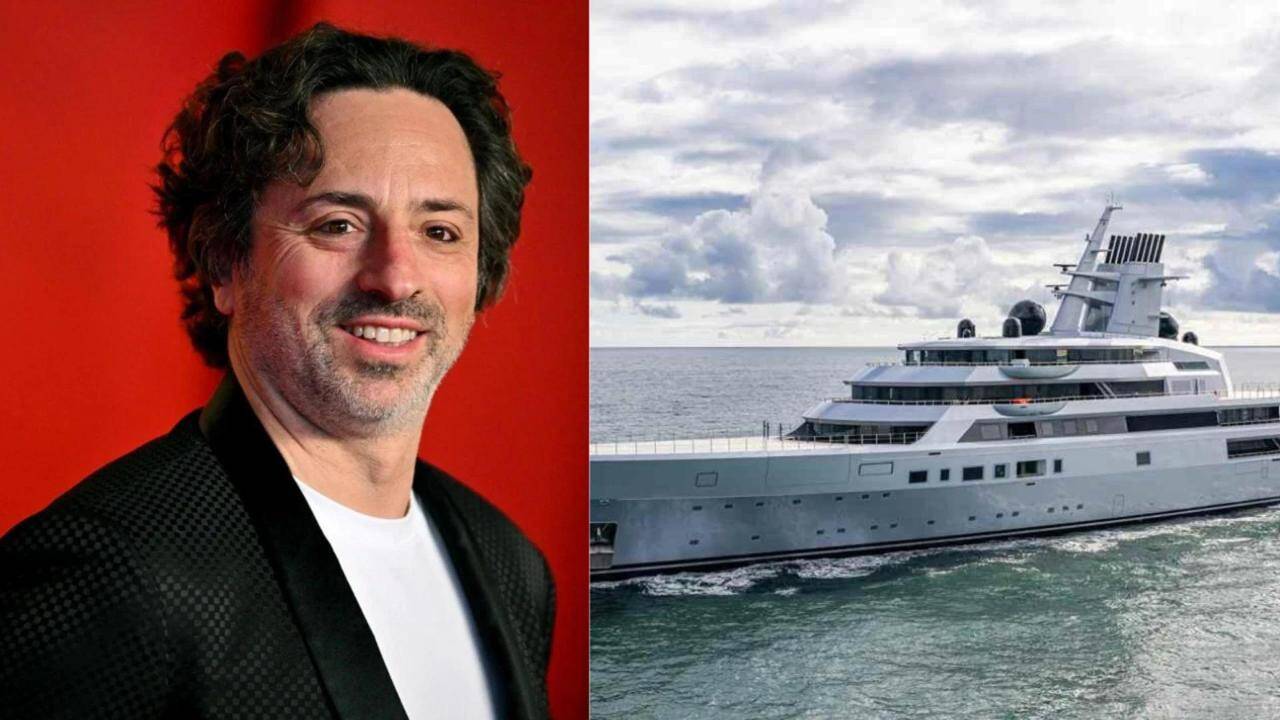
Sergey Brin, the co-founder of Google, recently docked his $450 million superyacht, Dragonfly, at a Spanish Navy cruise berth in Gibraltar for refueling. The massive vessel requires industrial-scale bunkering infrastructure to meet its substantial fuel needs, resulting in lengthy refueling operations that can last for many hours.
The Dragonfly's enormous size poses significant logistical challenges, preventing it from docking at standard marinas and requiring specialized port facilities. This recent stop highlights the difficulties of maintaining such colossal marine vessels, which demand careful planning and specialized infrastructure to support their operations.
Sergey Brin's superyacht is one of the largest and most luxurious private vessels in the world, featuring state-of-the-art amenities and accommodations. Its size and complexity require a significant amount of resources to maintain, including fuel, provisions, and crew.
The Dragonfly's visit to Gibraltar is not unusual, as the region is a popular stopover for superyachts due to its strategic location and favorable tax environment. However, the yacht's massive size and fuel requirements make it a notable visitor, requiring special arrangements and accommodations.
The logistical challenges of maintaining superyachts like the Dragonfly are not unique to Sergey Brin's vessel. Many large private yachts face similar difficulties, including finding suitable docking facilities, arranging for fuel and provisions, and managing complex crew and maintenance operations.
Despite these challenges, superyachts like the Dragonfly continue to be popular among wealthy individuals and celebrities, offering a unique and luxurious way to travel and experience the world. For owners like Sergey Brin, the benefits of owning a superyacht, including the freedom and flexibility to travel wherever and whenever they want, outweigh the logistical challenges and costs associated with maintaining these massive vessels.
In the context of the global superyacht industry, the Dragonfly's recent stop in Gibraltar highlights the growing demand for specialized infrastructure and services to support the needs of these large and complex vessels. As the number of superyachts on the water continues to grow, ports and marinas are being forced to adapt and invest in new facilities and technologies to meet the demands of these luxurious private vessels.
The visit of the Dragonfly to Gibraltar also underscores the importance of strategic locations and favorable tax environments in attracting superyachts and supporting the growth of the industry. For regions like Gibraltar, the presence of superyachts like the Dragonfly can have significant economic benefits, generating revenue and creating jobs in the local economy.
In conclusion, the recent docking of Sergey Brin's $450 million superyacht, Dragonfly, at a Spanish Navy cruise berth in Gibraltar highlights the logistical challenges and complexities of maintaining large and luxurious private vessels. While these challenges are significant, they do not appear to be deterring owners like Sergey Brin, who continue to enjoy the benefits and freedoms of superyacht ownership.
The significance of this event for the global superyacht industry and the economy of regions like Gibraltar cannot be overstated. As the industry continues to grow and evolve, it will be important to address the logistical challenges and infrastructure needs of these massive vessels, ensuring that they can continue to operate safely and efficiently, while also generating economic benefits and supporting local communities.
Frequently asked questions
How much does Sergey Brin's superyacht cost?
Sergey Brin's superyacht, Dragonfly, is valued at $450 million.
Why did the Dragonfly dock at a Spanish Navy cruise berth?
The Dragonfly docked at a Spanish Navy cruise berth in Gibraltar for refueling, due to its massive size and substantial fuel requirements.