MP Governor Denies Prosecution Sanction to Minister Vijay Shah
MP Governor Mangubhai Patel denies prosecution sanction to Minister Vijay Shah. Shah faced controversy over remarks against Colonel Sofiya Qureshi.
'%3E%3Crect%20width%3D'96'%20height%3D'96'%20fill%3D'%231A5276'%2F%3E%3Ccircle%20cx%3D'30'%20cy%3D'24'%20r%3D'44'%20fill%3D'%23fff'%20opacity%3D'.12'%2F%3E%3Ccircle%20cx%3D'60'%20cy%3D'74'%20r%3D'40'%20fill%3D'%23000'%20opacity%3D'.10'%2F%3E%3C%2Fg%3E%3Cg%20fill%3D'%23fff'%3E%3Cpath%20d%3D'M31%2041%20L48%2031%20L65%2041%20Z'%2F%3E%3Crect%20x%3D'33'%20y%3D'43'%20width%3D'4'%20height%3D'17'%2F%3E%3Crect%20x%3D'41'%20y%3D'43'%20width%3D'4'%20height%3D'17'%2F%3E%3Crect%20x%3D'51'%20y%3D'43'%20width%3D'4'%20height%3D'17'%2F%3E%3Crect%20x%3D'59'%20y%3D'43'%20width%3D'4'%20height%3D'17'%2F%3E%3Crect%20x%3D'30'%20y%3D'62'%20width%3D'36'%20height%3D'4'%20rx%3D'1'%2F%3E%3C%2Fg%3E%3C%2Fsvg%3E)
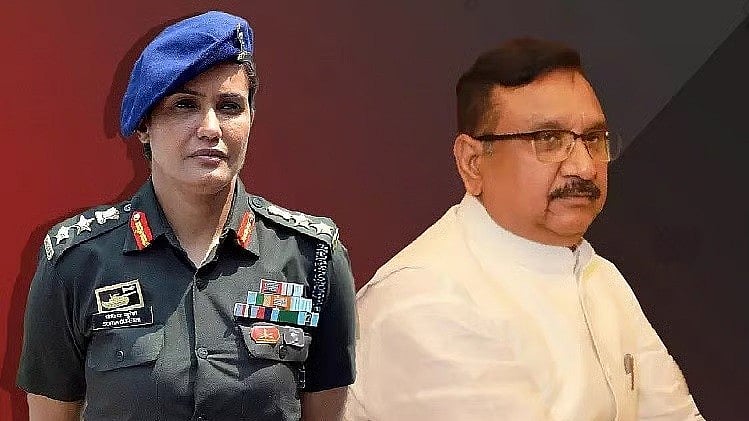
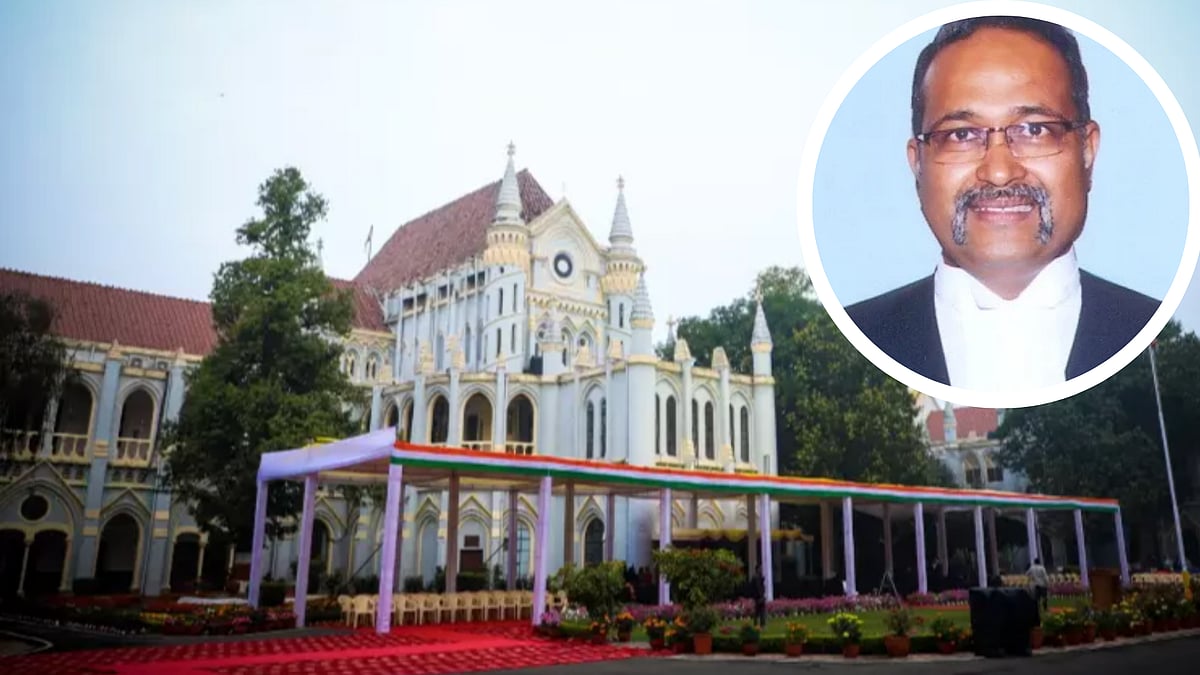
Madhya Pradesh Governor Mangubhai Patel has accepted the Cabinet's proposal to deny prosecution sanction to Tribal Welfare Minister Vijay Shah. This decision was made on Monday evening, after a discussion with Chief Secretary Ashok Barnwal in Bhopal.
The case against Shah stems from his controversial remarks against Colonel Sofiya Qureshi. The state government had informed the Supreme Court that a decision on sanction to prosecute Shah was expected shortly.
The Supreme Court, comprising Chief Justice of India Surya Kant, Justice Joymalya Bagchi, and Justice V Mohan, was hearing the case. Additional Solicitor General KM Nataraj stated that the state government's recommendation on prosecution sanction was pending before the Governor.
Justice Joymalya Bagchi remarked that the Governor should be allowed to take a decision on the matter. Chief Justice of India Surya Kant also stated that the investigation report ultimately has to go before the competent authority.
The High Court had taken suo motu cognisance of the remarks on May 14, 2025, and directed registration of a criminal case, prompting Shah to move the Supreme Court.
Chief Justice of India Surya Kant asked the SIT what would happen next if sanction to prosecute Shah was not granted. Nataraj stated that a closure report would have to be filed in such a scenario.
The SIT had probed Shah's comments against Colonel Sofiya Qureshi and sought permission under Section 196(1)(a) of the Bharatiya Nyaya Sanhita.
With the Governor's decision to deny prosecution sanction, the government may now file a closure report in court. This means that while the SIT investigation is complete, further legal action depends on prosecution sanction.
The denial of prosecution sanction to Minister Vijay Shah has significant implications for the case. If sanction is granted, the process to file a chargesheet would proceed, whereas if sanction is denied, a closure report would be submitted.
In this case, the Governor's decision to deny prosecution sanction brings relief to Minister Vijay Shah. However, it also raises questions about the accountability of public officials and the rule of law in the state.
The decision is likely to have far-reaching consequences for the state government and the judiciary. It highlights the importance of the prosecution sanction process in ensuring that public officials are held accountable for their actions.
The case against Minister Vijay Shah has been widely followed in the state, and the Governor's decision is likely to be closely watched by the public and the media.
In conclusion, the denial of prosecution sanction to Minister Vijay Shah is a significant development in the case. It highlights the complexities of the prosecution sanction process and the importance of ensuring that public officials are held accountable for their actions.
Frequently asked questions
What is the case against Minister Vijay Shah about?
The case against Minister Vijay Shah is about his controversial remarks against Colonel Sofiya Qureshi.
What is the significance of the Governor's decision to deny prosecution sanction?
The Governor's decision to deny prosecution sanction means that the government may now file a closure report in court, and further legal action depends on prosecution sanction.