Govt Debunks E20 Petrol Claims
E20 petrol may lower fuel efficiency by 2-6%. Govt clarifies impact on mileage and engines.
'%3E%3Crect%20width%3D'96'%20height%3D'96'%20fill%3D'%230B6E4F'%2F%3E%3Ccircle%20cx%3D'30'%20cy%3D'24'%20r%3D'44'%20fill%3D'%23fff'%20opacity%3D'.12'%2F%3E%3Ccircle%20cx%3D'60'%20cy%3D'74'%20r%3D'40'%20fill%3D'%23000'%20opacity%3D'.10'%2F%3E%3C%2Fg%3E%3Cg%20fill%3D'none'%20stroke%3D'%23fff'%20stroke-width%3D'3.2'%20stroke-linecap%3D'round'%20stroke-linejoin%3D'round'%3E%3Cpolyline%20points%3D'31%2C59%2041%2C49%2049%2C54%2063%2C37'%2F%3E%3Cpolyline%20points%3D'55%2C37%2063%2C37%2063%2C45'%2F%3E%3C%2Fg%3E%3C%2Fsvg%3E)
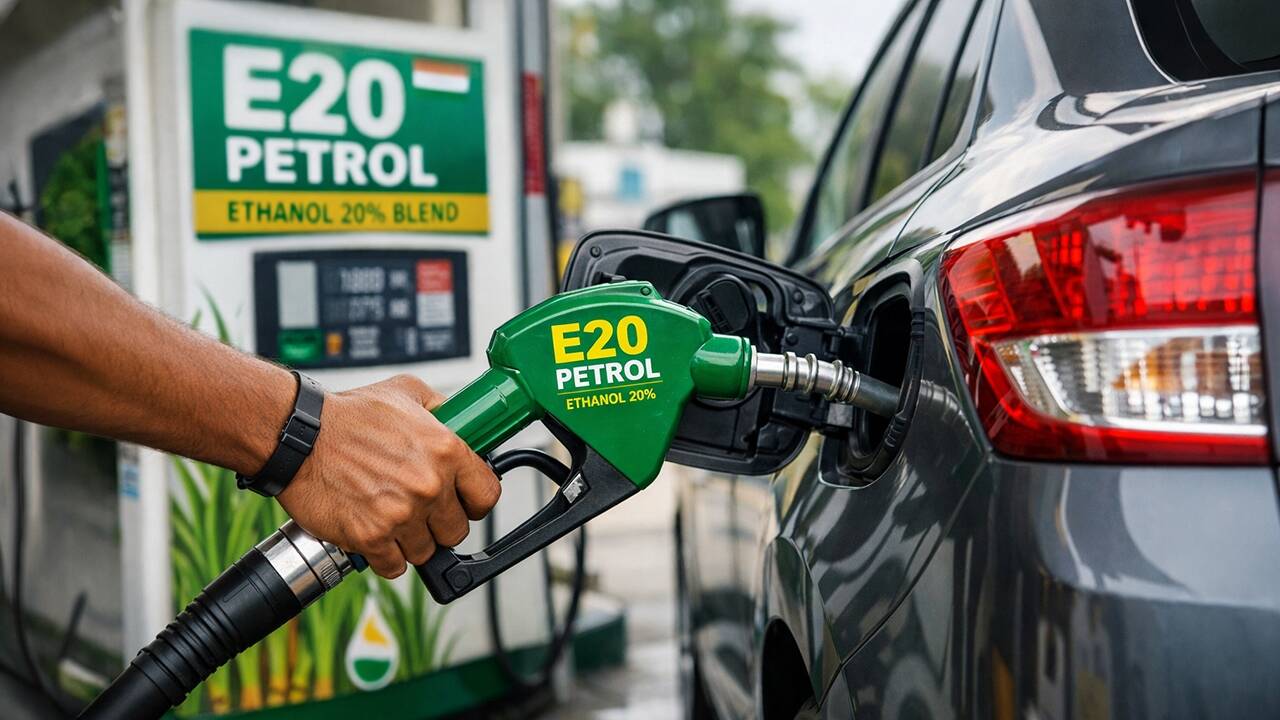
The Indian government has addressed concerns surrounding the use of petrol blended with 20% ethanol, known as E20. According to Road Transport and Highways Minister Nitin Gadkari, the use of E20 petrol may result in a 2-6% decrease in fuel efficiency. This reduction in mileage is dependent on the type and age of the vehicle.
The government's statement comes as a response to various claims made about the effects of E20 petrol on vehicles. Minister Gadkari has debunked seven claims related to the use of E20 petrol, aiming to provide clarity on the matter.
One of the primary concerns associated with E20 petrol is its impact on engine performance. However, the government has assured that E20 petrol is compatible with most vehicles, and the effects on engine longevity are minimal.
The use of ethanol-blended petrol is part of the government's efforts to reduce the country's dependence on fossil fuels and decrease carbon emissions. The introduction of E20 petrol is expected to contribute to a more sustainable and environmentally friendly transportation sector.
In recent years, the Indian government has been actively promoting the use of biofuels, including ethanol. The country has set ambitious targets to increase the production and use of biofuels, with the aim of reducing greenhouse gas emissions and improving air quality.
The debate surrounding E20 petrol has sparked intense discussion among vehicle owners, manufacturers, and environmentalists. While some have raised concerns about the potential effects on mileage and engine performance, others have welcomed the introduction of E20 petrol as a step towards a more sustainable future.
As the government continues to promote the use of E20 petrol, it is essential for vehicle owners to understand the potential impacts on their vehicles. The 2-6% reduction in fuel efficiency may require drivers to adjust their driving habits or vehicle maintenance routines.
In conclusion, the Indian government's clarification on the effects of E20 petrol provides valuable insight into the potential impacts on vehicles. As the country moves towards a more sustainable transportation sector, it is crucial for stakeholders to work together to address concerns and promote the adoption of environmentally friendly fuels.
The introduction of E20 petrol is a significant step towards reducing India's carbon footprint and promoting sustainable development. As the government continues to implement policies aimed at reducing greenhouse gas emissions, it is likely that the use of E20 petrol will become increasingly widespread.
The impact of E20 petrol on the environment and the transportation sector will be closely monitored in the coming years. With the government's commitment to promoting sustainable fuels, India is poised to make significant strides in reducing its dependence on fossil fuels and contributing to a more environmentally friendly future.
The government's efforts to debunk myths surrounding E20 petrol are expected to boost confidence among vehicle owners and manufacturers. As the country continues to transition towards a more sustainable transportation sector, it is essential for stakeholders to work together to address concerns and promote the adoption of environmentally friendly fuels.
In the long run, the introduction of E20 petrol is expected to have a positive impact on the environment and the transportation sector. With the government's commitment to promoting sustainable fuels, India is likely to emerge as a leader in the adoption of environmentally friendly transportation solutions.
Frequently asked questions
What is E20 petrol and how does it affect mileage?
E20 petrol is petrol blended with 20% ethanol, which may lower fuel efficiency by 2-6%, depending on the type and age of the vehicle.
Is E20 petrol compatible with all vehicles?
The government has assured that E20 petrol is compatible with most vehicles, and the effects on engine longevity are minimal.