MP's Mowgli Inspired by UP's Wolf Boy
Mowgli's story inspired by real-life wolf boy, Dina Sanichar. Kipling's acquaintance with Sanichar sparked The Jungle Book.
'%3E%3Crect%20width%3D'96'%20height%3D'96'%20fill%3D'%23B3261E'%2F%3E%3Ccircle%20cx%3D'30'%20cy%3D'24'%20r%3D'44'%20fill%3D'%23fff'%20opacity%3D'.12'%2F%3E%3Ccircle%20cx%3D'60'%20cy%3D'74'%20r%3D'40'%20fill%3D'%23000'%20opacity%3D'.10'%2F%3E%3C%2Fg%3E%3Cg%20fill%3D'%23fff'%3E%3Crect%20x%3D'29'%20y%3D'49'%20width%3D'8'%20height%3D'19'%20rx%3D'1'%2F%3E%3Crect%20x%3D'39'%20y%3D'40'%20width%3D'9'%20height%3D'28'%20rx%3D'1'%2F%3E%3Crect%20x%3D'50'%20y%3D'45'%20width%3D'8'%20height%3D'23'%20rx%3D'1'%2F%3E%3Crect%20x%3D'60'%20y%3D'53'%20width%3D'7'%20height%3D'15'%20rx%3D'1'%2F%3E%3Crect%20x%3D'41'%20y%3D'34'%20width%3D'5'%20height%3D'6'%2F%3E%3C%2Fg%3E%3C%2Fsvg%3E)
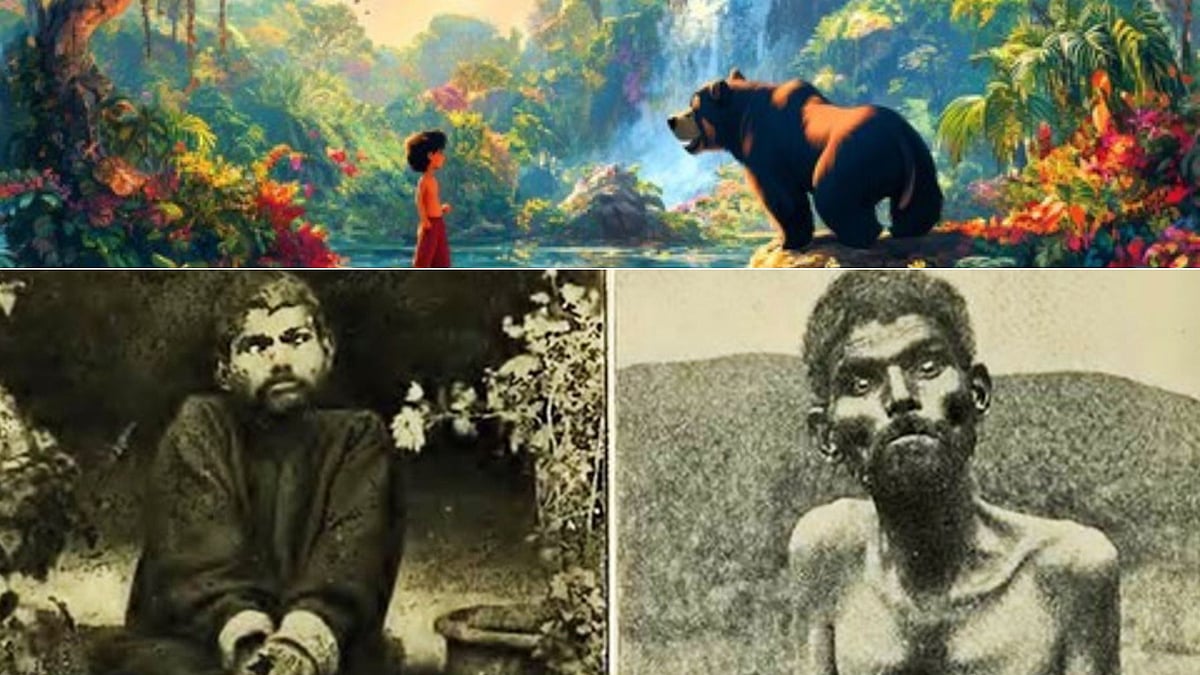
A fascinating story has emerged about the inspiration behind Rudyard Kipling's famous character, Mowgli, from The Jungle Book. The protagonist, raised by a pack of wolves in the Pench forests of Madhya Pradesh, has a real-life counterpart in Dina Sanichar, a six-year-old boy found among wolves in a cave in Uttar Pradesh's Bulandshahr district in 1867.
The discovery of Sanichar, also known as the 'Wolf Boy', was widely covered by the media, including The Pioneer, a newspaper where Kipling worked as a journalist from 1887 to 1889. It is believed that Kipling's acquaintance with Sanichar's story inspired him to create the character of Mowgli.
Sanichar's story is a remarkable one. Found by a band of hunters, he was taken to an orphanage in Agra, where he was named 'Sanichar' because he arrived on a Saturday. Despite efforts to civilize him, Sanichar never shed his wild behavior, often howling, grunting, and snarling like a wolf. He eventually became a chain smoker and died of tuberculosis in 1895.
Kipling's The Jungle Book, published in 1894, tells the story of Mowgli, a boy raised by wolves in the Seonee hills of Madhya Pradesh. While Kipling never visited the Pench forest, he based his story on an adventure tale written by Robert Armitage Sterndale, which vividly describes the landscape of Seoni.
The character of Mowgli has become an iconic figure in literature, embodying the duality of human and animal traits. His story has captivated readers for generations, and the inspiration behind his creation is a fascinating tale that sheds light on the importance of childhood conduct and the influence of nature on human behavior.
The story of Dina Sanichar and his connection to Mowgli is a testament to the power of literature to inspire and captivate audiences. It also highlights the significance of the Pench forest and the Seonee hills as a backdrop for Kipling's famous tale.
In conclusion, the story of Mowgli and his real-life counterpart, Dina Sanichar, is a fascinating one that continues to inspire and captivate audiences. The connection between the two is a reminder of the power of literature to shape our understanding of the world and our place in it.
The legend of Dina Sanichar and Mowgli has endured for generations, and their stories continue to fascinate people to this day. The tale of the 'Wolf Boy' and the fictional character he inspired is a reminder of the importance of exploring and understanding the natural world and our place within it.
As we reflect on the story of Mowgli and Dina Sanichar, we are reminded of the significance of literature in shaping our understanding of the world and our place in it. The connection between the two is a testament to the power of storytelling to inspire and captivate audiences, and to the enduring legacy of Rudyard Kipling's famous tale.
The story of Mowgli and Dina Sanichar is a significant one, not only because of its literary significance but also because of its cultural and historical importance. It highlights the importance of understanding and appreciating the natural world and our place within it, and it reminds us of the power of literature to shape our understanding of the world and our place in it.
In the end, the story of Mowgli and Dina Sanichar is a fascinating tale that continues to inspire and captivate audiences. It is a reminder of the power of literature to shape our understanding of the world and our place in it, and it is a testament to the enduring legacy of Rudyard Kipling's famous tale.