Bhopal Doctors' Sickle Cell Initiative Gets Harvard Recognition
A doctor couple from Bhopal earns international recognition for their sickle cell initiative. Their work is featured in a Harvard University Press book.
'%3E%3Crect%20width%3D'96'%20height%3D'96'%20fill%3D'%23B3261E'%2F%3E%3Ccircle%20cx%3D'30'%20cy%3D'24'%20r%3D'44'%20fill%3D'%23fff'%20opacity%3D'.12'%2F%3E%3Ccircle%20cx%3D'60'%20cy%3D'74'%20r%3D'40'%20fill%3D'%23000'%20opacity%3D'.10'%2F%3E%3C%2Fg%3E%3Cg%20fill%3D'%23fff'%3E%3Crect%20x%3D'29'%20y%3D'49'%20width%3D'8'%20height%3D'19'%20rx%3D'1'%2F%3E%3Crect%20x%3D'39'%20y%3D'40'%20width%3D'9'%20height%3D'28'%20rx%3D'1'%2F%3E%3Crect%20x%3D'50'%20y%3D'45'%20width%3D'8'%20height%3D'23'%20rx%3D'1'%2F%3E%3Crect%20x%3D'60'%20y%3D'53'%20width%3D'7'%20height%3D'15'%20rx%3D'1'%2F%3E%3Crect%20x%3D'41'%20y%3D'34'%20width%3D'5'%20height%3D'6'%2F%3E%3C%2Fg%3E%3C%2Fsvg%3E)
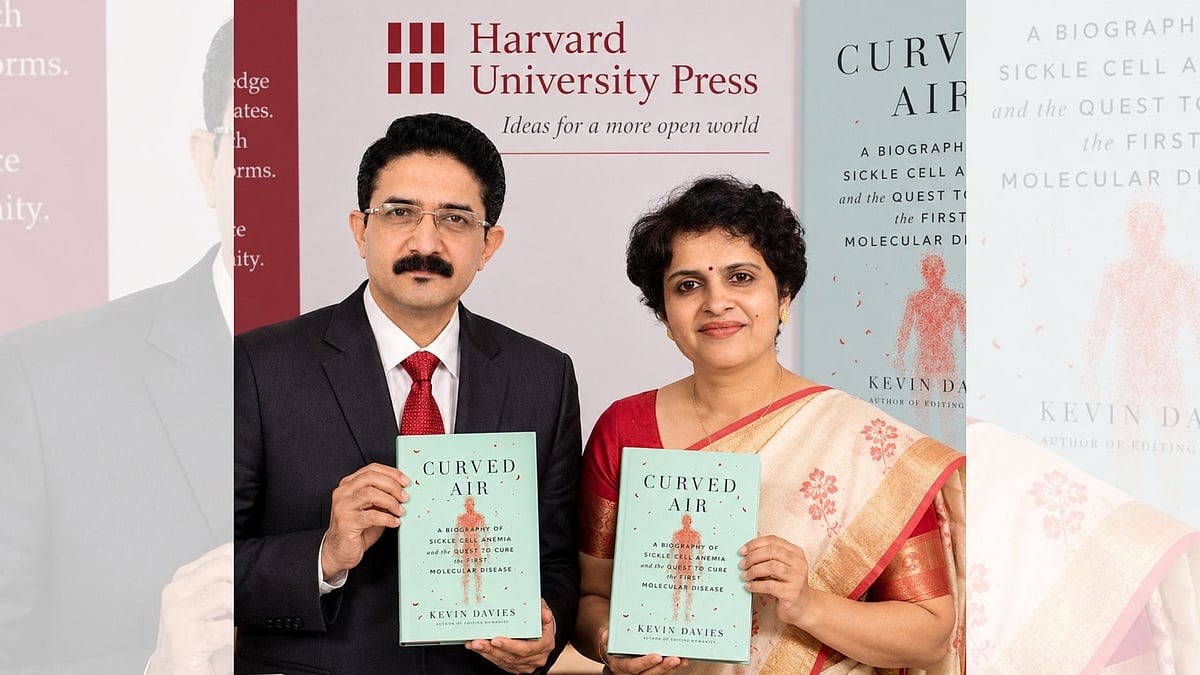
A homeopathic doctor couple from Bhopal, Professor Nisanth Nambison and Dr Smita Nambison, has earned international recognition for their efforts in combating sickle cell disease among tribal communities in Chhindwara, Madhya Pradesh.
Their initiative, which involved screening nearly 25,000 people for sickle cell disease in 2018, has been featured in the book 'Curved Air: A Biography of Sickle Cell Anaemia' published by Harvard University Press. The book, authored by molecular geneticist Kevin Davies, highlights the couple's innovative approach to overcoming challenges such as low literacy, limited healthcare access, and stigma surrounding genetic disorders.
To simplify genetic counselling, Dr Nambison developed the GIPCI Card, a colour-coded, punch-hole tool that translates complex Mendelian genetics into easy-to-understand visual probabilities. The system is linked to a mobile application and central database, helping prospective couples understand genetic risks and make informed decisions.
The couple's work has brought international attention to their grassroots approach, which combines screening, counselling, and technology. In an interview featured in the book, Professor Nambison expressed their desire to bring change in the lives of the people they are helping.
The recognition of their work is a significant achievement, not only for the couple but also for the state of Madhya Pradesh. It highlights the importance of community-based initiatives in addressing public health challenges.
Sickle cell disease is a genetic disorder that affects millions of people worldwide, including a significant number in India. The disease can cause severe health complications, including anaemia, infections, and stroke. Early screening and genetic counselling are crucial in preventing the transmission of the disease.
The couple's initiative has shown that with innovative approaches and community involvement, it is possible to make a significant impact in addressing public health challenges. Their work serves as an inspiration to others working in the field of public health and highlights the importance of collaboration and community engagement.
The recognition of their work by Harvard University Press is a testament to the couple's dedication and hard work. It also underscores the importance of international collaboration and recognition in promoting innovative approaches to public health challenges.
In conclusion, the recognition of the Bhopal doctor couple's sickle cell initiative by Harvard University Press is a significant achievement that highlights the importance of community-based initiatives in addressing public health challenges. Their work serves as an inspiration to others and underscores the importance of innovation, collaboration, and community engagement in making a positive impact on public health.
Frequently asked questions
What is sickle cell disease?
Sickle cell disease is a genetic disorder that affects millions of people worldwide, causing severe health complications.
What is the GIPCI Card?
The GIPCI Card is a colour-coded, punch-hole tool developed by Dr Nambison to simplify genetic counselling and translate complex Mendelian genetics into easy-to-understand visual probabilities.