G. Sathiyan Stresses Ecosystem Support for India's Sporting Rise
Olympian G. Sathiyan highlights ecosystem support, government and corporate collaboration for India's sporting growth.
'%3E%3Crect%20width%3D'96'%20height%3D'96'%20fill%3D'%231B5E20'%2F%3E%3Ccircle%20cx%3D'30'%20cy%3D'24'%20r%3D'44'%20fill%3D'%23fff'%20opacity%3D'.12'%2F%3E%3Ccircle%20cx%3D'60'%20cy%3D'74'%20r%3D'40'%20fill%3D'%23000'%20opacity%3D'.10'%2F%3E%3C%2Fg%3E%3Cg%3E%3Ccircle%20cx%3D'48'%20cy%3D'48'%20r%3D'15'%20fill%3D'%23fff'%2F%3E%3Cpath%20d%3D'M43%2034%20Q50%2048%2043%2062'%20fill%3D'none'%20stroke%3D'%238a94a6'%20stroke-width%3D'2.4'%2F%3E%3Cpath%20d%3D'M47%2033%20Q54%2048%2047%2063'%20fill%3D'none'%20stroke%3D'%238a94a6'%20stroke-width%3D'1.8'%20stroke-dasharray%3D'1.5%203'%2F%3E%3C%2Fg%3E%3C%2Fsvg%3E)
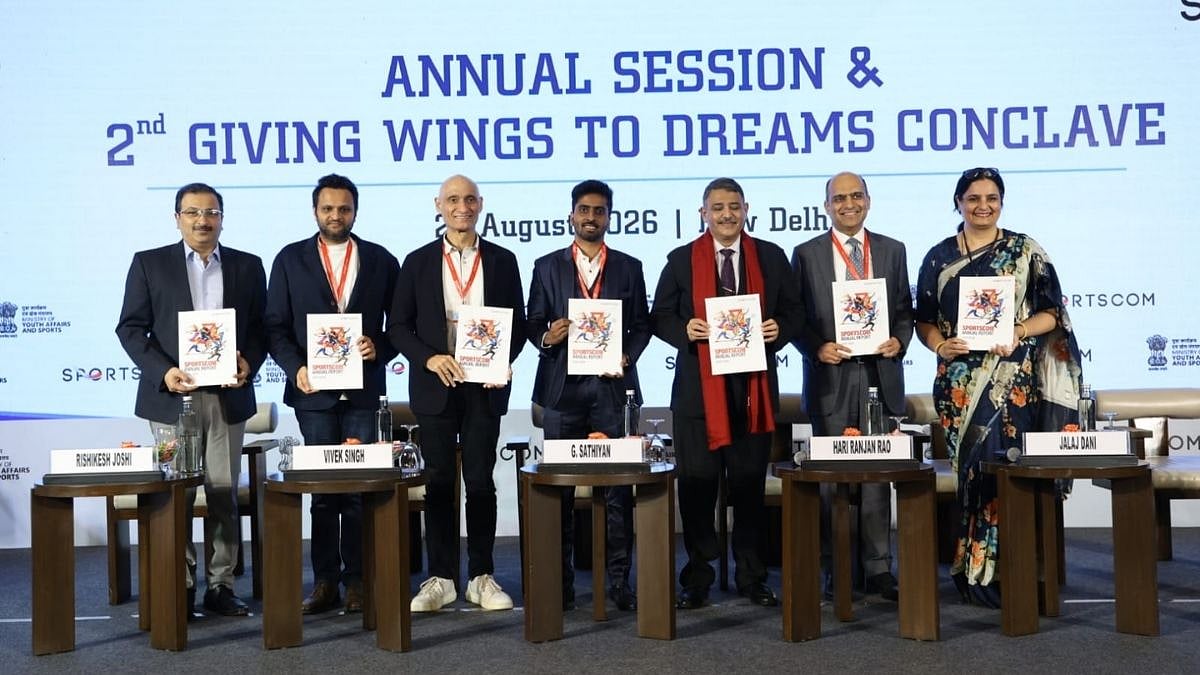
Olympian and Arjuna Award-winning table tennis player G. Sathiyan emphasized the importance of sustained support from the government, corporate sector, and broader industry for India's transformation into a global sporting powerhouse.
He delivered the keynote address at SPORTSCOM's 2nd 'Giving Wings To Dreams' Conclave in New Delhi, where he noted that sports have evolved from an extracurricular pursuit to a viable profession and economic driver.
Sathiyan stressed that it's not just about athletes, but also about the people coming together to support them, including corporates and the government. He highlighted the role of grassroots visibility, saying that when parents see Olympians and Asian Games medalists close to home, they will believe their children can reach the next level.
The conclave brought together senior government officials, investors, and key sports ecosystem stakeholders to discuss India's sporting framework. Hari Ranjan Rao, Secretary – Sports, Ministry of Youth Affairs & Sports, outlined upcoming policy developments, including the National Sports Policy and the proposed Sports Goods Manufacturing Scheme.
Shri Jayant Chaudhary, Minister of State for Skill Development and Entrepreneurship, called for viewing sport beyond medals, as a driver of employment, entrepreneurship, and economic growth. He emphasized integrating sport with education and skilling, highlighting opportunities across sports science, coaching, nutrition, event management, content, technology, manufacturing, and entrepreneurship.
Kunal, Joint Secretary (MYAS), reiterated the government's vision to leverage sports for economic growth and youth engagement. He noted that India is pursuing a whole-of-government approach toward its 2036 Olympic host bid, while promoting indigenous disciplines like Kho-Kho, Yogasana, and Mallakhamb.
The conclave also featured an investor panel, which discussed what makes a sports startup venture-ready. The panel highlighted the importance of collaboration among government, industry, and academia, as well as the role of AI, technology, and women-led rural enterprises in enabling inclusive growth in the sports ecosystem.
Overall, the conclave emphasized the need for sustained support and collaboration across the government, corporate sector, and broader industry to drive India's sporting growth.
With the right ecosystem in place, India can truly become a sporting powerhouse, providing opportunities for athletes to perform at their best and driving economic growth and youth engagement.
The government's vision to leverage sports for economic growth and youth engagement is a step in the right direction, and the promotion of indigenous disciplines and grassroots initiatives will help to create a strong foundation for India's sporting future.
In conclusion, the conclave highlighted the importance of ecosystem support for India's sporting rise, and the need for collaboration and sustained support from all stakeholders to drive growth and success in the sports industry.
This collaborative approach will not only benefit athletes but also contribute to the country's economic growth and development.
As India continues to pursue its 2036 Olympic host bid, the focus on sports as a driver of employment, entrepreneurship, and economic growth will be crucial in creating a thriving sports ecosystem.
The emphasis on integrating sport with education and skilling will also help to create a talented pool of professionals in the sports industry, driving innovation and growth.
In the end, it is clear that India's sporting rise will depend on the collective efforts of all stakeholders, including the government, corporates, and the broader industry.
By working together, India can unlock its full potential and become a global sporting powerhouse, providing opportunities for athletes to succeed and driving economic growth and youth engagement.
The future of sports in India looks promising, with a strong focus on ecosystem support, collaboration, and sustained growth.
As the country continues to invest in its sports infrastructure and promote indigenous disciplines, it is likely that India will see a significant increase in its sporting success and economic growth in the years to come.
With the right approach and support, India can achieve its goal of becoming a global sporting powerhouse, and the conclave's emphasis on ecosystem support and collaboration is a step in the right direction.
The conclave's discussions and outcomes will likely have a positive impact on India's sporting ecosystem, driving growth, innovation, and success in the years to come.
In the long run, India's focus on sports as a driver of economic growth and youth engagement will pay off, creating a thriving sports industry that benefits athletes, businesses, and the country as a whole.
The conclave's message of collaboration and ecosystem support will resonate with stakeholders across the sports industry, driving a collective effort to unlock India's full potential and achieve sporting success.
As India looks to the future, it is clear that the sports industry will play a vital role in driving economic growth, youth engagement, and innovation, and the conclave's emphasis on ecosystem support and collaboration will be crucial in achieving this goal.
In conclusion, the conclave highlighted the importance of ecosystem support for India's sporting rise, and the need for collaboration and sustained support from all stakeholders to drive growth and success in the sports industry.
The future of sports in India is bright, with a strong focus on ecosystem support, collaboration, and sustained growth, and it is likely that the country will see significant increases in sporting success and economic growth in the years to come.
What it means for Mumbai and India is that the sports industry will continue to grow and thrive, providing opportunities for athletes, businesses, and the country as a whole, and driving economic growth, youth engagement, and innovation.
The conclave's message of collaboration and ecosystem support will have a positive impact on the sports industry, driving growth, innovation, and success, and it is likely that India will become a global sporting powerhouse in the years to come.
The emphasis on integrating sport with education and skilling will also help to create a talented pool of professionals in the sports industry, driving innovation and growth, and contributing to the country's economic development.
In the end, it is clear that India's sporting rise will depend on the collective efforts of all stakeholders, including the government, corporates, and the broader industry, and that the conclave's emphasis on ecosystem support and collaboration is a step in the right direction.
The future of sports in India looks promising, with a strong focus on ecosystem support, collaboration, and sustained growth, and it is likely that the country will see significant increases in sporting success and economic growth in the years to come.
Frequently asked questions
What is the key to India's sporting rise?
Ecosystem support and collaboration among government, corporates, and the broader industry.
What is the government's vision for sports in India?
To leverage sports for economic growth and youth engagement, and to promote indigenous disciplines and grassroots initiatives.