US Intensifies Strikes On Iran Amid Strait Of Hormuz Crisis
US strikes Iran, Iran retaliates with missile fire. Fears of wider war grow.
'%3E%3Crect%20width%3D'96'%20height%3D'96'%20fill%3D'%234A235A'%2F%3E%3Ccircle%20cx%3D'30'%20cy%3D'24'%20r%3D'44'%20fill%3D'%23fff'%20opacity%3D'.12'%2F%3E%3Ccircle%20cx%3D'60'%20cy%3D'74'%20r%3D'40'%20fill%3D'%23000'%20opacity%3D'.10'%2F%3E%3C%2Fg%3E%3Cg%20fill%3D'none'%20stroke%3D'%23fff'%20stroke-width%3D'3'%3E%3Ccircle%20cx%3D'48'%20cy%3D'48'%20r%3D'16'%2F%3E%3Cellipse%20cx%3D'48'%20cy%3D'48'%20rx%3D'6.5'%20ry%3D'16'%2F%3E%3Cline%20x1%3D'32'%20y1%3D'42'%20x2%3D'64'%20y2%3D'42'%2F%3E%3Cline%20x1%3D'32'%20y1%3D'54'%20x2%3D'64'%20y2%3D'54'%2F%3E%3C%2Fg%3E%3C%2Fsvg%3E)
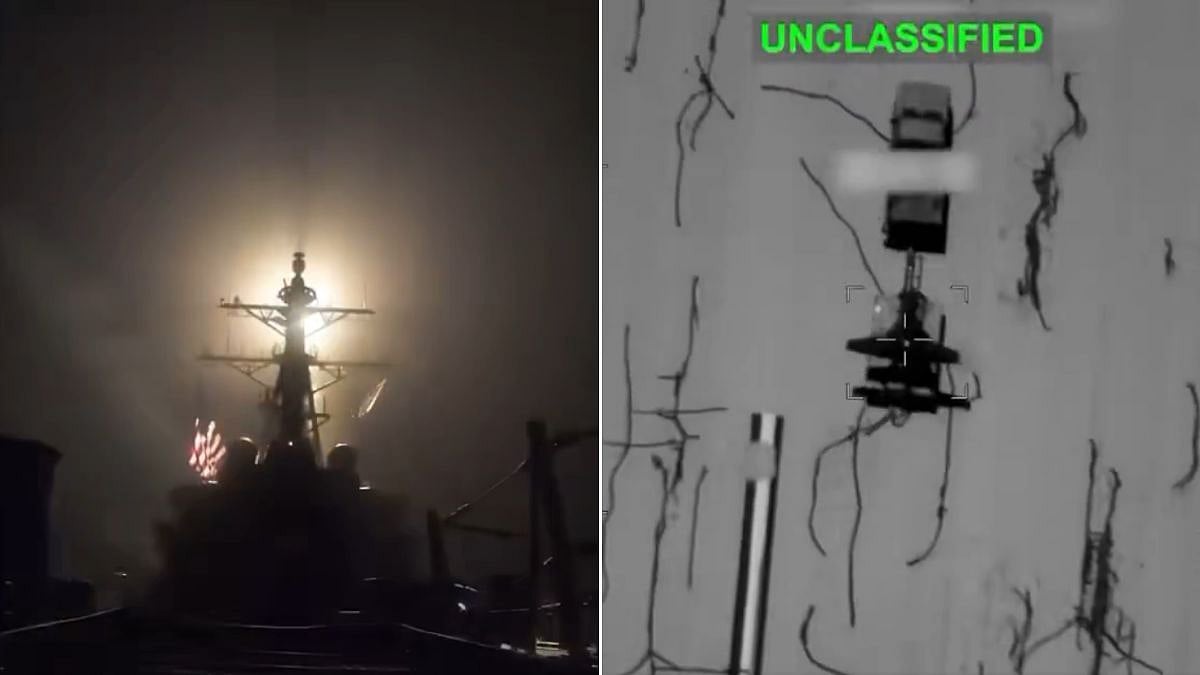
The United States has intensified its strikes on Iran, targeting command centers, air defense sites, and coastal surveillance facilities. The latest wave of strikes ended at 9 pm eastern time on Thursday, but the conflict is ongoing.
The US strikes have killed more than 35 people and wounded over 300 others, according to Iranian officials. The strikes have also reached areas around Iran's capital, Tehran, for the first time in this latest round of violence.
The conflict began when the US and Israel launched a war on Iran on February 28. In response, Tehran closed the Strait of Hormuz to shipping traffic, sending the price of oil and other goods soaring. The US has since restarted a naval blockade against Iranian ports, redirecting two commercial vessels attempting to run the blockade.
Iran has retaliated with missile and drone fire targeting Bahrain and Kuwait. The country's parliament speaker and lead negotiator, Mohammad Bagher Qalibaf, has warned that Iran is prepared for a fuller military confrontation if the US does not live up to the terms of the interim deal.
The US and Iran have traded threats as the attacks intensify. The Iranian paramilitary Revolutionary Guard has threatened to halt all energy exports from the Middle East over the blockade. The Guard said, "The export of oil and gas from the region will be either for everyone or for no one."
The conflict has significant implications for the global economy, particularly with regards to oil prices. The rising prices pose a challenge to US President Donald Trump and his Republican Party, which hopes to retain control of Congress in elections in November.
The situation in the Middle East is complex and has a long history. The Strait of Hormuz is a critical waterway for international trade, with a significant portion of the world's oil passing through it. The closure of the strait has had far-reaching consequences, affecting not only the regional economy but also global markets.
The US and Iran have been engaged in a series of negotiations to resolve the conflict, but so far, a peaceful resolution has not been reached. The US has reimposed a naval blockade on Iranian ports, which has led to a significant escalation of the conflict.
The international community is watching the situation closely, with many countries calling for a peaceful resolution to the conflict. The United Nations has urged both sides to exercise restraint and to engage in diplomatic efforts to resolve the dispute.
As the conflict continues to escalate, there are growing fears of a wider regional war. The situation is complex and involves multiple countries and interests. A peaceful resolution to the conflict is essential to prevent further escalation and to ensure the stability of the region.
In conclusion, the conflict between the US and Iran is a significant and complex issue that has far-reaching implications for the global economy and regional stability. The situation is ongoing, and a peaceful resolution is essential to prevent further escalation and to ensure the stability of the region.