Supreme Court Clarifies Obscenity Law
Abusive language not equal to obscenity, rules SC. Upholds grievous hurt conviction.
'%3E%3Crect%20width%3D'96'%20height%3D'96'%20fill%3D'%231A5276'%2F%3E%3Ccircle%20cx%3D'30'%20cy%3D'24'%20r%3D'44'%20fill%3D'%23fff'%20opacity%3D'.12'%2F%3E%3Ccircle%20cx%3D'60'%20cy%3D'74'%20r%3D'40'%20fill%3D'%23000'%20opacity%3D'.10'%2F%3E%3C%2Fg%3E%3Cg%20fill%3D'%23fff'%3E%3Cpath%20d%3D'M31%2041%20L48%2031%20L65%2041%20Z'%2F%3E%3Crect%20x%3D'33'%20y%3D'43'%20width%3D'4'%20height%3D'17'%2F%3E%3Crect%20x%3D'41'%20y%3D'43'%20width%3D'4'%20height%3D'17'%2F%3E%3Crect%20x%3D'51'%20y%3D'43'%20width%3D'4'%20height%3D'17'%2F%3E%3Crect%20x%3D'59'%20y%3D'43'%20width%3D'4'%20height%3D'17'%2F%3E%3Crect%20x%3D'30'%20y%3D'62'%20width%3D'36'%20height%3D'4'%20rx%3D'1'%2F%3E%3C%2Fg%3E%3C%2Fsvg%3E)
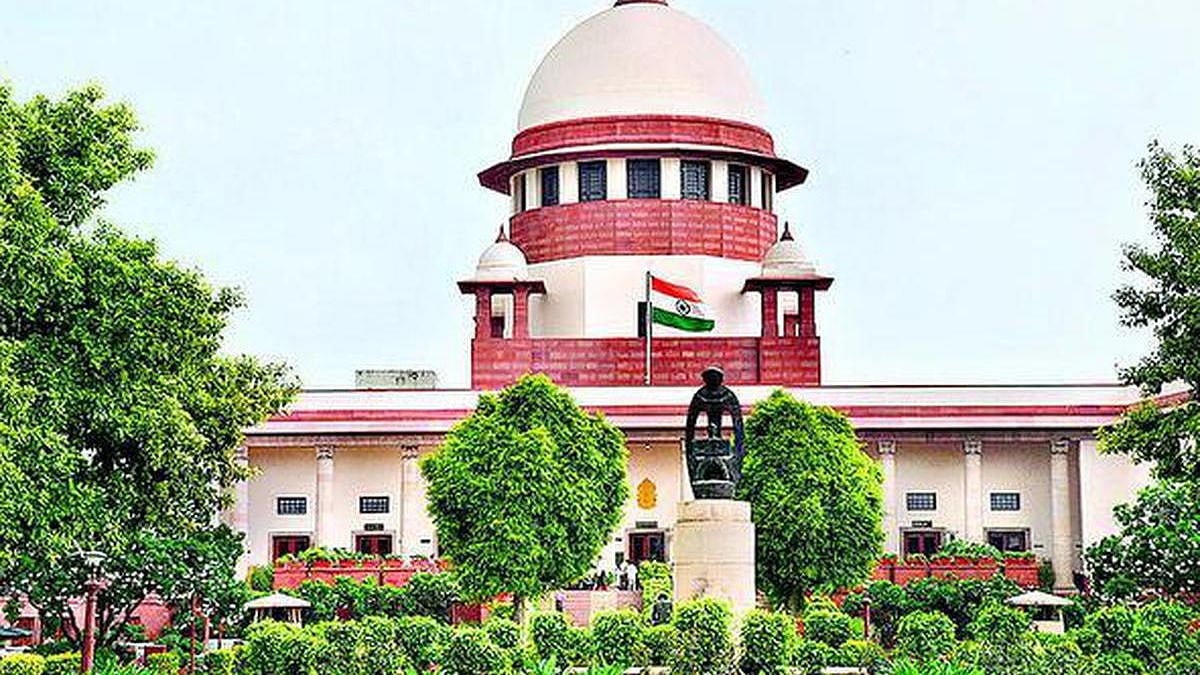
The Supreme Court has made a significant clarification on the law of obscenity in India. According to the Court, using swear words or abusive language, however offensive, does not amount to the offence of obscenity under Section 294(b) of the Indian Penal Code (IPC).
This ruling was made by a Bench of Justice Sanjay Karol and Justice Vipul M Pancholi while hearing the appeal of a 70-year-old man from Tamil Nadu. The man was convicted in a case related to a land dispute, where he was accused of using abusive language and causing grievous hurt to the complainant.
The Court observed that obscenity in law is different from vulgarity or profanity. To constitute obscenity, the words must be lascivious, appeal to prurient interests, and have the tendency to deprave and corrupt susceptible minds. The Bench noted that the law does not treat every abusive or offensive expression as obscene.
The case originated from an altercation over agricultural land in Tamil Nadu in August 2017. The appellant was accused of abusing the complainant using vulgar expletives and caste-based slurs, and then attacking him with a billhook. The complainant suffered injuries, including a fractured nasal bone.
The trial court had convicted the appellant under various sections of the IPC, including Section 294(b) for obscenity and Section 326 for voluntarily causing grievous hurt. The Madras High Court later upheld these convictions, prompting the appellant to approach the Supreme Court.
The Supreme Court set aside the conviction under Section 294(b) IPC, holding that the abusive expressions used by the appellant were at best vulgar or abusive, but did not satisfy the legal requirements of obscenity. However, the Court upheld the conviction under Section 326 IPC for voluntarily causing grievous hurt.
Taking into account the appellant's age, poor health, and the background of the dispute, the Bench reduced his sentence to imprisonment till the rising of the court and directed him to pay a fine of ₹50,000 within two months.
This landmark ruling reinforces the legal distinction between vulgarity and obscenity. It emphasizes that the prosecution must prove two essential ingredients to establish the offence of obscenity: that obscene words were uttered in or near a public place, and that the utterance caused annoyance to others.
The Supreme Court's clarification on the law of obscenity is significant, as it provides guidance on what constitutes obscenity in India. The ruling will have implications for future cases involving allegations of obscenity and will help to ensure that the law is applied consistently and fairly.
In conclusion, the Supreme Court's decision highlights the importance of understanding the nuances of the law of obscenity in India. The ruling reinforces the distinction between vulgarity and obscenity, and emphasizes the need for the prosecution to prove the essential ingredients of the offence. This clarification will help to promote clarity and consistency in the application of the law, and will have significant implications for future cases involving allegations of obscenity.
The significance of this ruling cannot be overstated, as it has the potential to impact a wide range of cases, from those involving abusive language to those involving more serious forms of obscenity. As such, it is essential to understand the implications of this ruling and to apply the law in a fair and consistent manner.
In the context of Indian law, this ruling is a significant development, as it provides clarity on a complex and often contentious issue. The Supreme Court's decision will help to promote a better understanding of the law of obscenity, and will ensure that the law is applied in a fair and consistent manner.
Overall, the Supreme Court's clarification on the law of obscenity is a welcome development, as it provides guidance and clarity on a complex issue. The ruling will have significant implications for future cases, and will help to promote a better understanding of the law in India.