Mumbai Students Find New Rallying Point
Student politics in Mumbai sees a surge, students engage in new ways.
'%3E%3Crect%20width%3D'96'%20height%3D'96'%20fill%3D'%23B3261E'%2F%3E%3Ccircle%20cx%3D'30'%20cy%3D'24'%20r%3D'44'%20fill%3D'%23fff'%20opacity%3D'.12'%2F%3E%3Ccircle%20cx%3D'60'%20cy%3D'74'%20r%3D'40'%20fill%3D'%23000'%20opacity%3D'.10'%2F%3E%3C%2Fg%3E%3Cg%20fill%3D'%23fff'%3E%3Crect%20x%3D'29'%20y%3D'49'%20width%3D'8'%20height%3D'19'%20rx%3D'1'%2F%3E%3Crect%20x%3D'39'%20y%3D'40'%20width%3D'9'%20height%3D'28'%20rx%3D'1'%2F%3E%3Crect%20x%3D'50'%20y%3D'45'%20width%3D'8'%20height%3D'23'%20rx%3D'1'%2F%3E%3Crect%20x%3D'60'%20y%3D'53'%20width%3D'7'%20height%3D'15'%20rx%3D'1'%2F%3E%3Crect%20x%3D'41'%20y%3D'34'%20width%3D'5'%20height%3D'6'%2F%3E%3C%2Fg%3E%3C%2Fsvg%3E)
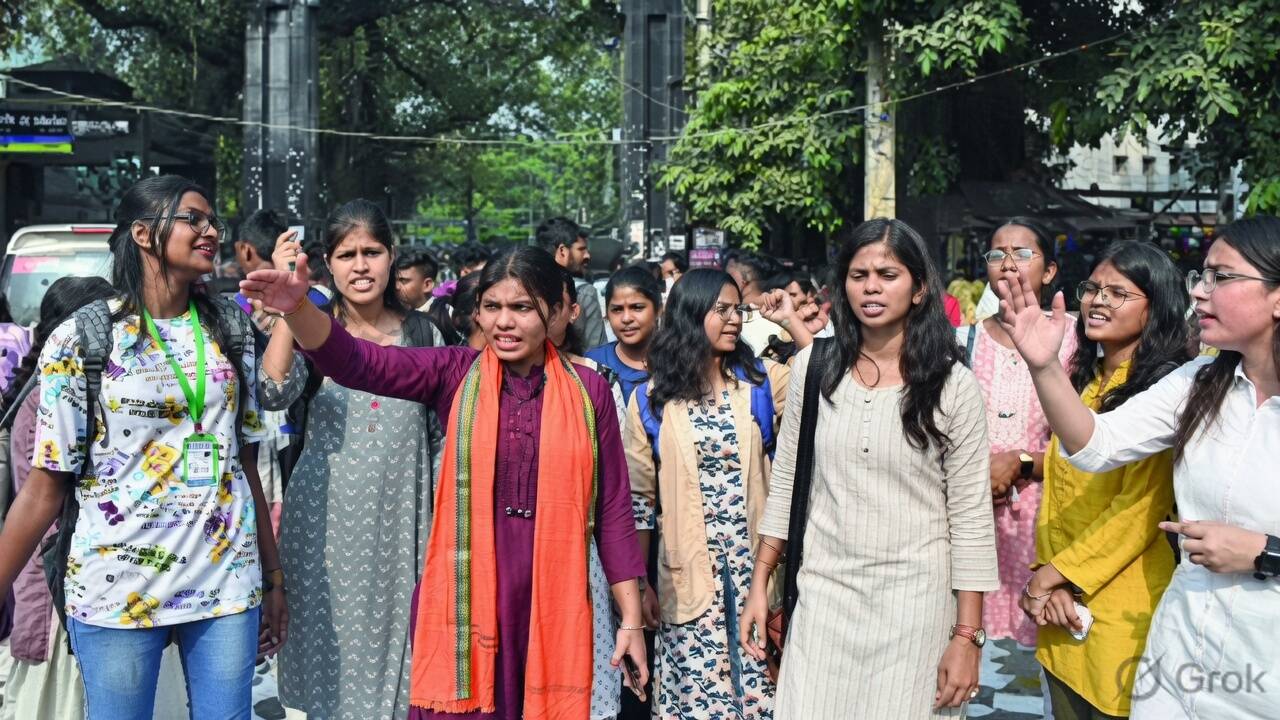
Mumbai's student politics scene has witnessed a significant decline in recent years, marked by the absence of regular student elections and a subsequent leadership vacuum. Many students have shifted their focus towards career development and opportunities abroad, rather than participating in public life. Additionally, stricter rules on campuses have limited the scope for protests and student-led demonstrations, further contributing to the decline.
However, despite these challenges, students in Mumbai are now finding new avenues for engagement and expression. Social media has emerged as a powerful tool, enabling students to mobilize and raise awareness about various issues. Furthermore, inspirational figures like Sonam Wangchuk, known for his innovative approaches to education and social change, are motivating students to take action.
The decline of student politics in Mumbai can be attributed to various factors, including the changing priorities of students and the restrictive campus environment. In the past, student elections and protests were common features of campus life, providing a platform for students to engage with social and political issues. However, with the absence of these activities, students have been forced to explore alternative means of expression and participation.
The rise of social media has been a significant factor in the resurgence of student engagement in Mumbai. Platforms like Twitter, Facebook, and Instagram have enabled students to connect with each other, share ideas, and mobilize around common causes. This has allowed students to bypass traditional channels of participation, such as student elections and protests, and instead create their own spaces for discussion and activism.
Figures like Sonam Wangchuk are also playing a crucial role in inspiring students to take action. Through his innovative approaches to education and social change, Wangchuk has shown students that they have the power to create positive change in their communities. His emphasis on grassroots activism and community-led initiatives has resonated with many students, who are now seeking to apply these principles in their own contexts.
The resurgence of student engagement in Mumbai is a significant development, with implications for the city's social and political landscape. As students begin to find new ways to participate and express themselves, they are likely to play an increasingly important role in shaping the city's future. Whether through social media, grassroots activism, or other forms of engagement, students in Mumbai are poised to make a meaningful impact on the issues that matter most to them.
In conclusion, the decline of student politics in Mumbai has been a significant trend in recent years, but students are now finding new ways to engage and participate. Through social media, inspirational figures, and grassroots activism, students are creating new spaces for discussion, activism, and positive change. As they continue to navigate the challenges of campus life and find new avenues for expression, students in Mumbai are likely to play an increasingly important role in shaping the city's future.
The significance of this development cannot be overstated, as it has the potential to revitalize the city's social and political landscape. With students at the forefront of change, Mumbai is likely to witness a new era of activism, innovation, and progress. As the city continues to evolve and grow, the role of students in shaping its future will be critical, and their newfound engagement is a positive sign for the years to come.
Frequently asked questions
What has led to the decline of student politics in Mumbai?
The decline of student politics in Mumbai can be attributed to various factors, including the absence of regular student elections, stricter rules on campuses, and changing priorities of students.
How are students in Mumbai finding new ways to engage and participate?
Students in Mumbai are finding new ways to engage and participate through social media, inspirational figures like Sonam Wangchuk, and grassroots activism.