Assam's Manas National Park Discovers Rare Black-And-Golden Cicada
A rare cicada species found, adding to India's biodiversity records. Discovery made in Manas National Park.
'%3E%3Crect%20width%3D'96'%20height%3D'96'%20fill%3D'%23B3261E'%2F%3E%3Ccircle%20cx%3D'30'%20cy%3D'24'%20r%3D'44'%20fill%3D'%23fff'%20opacity%3D'.12'%2F%3E%3Ccircle%20cx%3D'60'%20cy%3D'74'%20r%3D'40'%20fill%3D'%23000'%20opacity%3D'.10'%2F%3E%3C%2Fg%3E%3Cg%20fill%3D'%23fff'%3E%3Crect%20x%3D'29'%20y%3D'49'%20width%3D'8'%20height%3D'19'%20rx%3D'1'%2F%3E%3Crect%20x%3D'39'%20y%3D'40'%20width%3D'9'%20height%3D'28'%20rx%3D'1'%2F%3E%3Crect%20x%3D'50'%20y%3D'45'%20width%3D'8'%20height%3D'23'%20rx%3D'1'%2F%3E%3Crect%20x%3D'60'%20y%3D'53'%20width%3D'7'%20height%3D'15'%20rx%3D'1'%2F%3E%3Crect%20x%3D'41'%20y%3D'34'%20width%3D'5'%20height%3D'6'%2F%3E%3C%2Fg%3E%3C%2Fsvg%3E)
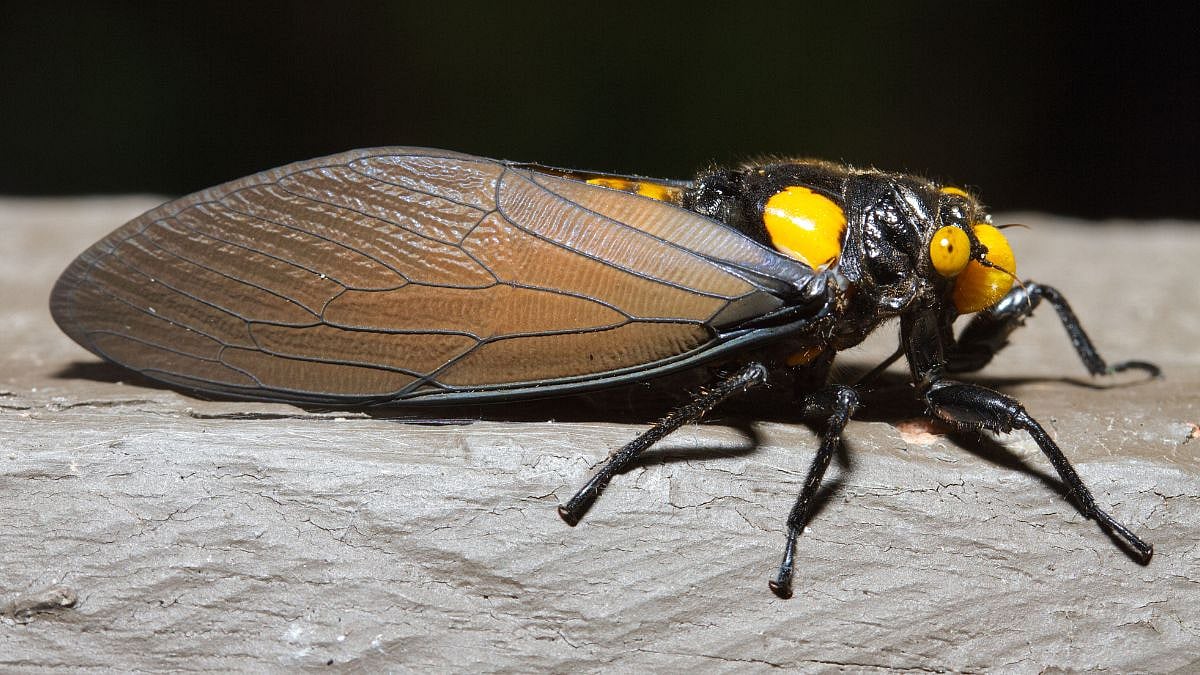
On May 20, 2024, researchers from Aarayank and the Durrell Wildlife Conservation Trust made a significant discovery in Assam's Manas National Park. They documented the black-and-golden cicada, a rare and striking insect, marking an important addition to India's wildlife records.
The discovery was made during a field survey in the Bansbari range of Manas, near the Bangale Hat-Dhuwa forest camp. The researchers spotted the cicada perched on the trunk of an Okshi tree, and although it was only visible for about one minute before flying away, they were able to identify it as Huechys fusca Distant, commonly known as the black-and-golden cicada.
The black-and-golden cicada is known for its distinctive black body and golden markings, making it an interesting subject for entomologists and wildlife researchers. Cicadas are insects best known for their loud and characteristic calls, particularly during the warmer months. They spend a significant part of their life cycle underground as nymphs before emerging as adults.
The discovery of the black-and-golden cicada is significant because its presence adds to the known diversity of cicadas documented in India. India is currently known to have around 204 native cicada species, while the genus Huechys comprises 24 living species.
Manas National Park is recognized for its exceptional biodiversity and is home to several rare and endangered species. The park forms part of the Manas landscape, which extends towards Bhutan and provides important habitats for wildlife. The discovery of the black-and-golden cicada highlights the rich and lesser-known insect diversity found within one of India's most important protected areas.
The discovery is a testament to the importance of conservation efforts and the need to continue exploring and documenting India's biodiversity. The Manas National Park is a vital component of India's conservation efforts, and discoveries like this one underscore the significance of protecting and preserving our natural heritage.
In conclusion, the discovery of the black-and-golden cicada in Assam's Manas National Park is a significant addition to India's wildlife records and highlights the importance of continued conservation efforts. The park's exceptional biodiversity and the discovery of new species like the black-and-golden cicada make it an important location for wildlife research and conservation.
The discovery also underscores the importance of collaboration between researchers and conservation organizations in documenting and protecting India's biodiversity. The partnership between Aarayank and the Durrell Wildlife Conservation Trust has led to this significant discovery, and it is hoped that such collaborations will continue to yield important findings in the future.
Overall, the discovery of the black-and-golden cicada is a positive development for India's conservation efforts and highlights the need to continue exploring and documenting the country's rich biodiversity.
The significance of this discovery will have a lasting impact on the conservation of India's wildlife and will pave the way for future research and discoveries.
Frequently asked questions
What is the significance of the black-and-golden cicada discovery?
The discovery adds to the known diversity of cicadas documented in India and highlights the rich and lesser-known insect diversity found within one of India's most important protected areas.
Where was the black-and-golden cicada discovered?
The black-and-golden cicada was discovered in Assam's Manas National Park, near the Bangale Hat-Dhuwa forest camp.