Vast Water Reserves Found Under Oregon's Cascades
Scientists discover hidden water, Oregon's volcanic region, new findings
'%3E%3Crect%20width%3D'96'%20height%3D'96'%20fill%3D'%23B3261E'%2F%3E%3Ccircle%20cx%3D'30'%20cy%3D'24'%20r%3D'44'%20fill%3D'%23fff'%20opacity%3D'.12'%2F%3E%3Ccircle%20cx%3D'60'%20cy%3D'74'%20r%3D'40'%20fill%3D'%23000'%20opacity%3D'.10'%2F%3E%3C%2Fg%3E%3Cg%20fill%3D'%23fff'%3E%3Crect%20x%3D'29'%20y%3D'49'%20width%3D'8'%20height%3D'19'%20rx%3D'1'%2F%3E%3Crect%20x%3D'39'%20y%3D'40'%20width%3D'9'%20height%3D'28'%20rx%3D'1'%2F%3E%3Crect%20x%3D'50'%20y%3D'45'%20width%3D'8'%20height%3D'23'%20rx%3D'1'%2F%3E%3Crect%20x%3D'60'%20y%3D'53'%20width%3D'7'%20height%3D'15'%20rx%3D'1'%2F%3E%3Crect%20x%3D'41'%20y%3D'34'%20width%3D'5'%20height%3D'6'%2F%3E%3C%2Fg%3E%3C%2Fsvg%3E)
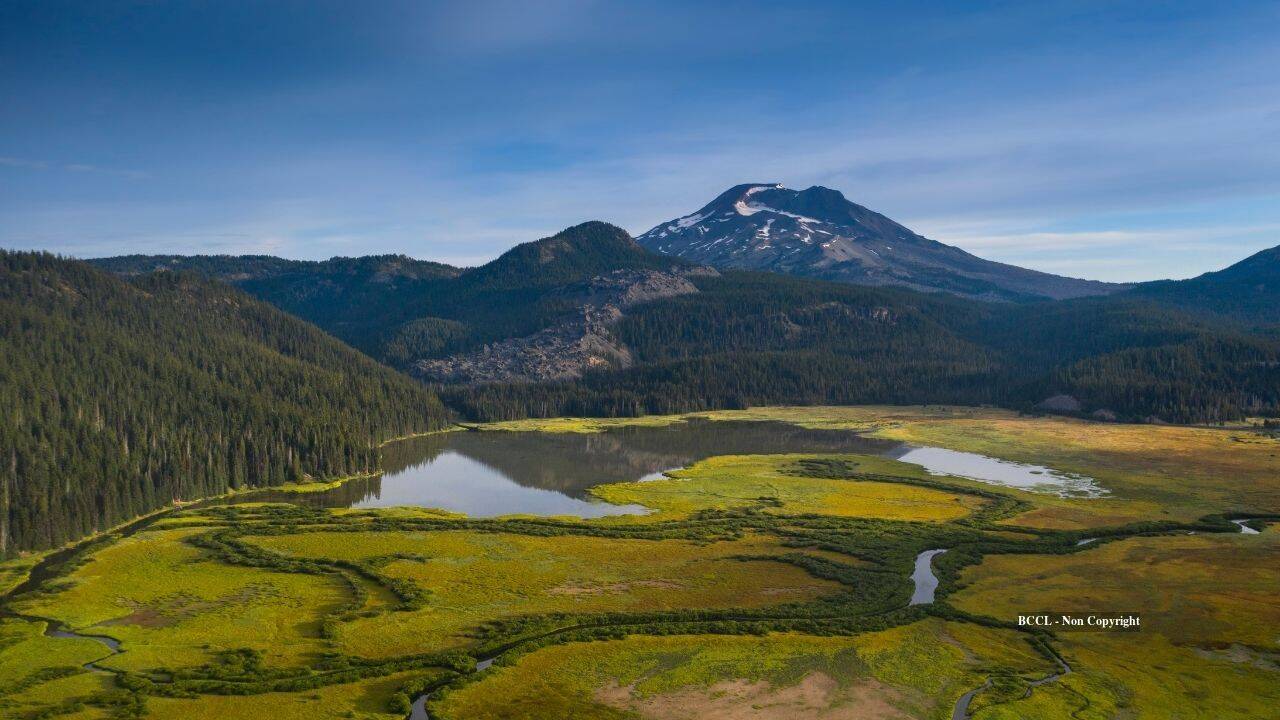
Scientists have made a groundbreaking discovery in Oregon's volcanic Cascades region, uncovering vast hidden water reserves beneath the surface. This finding was announced recently, shedding new light on the region's hydrology.
The discovery was made by a team of scientists who used advanced technologies to map the underground water reserves. According to their findings, the water reserves are located beneath the volcanic rocks and soil of the Cascades, a mountain range that stretches across the Pacific Northwest.
The Cascades are known for their unique geology, with numerous volcanoes and a complex network of faults and fractures. The region's volcanic rocks are highly permeable, allowing water to seep deep into the earth and accumulate in vast reserves.
The scientists used a combination of techniques, including seismic imaging and electrical resistivity tomography, to create detailed maps of the underground water reserves. Their findings suggest that the reserves are much larger than previously thought, with some estimates indicating that they could be tens of kilometers wide and deep.
The discovery of these hidden water reserves has significant implications for the region's water management and conservation efforts. Oregon is known for its dry summers and wet winters, and the state's water resources are often stretched to the limit. The discovery of these new water reserves could help to alleviate some of the pressure on the state's water resources, particularly during times of drought.
The findings also have important implications for the region's ecosystem, as the hidden water reserves could be supporting a wide range of plant and animal species. The Cascades are home to a diverse range of flora and fauna, and the discovery of these new water reserves could help to shed new light on the region's complex ecosystems.
In terms of the discovery's significance, it is a major breakthrough in the field of hydrology, and could have far-reaching implications for water management and conservation efforts around the world. The discovery of hidden water reserves is a reminder of the complexity and beauty of the natural world, and the importance of continued scientific research and exploration.
The discovery is also a testament to the power of advanced technologies in helping scientists to better understand the world around us. The use of seismic imaging and electrical resistivity tomography has allowed scientists to create detailed maps of the underground water reserves, and has opened up new possibilities for the study of hydrology and geology.
In conclusion, the discovery of vast hidden water reserves beneath Oregon's volcanic Cascades is a significant finding that has important implications for the region's water management and conservation efforts, as well as for the field of hydrology as a whole. The discovery is a reminder of the importance of continued scientific research and exploration, and the potential for new breakthroughs and discoveries in the natural world.
Frequently asked questions
Where were the vast water reserves found?
The vast water reserves were found beneath Oregon's volcanic Cascades region.
What are the implications of the discovery?
The discovery has significant implications for the region's water management and conservation efforts, as well as for the field of hydrology.